Provençal interiors are like a summer morning in the south of France: lots of light, bright colors, natural materials and a touch of romance, but without overdoing it. It’s a style that soothes – instead of showy gimmicks, what counts are soft textures, muted colors and things with soul.
Below you will find our suggestions for interior design as if it were Provence: from the color palette and materials, through furniture, fabrics and lighting, to ready-made combinations for the living room, kitchen and bedroom. Inside you’ll also find answers to questions about brick: does it even fit a Provençal idyll, and if so, which one is best to choose?
Does brick go with Provençal style?
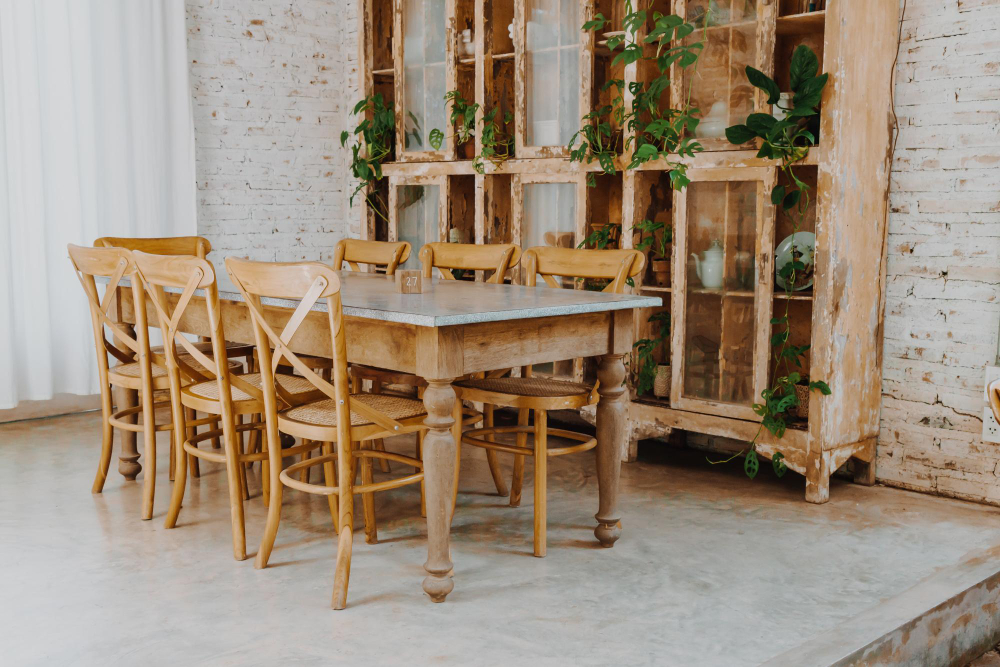
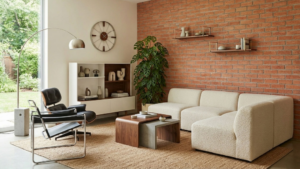
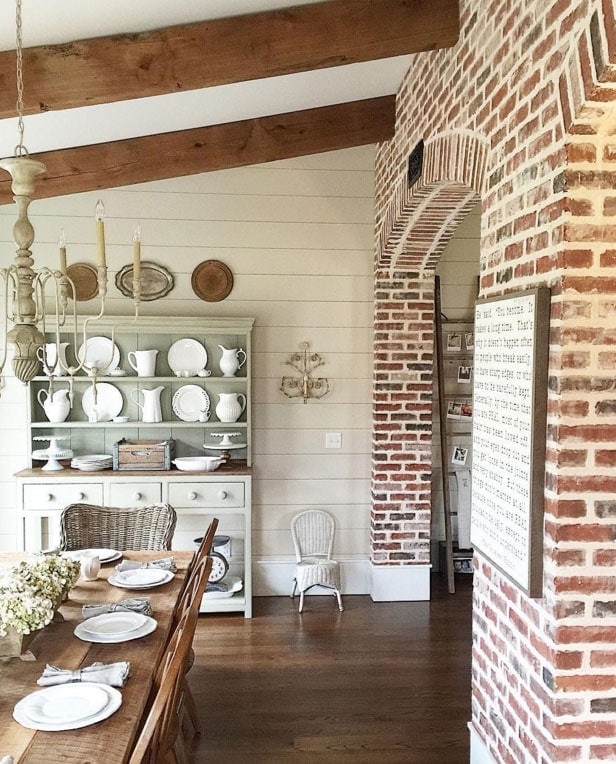
Yes – but not every one. In Provence, brick is warm and “soft” in appearance. Whitewashed brick (lime effect, delicate rubbing) or sand-red brick in muted, matte tones will work best. The key is the grout: light, cream or linen – it binds the whole and does not create an aggressive contrast. Avoid graphite grout and very “strong” red – this is already a loft direction.
Where to put it. In an alcove in the living room, behind the dining room table, as a low strip by the fireplace, between the countertop and cabinets in the kitchen (necessarily protected with a matte impregnation). Our favorite is just the use of brick on the wall in the kitchen. Another great option is using demolition brick on the floor in the kitchen or living room.
Remember that in the Provençal style, brick is a background that warms up creams, olive and wood – not the foreground star.
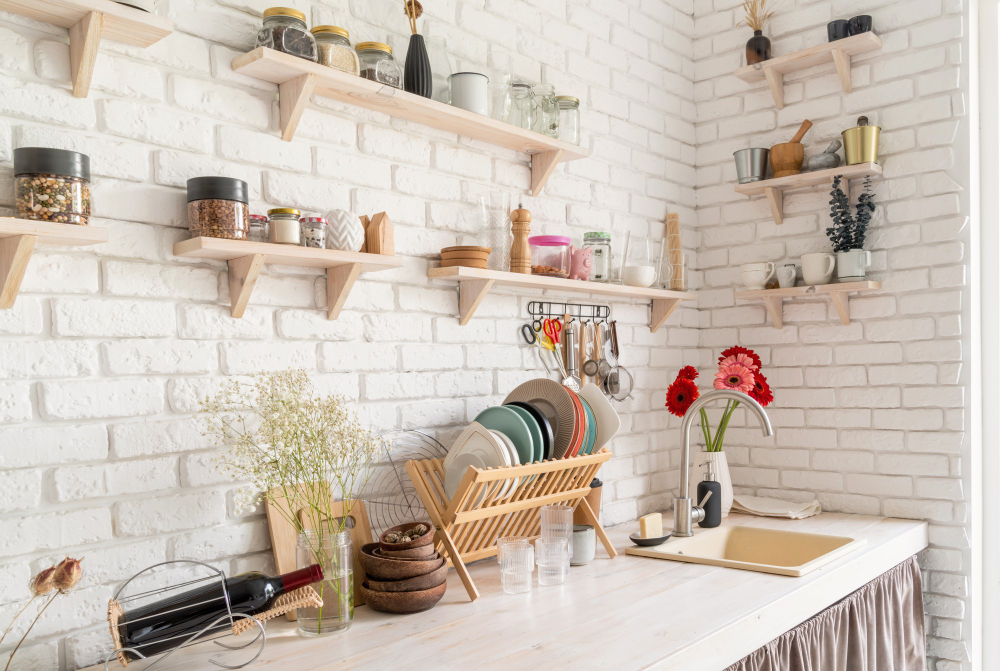
Color palette: creams, lavender and olive
The basis is broken whites, ivory, warm beiges. Plus dim pastels: lavender purple, olive green, sky blue, light gray. Accents can go the way of ochre or terracotta, but in accessories rather than on whole walls. The key is softness and light – nothing should “scream”.
-
Good combinations: broken white + olive; cream + lavender; sand beige + dove blue.
-
It is better to avoid: pure, cold white and intense contrasts (deep black, neons).
Materials and textures: natural and matte
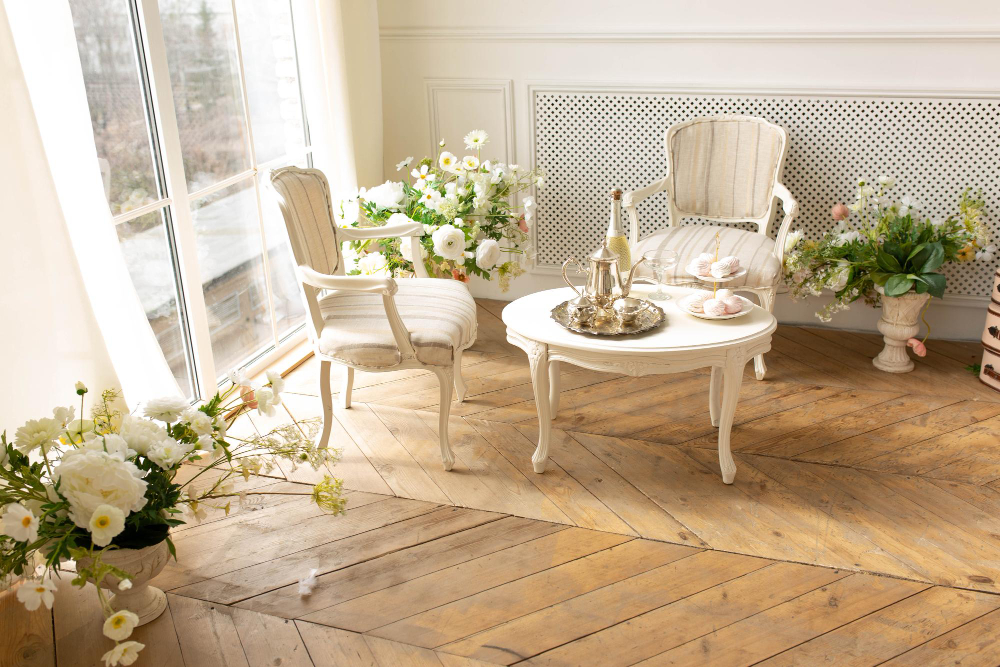
Provence likes wood (often whitewashed or lightly rubbed), pebbles, travertine, lime plaster, rattan and ceramics. Floors – if not plank – can mimic stone or old tiles. Everything should have a matte character, as if bathed by the sun and time.
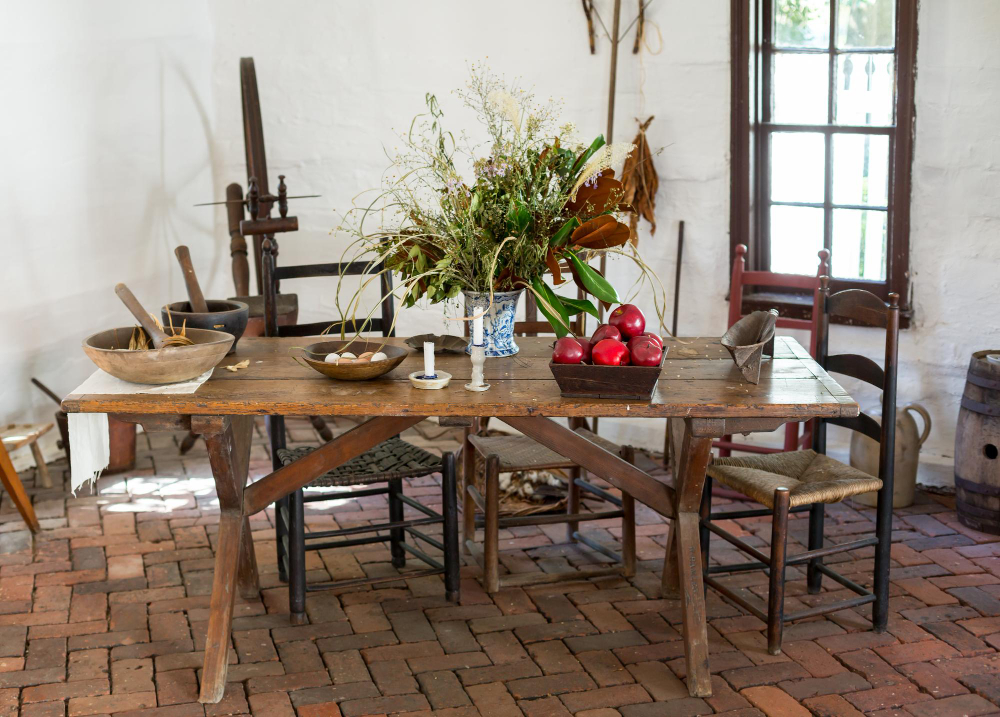
Furniture: classics with a touch of country elegance
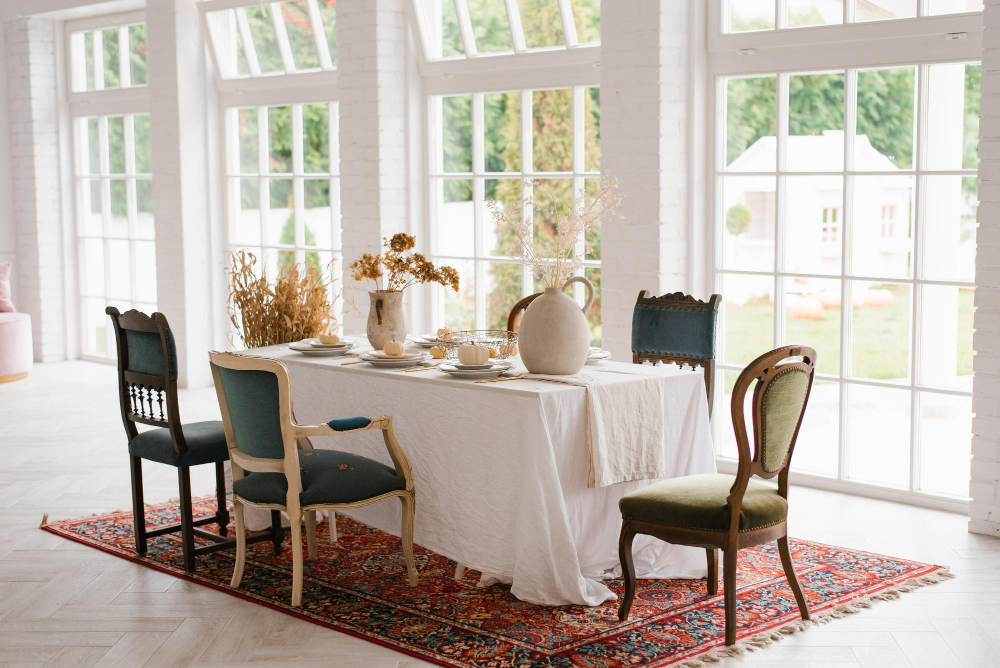
The forms are simple, timeless, sometimes with delicate milling. Tables with solid, straight legs, chests of drawers and display cabinets with glazing for ceramics, beds with wooden or metal bent headrest (in light colors). Finish – oil, wax, stain or whitewashed paint with subtle rubbing. Metal detailing is brushed brass or patinated iron; leave the gloss and chrome to other styles.
Fabrics for Provençal interior: light, soft, patterned
Linen and cotton work best – for curtains, tablecloths, pillowcases. Plus flat-woven rugs, plaids with a distinct weave. Patterns? Stripes, a small flower, sometimes a vichy check or classic toile de Jouy (but in moderation, for example, on two pillows or a bedroom curtain). Color palette dimmed, so that the whole remains bright and can “breathe”.
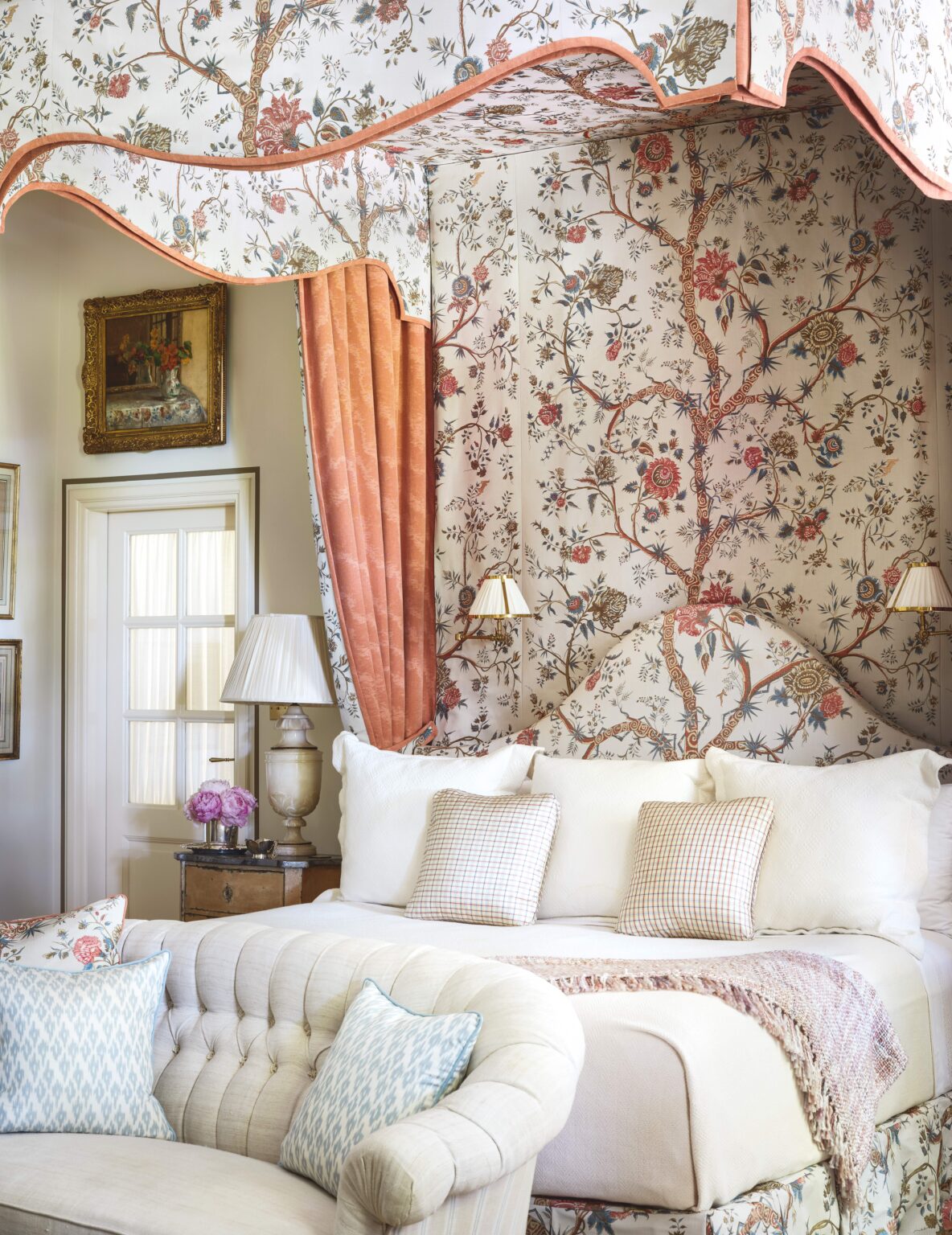
Lighting: soft as late afternoon sunshine
Instead of a single point of light – several sources: a ceiling lamp with a fabric or woven shade, wall sconces near the walls and table lamps on consoles. Light color 2700-3000 K warms textures and brings out details of wood and ceramics. Metal of fixtures – brass or porcelain fixtures rather than black steel.
Accessories: ceramics, glassware, baskets
Show what is usable: bowls, jugs, bottles, jars – preferably in shades of cream, olive, blue. Wicker and rattan keep things tidy (blankets, newspapers), and mirrors in wooden or “whitewashed” frames add light. Better a few larger, calm accents than dense finery.
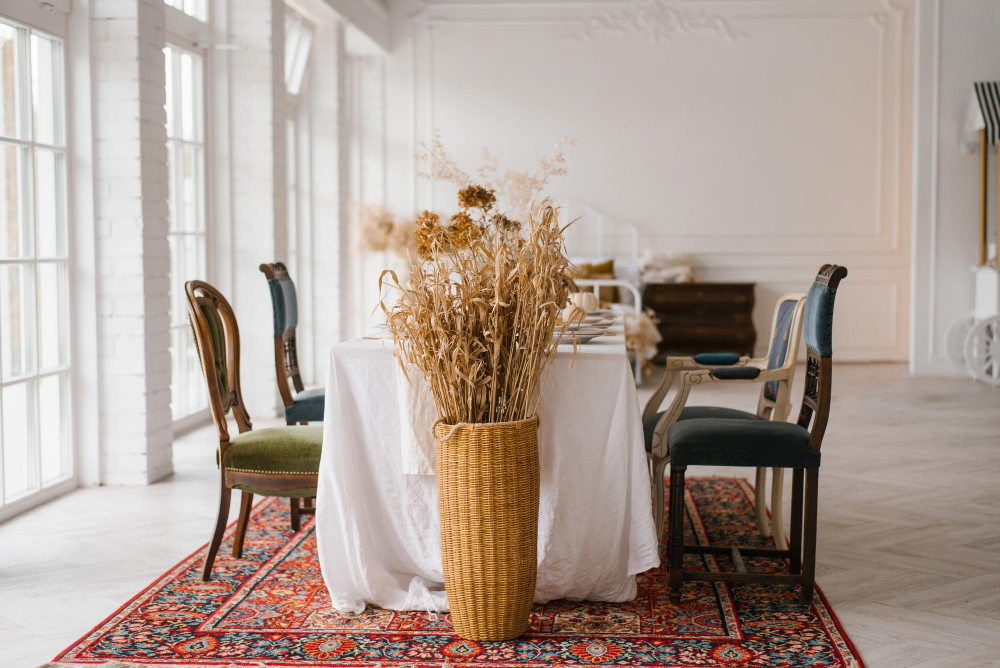
Plants: lavender in the foreground
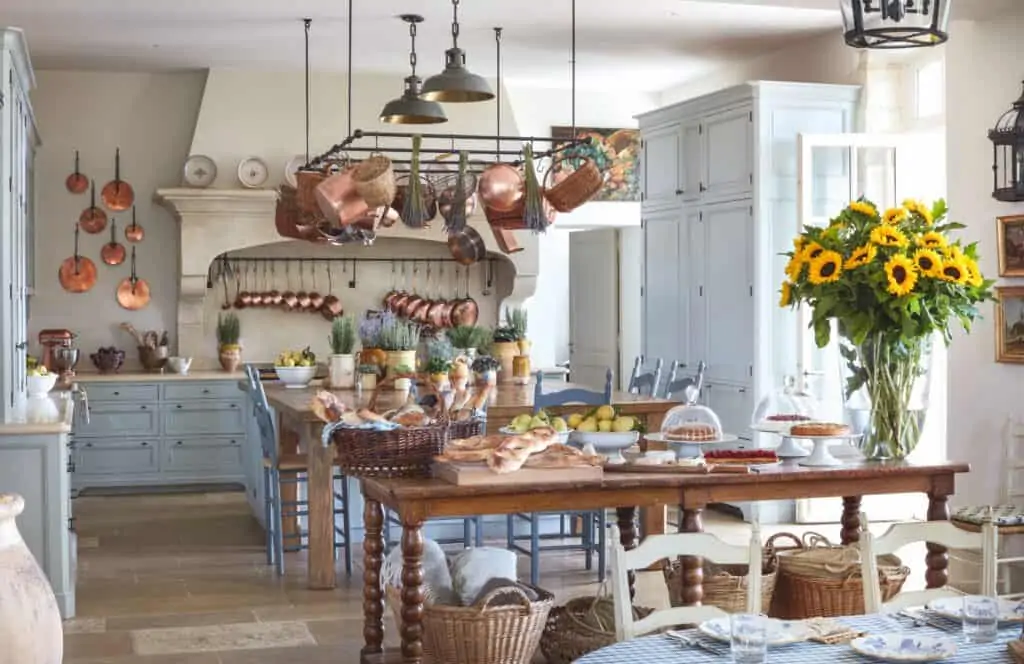
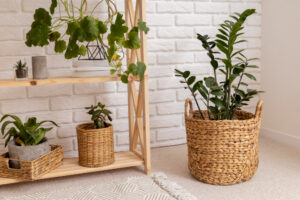
Plants are the best way to give your apartment a Provençal feel. Natural choices here are: lavender, rosemary, thyme – in clay pots. Sunflowers, for example, in an enameled or cast-iron pot, which will serve as a vase, will also look great.
In addition, for the living room you can choose olive in a pot, ivy or geraniums on the windowsill. The most important thing is harmony and lightness. Greenery should not look like a tropical jungle just light, like from a terrace bathed in the sun of southern France.
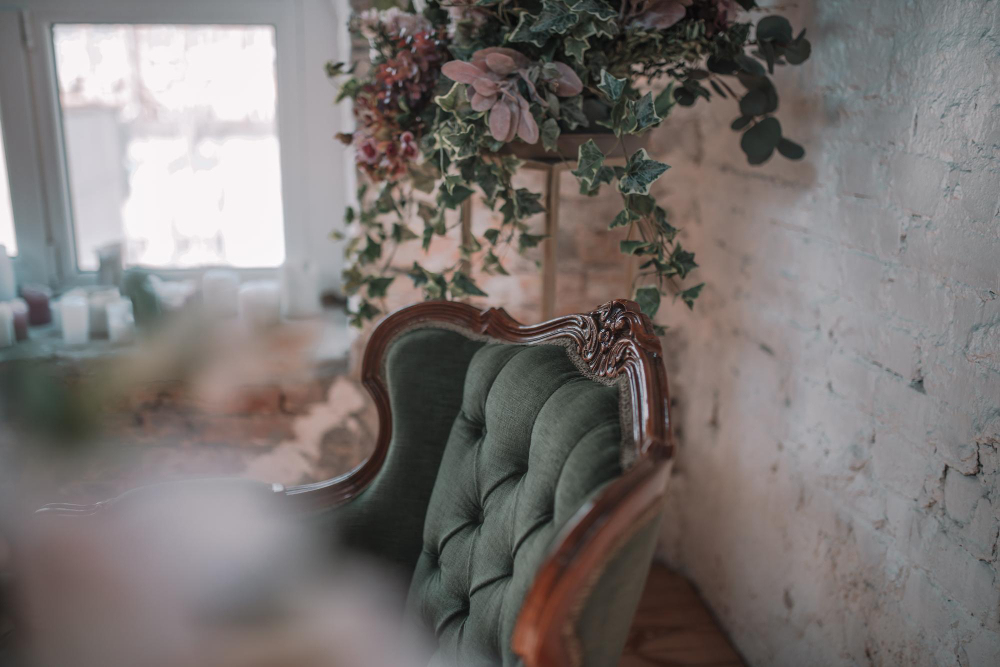
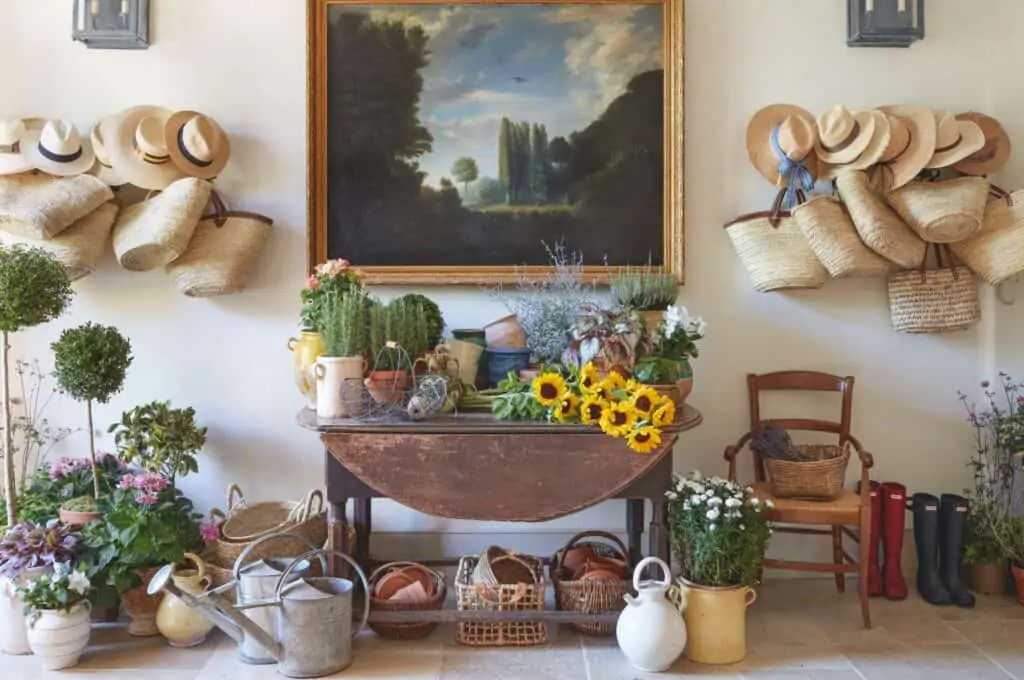
Examples of interior design in Provençal style
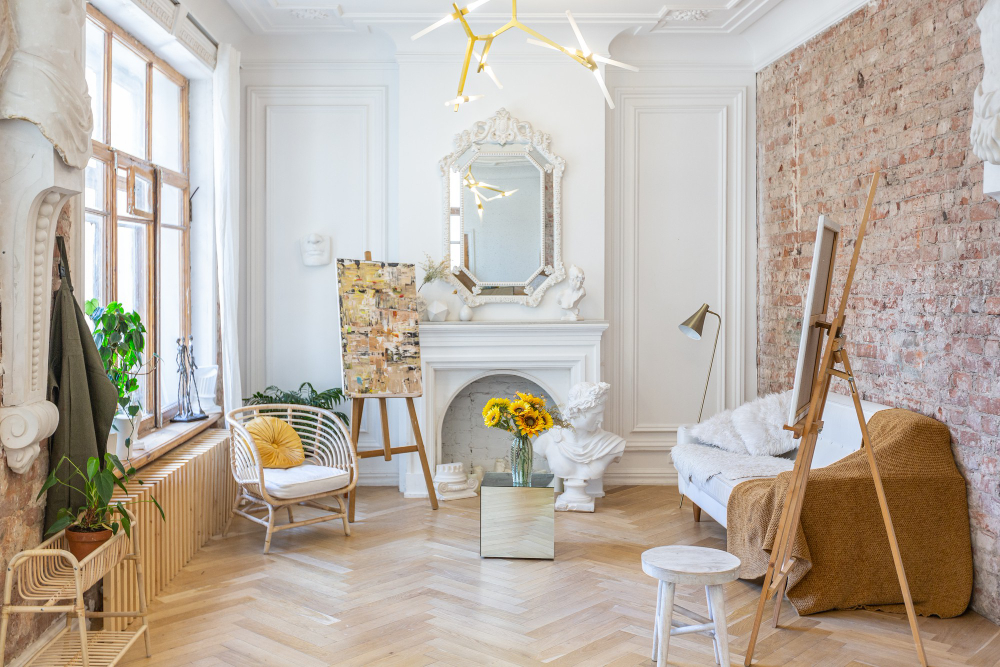
Salon
Walls in broken white, and on one wall laid whitewashed brick. Sofa in cream color, covers made of linen. Add pillows: in olive and lavender color. The whole will be completed by a table made of whitewashed wood, with rubbing.
On the dresser a stoneware bowl and a woven table lamp. In the corner an olive tree in a clay pot, on the windows light curtains to the floor.
Kitchen
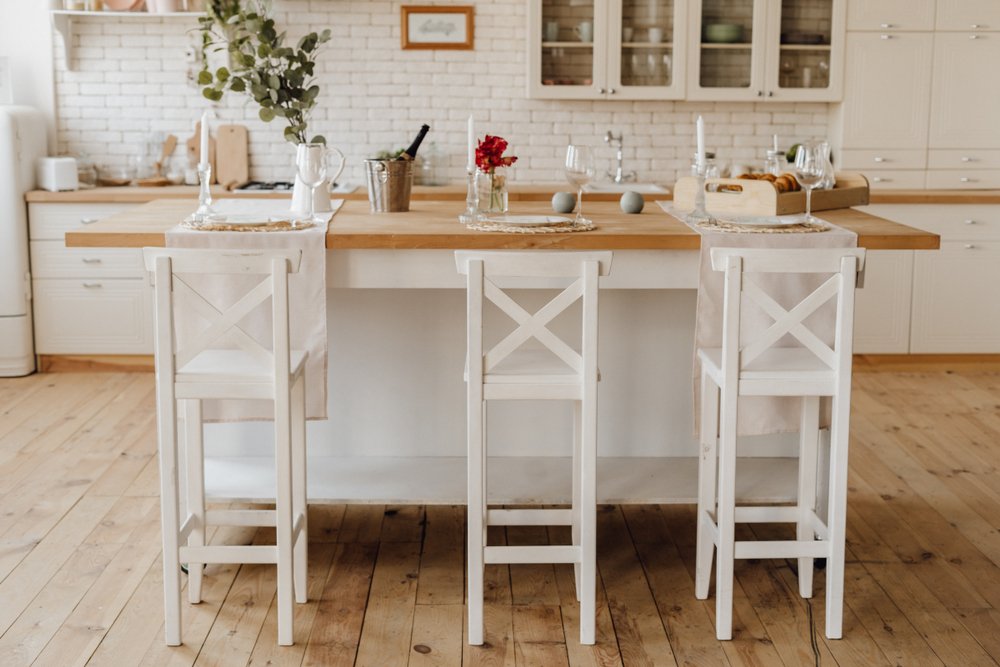
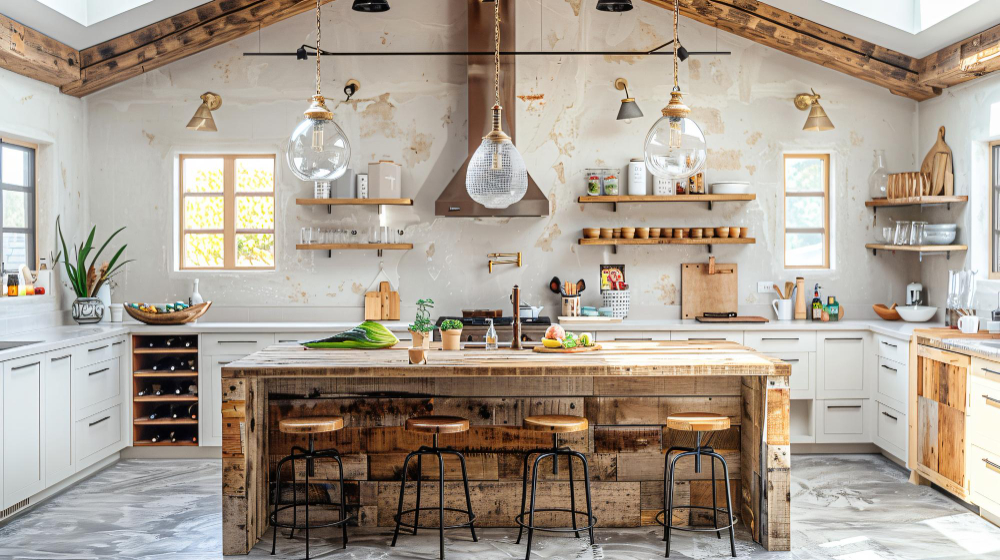
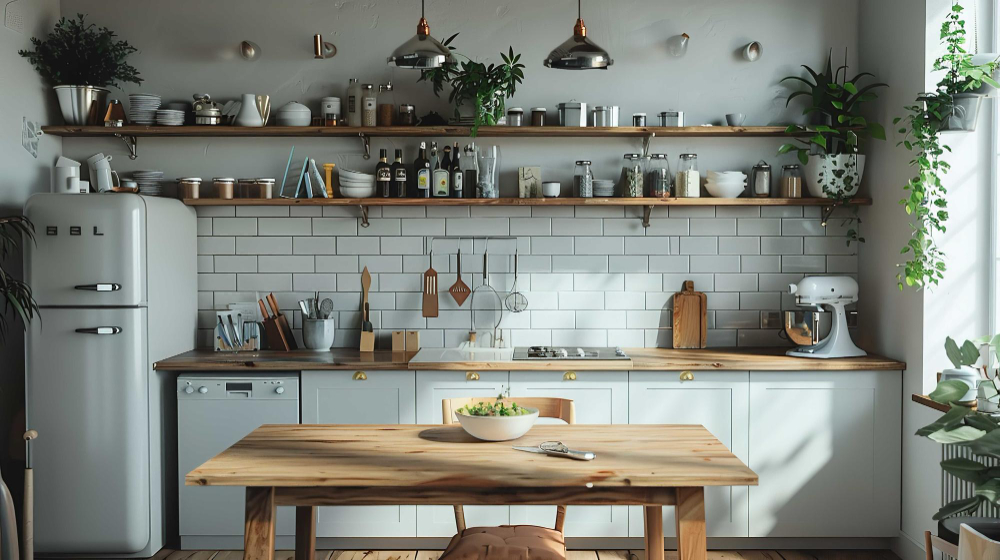
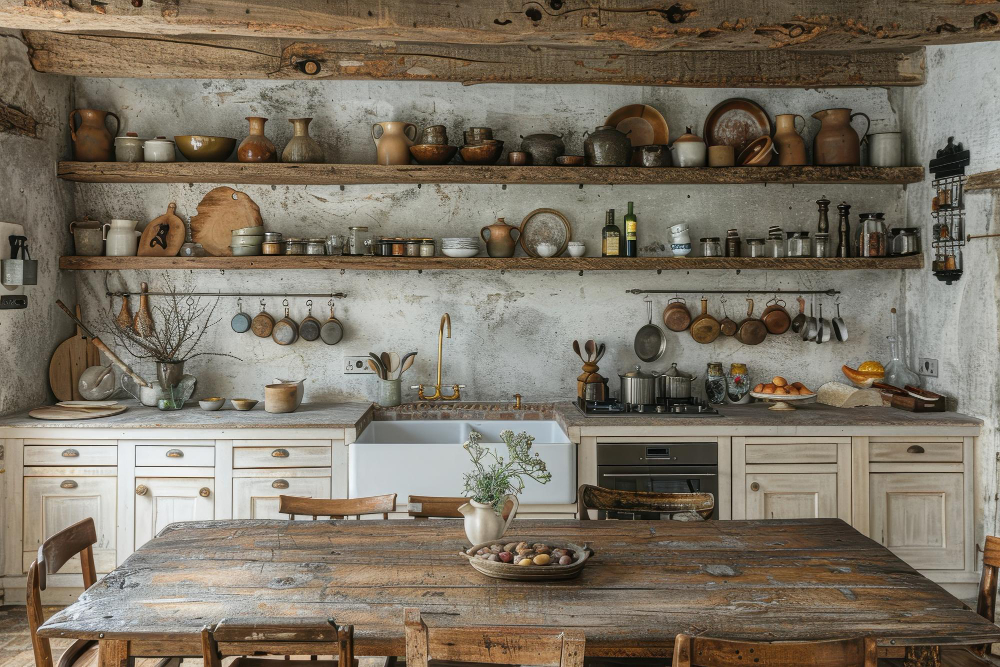
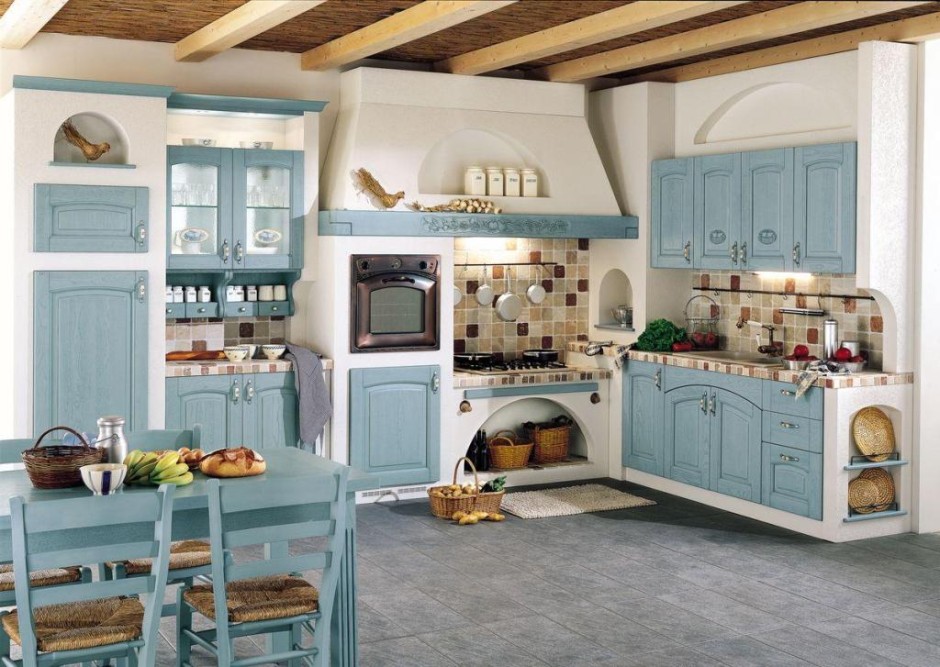
Choose matte fronts in cream, a wooden countertop and some open shelves for ceramics. Between the cabinets whitewashed brick tile with light grout, protected with impregnation. Above the table two smaller lamps with fabric shades. On the windowsill herbs in identical pots.
These can be pots in the form of metal watering cans or more elegant ones with decorative white covers.
If you want to faithfully reflect the atmosphere of a country house from Provence (farmhouse), we also recommend lining the floor with old brick.
Bedroom
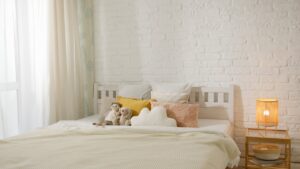
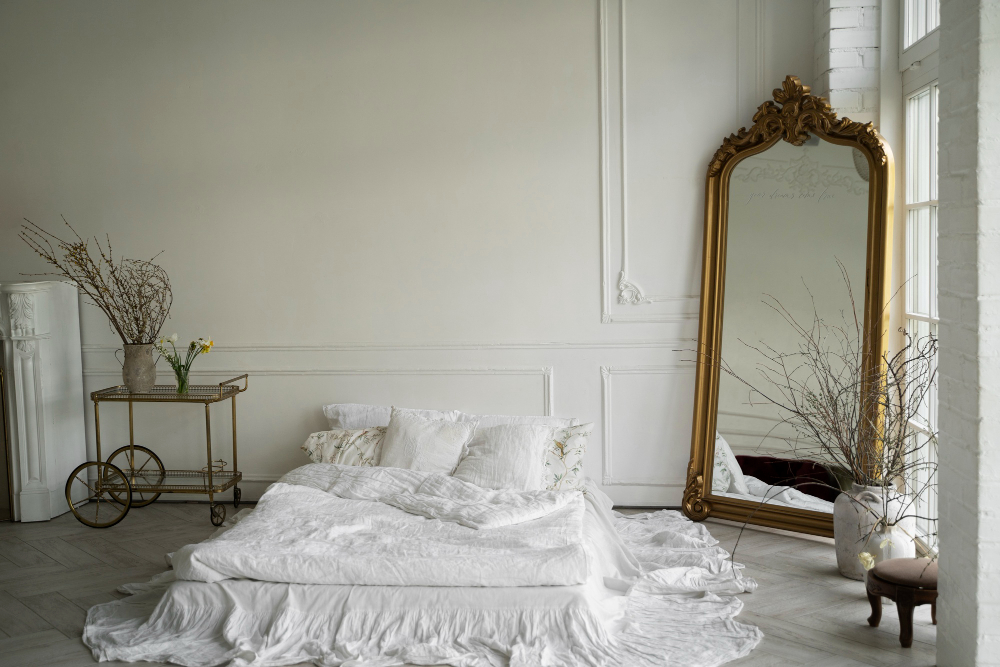
Cream walls, a wood or metal headboard in a light finish. Bedding made of cotton, can be in floral patterns, and the bedspread should have a distinct weave. Put lamps with fabric lampshades on the nightstands.
On the wall you can hang some botanical artwork in a delicate frame – preferably a single one, instead of a gallery of frames.
Don’t forget to add flowers here as well – they will bring an idyllic atmosphere and charm native to Provence.
What to avoid
-
Too strong contrasts: black steel loft accents dilute the Provençal mood.
-
Shiny surfaces and chrome – the style likes matte and patina.
-
Trinket overload: better two-three thoughtful scenes than a trifle on each shelf.
-
Cool white and “cold” LEDs – they put out the heat of the materials.