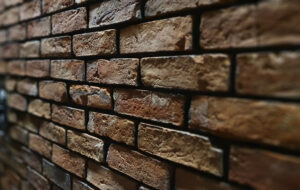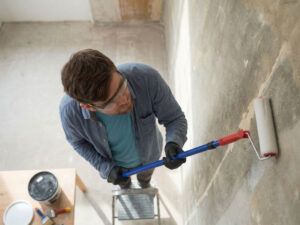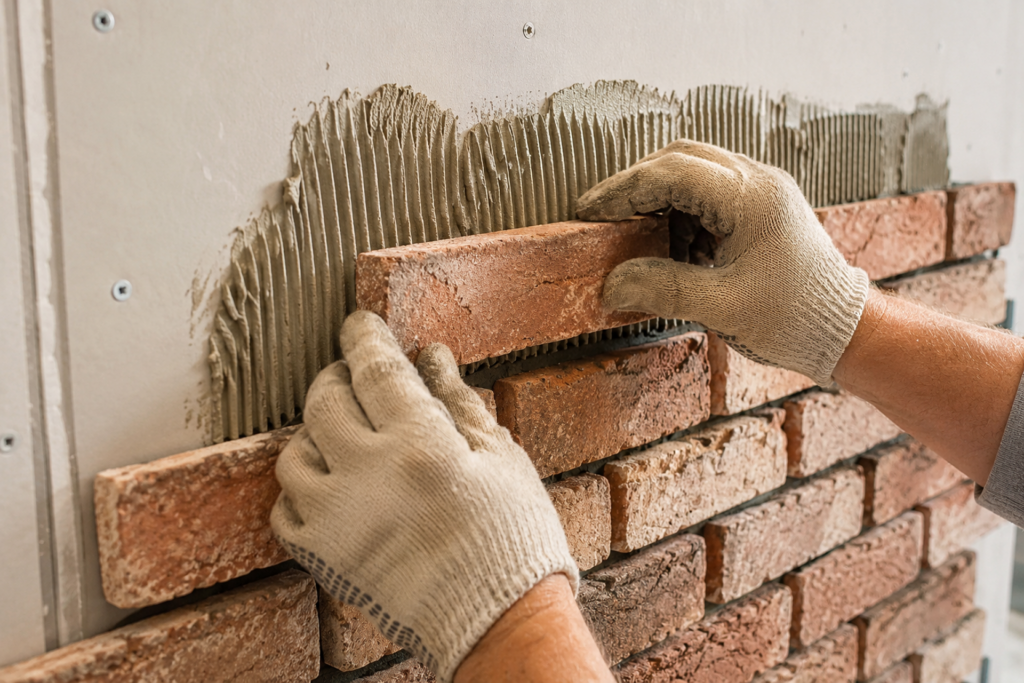
Yes, brick tiles can be glued to properly prepared drywall. However, before beginning installation, you must carefully assess the substrate. The drywall should be stable, properly secured, and adequately prepared.
This is very important because tiles made from reclaimed brick are a natural material. That is why they have different characteristics than lightweight wallpapers or thin decorative cladding.
What’s more, it’s not just the choice of brick tiles that matters. The selection of adhesive and surface preparation are equally important. This ensures that the finished wall will remain durable and look great for many years to come.
Can drywall support the weight of brick tiles?
Yes, provided that the entire structure has been built securely and in accordance with the requirements of the specific system. It is not only the panel itself that matters, but also the frame, the spacing between the profiles, the number of layers, and how the structure is secured to the substrate.
Tiles made from reclaimed brick, along with the adhesive and grout, can weigh approximately 40–50 kg/m². The exact weight depends on the thickness of the tiles, the amount of adhesive, and the width of the joints. Therefore, it is a good idea to assess the condition of the entire wall before beginning installation.
The substrate should not bend, vibrate, or crack. You should also check for loose screws, damaged areas, and visible signs of moisture. Any of these issues can compromise the durability of the finished cladding.
For larger areas or heavier tiles, the structure may require additional reinforcement. Sometimes, a denser spacing of the profiles or a second layer of panels is used; however, this solution should be determined by the specific installation system.
If the wall was built previously and there is uncertainty regarding its load-bearing capacity, it is best to consult the contractor. This is particularly important in the case of tall walls, large surfaces, and structures that are already showing signs of movement.
How do you prepare a drywall surface for brick-style tiles?
Preparing the surface is one of the most important steps in the installation process. That’s why you shouldn’t start gluing without first checking the surface.
First, carefully inspect the drywall. It should be dry, stable, and clean. In addition, the surface must be free of dust and loose pieces of material.
If the wall has been painted before, you need to check the adhesion of the paint. Weak or peeling layers should be removed. This will ensure that the adhesive makes contact with a stable surface.
Next, the surface must be thoroughly dusted. This is important because even a thin layer of dust can reduce adhesion.
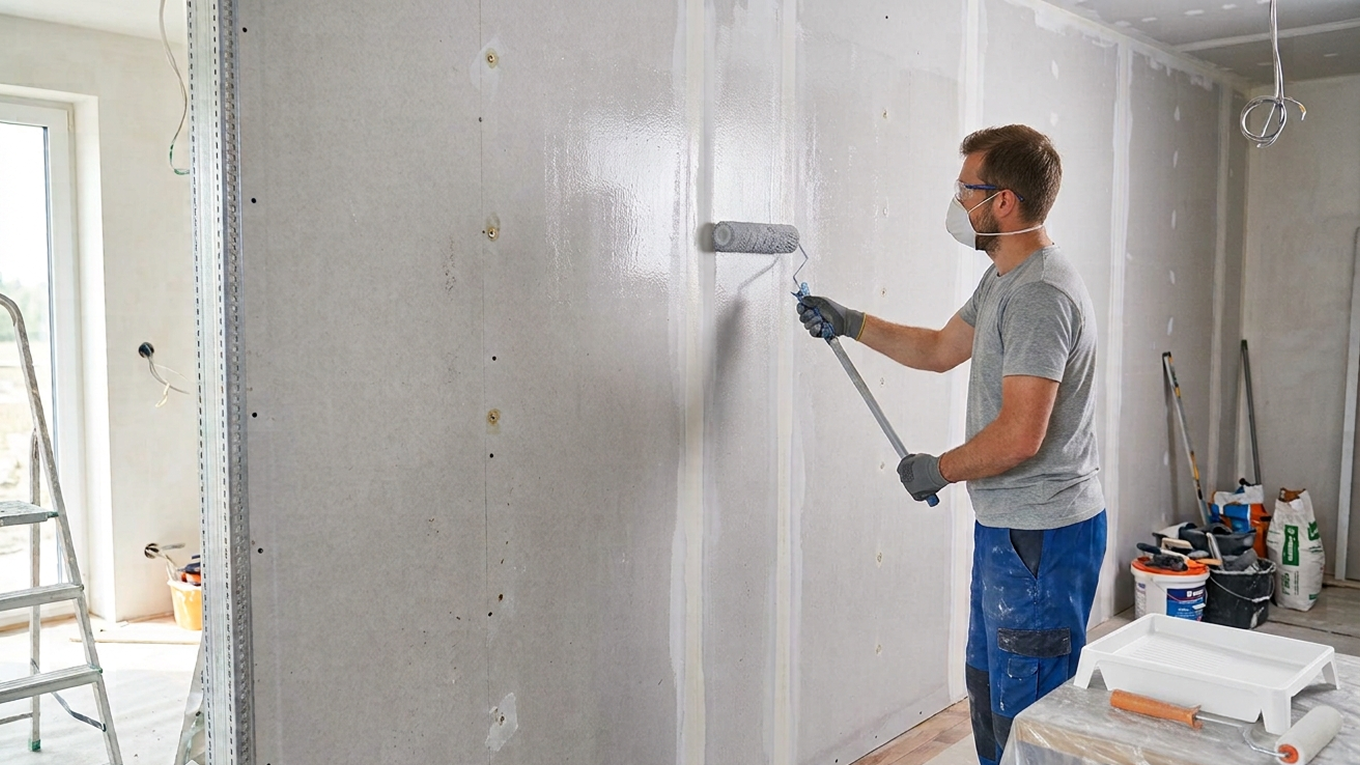
In addition, absorbent substrates must be properly primed. A primer helps even out the surface’s absorbency. At the same time, it strengthens the surface of the substrate.
Only after the primer has completely dried can you begin the next stage of work.
Is it necessary to prime the drywall before installing brick tiles?
When working with an absorbent substrate, priming is a very important step. Drywall can absorb moisture from the adhesive mortar. Therefore, proper surface preparation affects the adhesive’s curing conditions.
What’s more, the primer helps even out the absorbency of the substrate. This allows the adhesive to spread more evenly.
Priming also helps reduce dust from the surface. This is especially important after sanding the joints between panels or after previous renovation work.
Therefore, before installing tiles made from salvaged bricks, it is a good idea to thoroughly clean the surface. Next, apply an appropriate primer according to its intended use.
What kind of adhesive should I use to attach brick-style tiles to drywall?
When installing brick tiles indoors, we use FX 600 gel adhesive. This product is designed, among other things, for use on drywall.
Furthermore, FX 600 gel adhesive is a flexible gel-tape adhesive. It offers high adhesion and reduced sagging.
Thanks to gel technology, applying the adhesive is more convenient. In addition, the extended open time makes installation work easier.
FX 600 gel adhesive can be used when installing various brick tiles from our product line. It is therefore suitable for face tiles made from salvaged bricks, tiles made from the core of bricks, and Calibrated brick tiles.
However, the adhesive should always be prepared according to the manufacturer’s instructions. Do not adjust the water ratio or the consistency of the mortar on your own.
How do you attach brick-look tiles to a drywall panel?
Once the substrate has been prepared, you can begin installing the brick tiles. However, it’s a good idea to plan the layout of the entire wall first.
First of all, it’s a good idea to open a few boxes of tiles. Then, mix the tiles as you lay them.
This is especially important when using face tiles made from salvaged bricks. Natural bricks come in various shades and have natural variations in color. By mixing the tiles, you can achieve a more natural look.
Next, prepare the FX 600 gel adhesive. Mix the adhesive according to the manufacturer’s instructions.
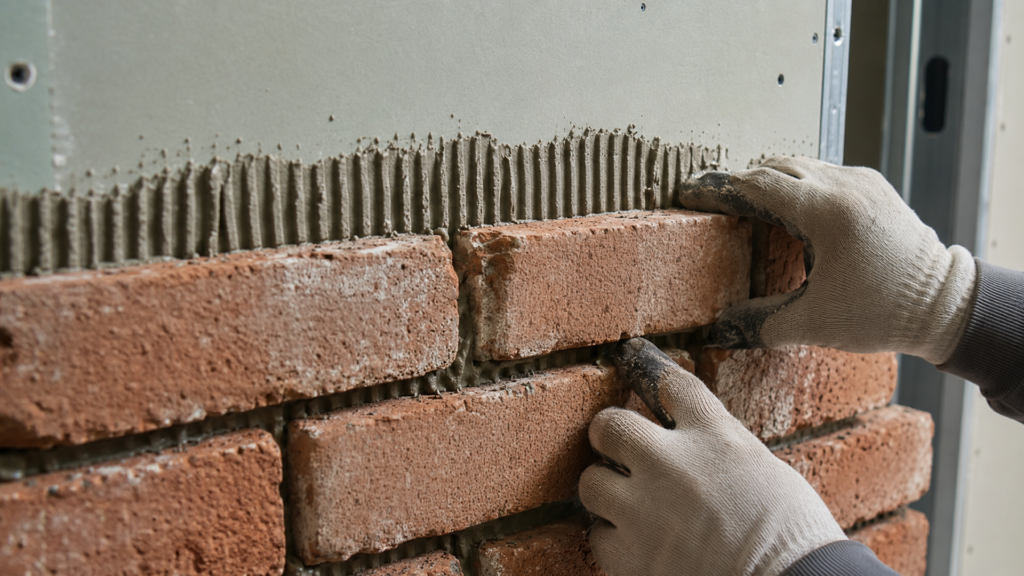
Apply the adhesive to the prepared surface. Then, press the brick tiles firmly into place and position them correctly.
During installation, it’s a good idea to check the level regularly. At the same time, be sure to maintain the planned spacing between the tiles.
However, there is no need to strive for perfect uniformity. Tiles made from salvaged bricks have natural variations in size. Therefore, slight irregularities highlight the character of the old wall.
Do brick tiles installed on drywall need to be grouted?
Yes, once the adhesive has set, you can begin grouting the brick tiles. The grout affects both the appearance of the wall and the overall look of the entire design.
Light-colored grout makes the individual tiles stand out more. Gray grout, on the other hand, creates a more subdued effect.
Dekoracyjnacegla.pl offers coarse-grained grout in a wide range of colors—from white, beige, and sand tones, through various shades of gray, to graphite, black, and brown.
However, grouting should not begin until the adhesive has set properly. Therefore, it is important to follow the curing time specified for the product you are using.
Do brick-look tiles installed on drywall need to be treated?
Waterproofing depends primarily on where the tiles will be installed. The requirements in a living room or bedroom may differ from those in a kitchen.
If the surface is prone to getting dirty, it’s worth considering protecting the brick. This can make future maintenance easier.
ProtectGuard wood preservative can be used to protect surfaces. It is best to choose the product based on the type of project and the desired result.
It is especially important to protect brick tiles in high-traffic areas. This includes, among other places, the kitchen and the entryway.
The Most Common Mistakes When Installing Brick-Look Tiles on Drywall
Installing tiles made from salvaged bricks on drywall requires proper preparation. Therefore, it’s not a good idea to rush through the individual steps.
The most common mistakes include:
- installation on an unstable drywall panel,
- failure to thoroughly remove dust from the surface,
- failure to prime an absorbent substrate,
- bonding to poor-quality paint coatings,
- the use of random adhesive,
- Do not mix tiles from different packages,
- Start grouting before the adhesive sets.
Any of these mistakes can affect the durability or appearance of the wall. That is why it is important to prepare the substrate thoroughly and use materials according to their intended purpose.
Summary
Can brick tiles be glued to drywall? Yes, but the substrate must be properly prepared and stable.
First of all, check the wall’s structure. Next, clean and properly prepare the surface.
For indoor installations, we use FX 600 gel adhesive. In addition, it is important to select the appropriate grout and sealant for the location where the bricks will be installed.
When installed properly, tiles made from reclaimed brick can create a unique wall even on drywall surfaces. What’s more, their appearance can be tailored to match the style of the entire interior.