Demolition of a residential and utility building in Wronki
The demolition of a residential and utility building in Wronki was a project that required good organization and careful execution. The building combined residential and utility functions, so the work involved various structural elements, demolition debris, and parts of the old infrastructure.
With this type of project, it’s not just about demolishing the building. Equally important are preparing the job site, securing the surrounding area, protecting greenery, sorting materials, and cleaning up the site after demolition is complete. This ensures that the site of the old structure can be handed over ready for further work.
The project in Wronki demonstrates what the demolition of a structure located in a challenging environment looks like. In such a location, it is crucial to maintain control over every stage, as the work must be carried out safely, efficiently, and with due consideration for the surrounding infrastructure.
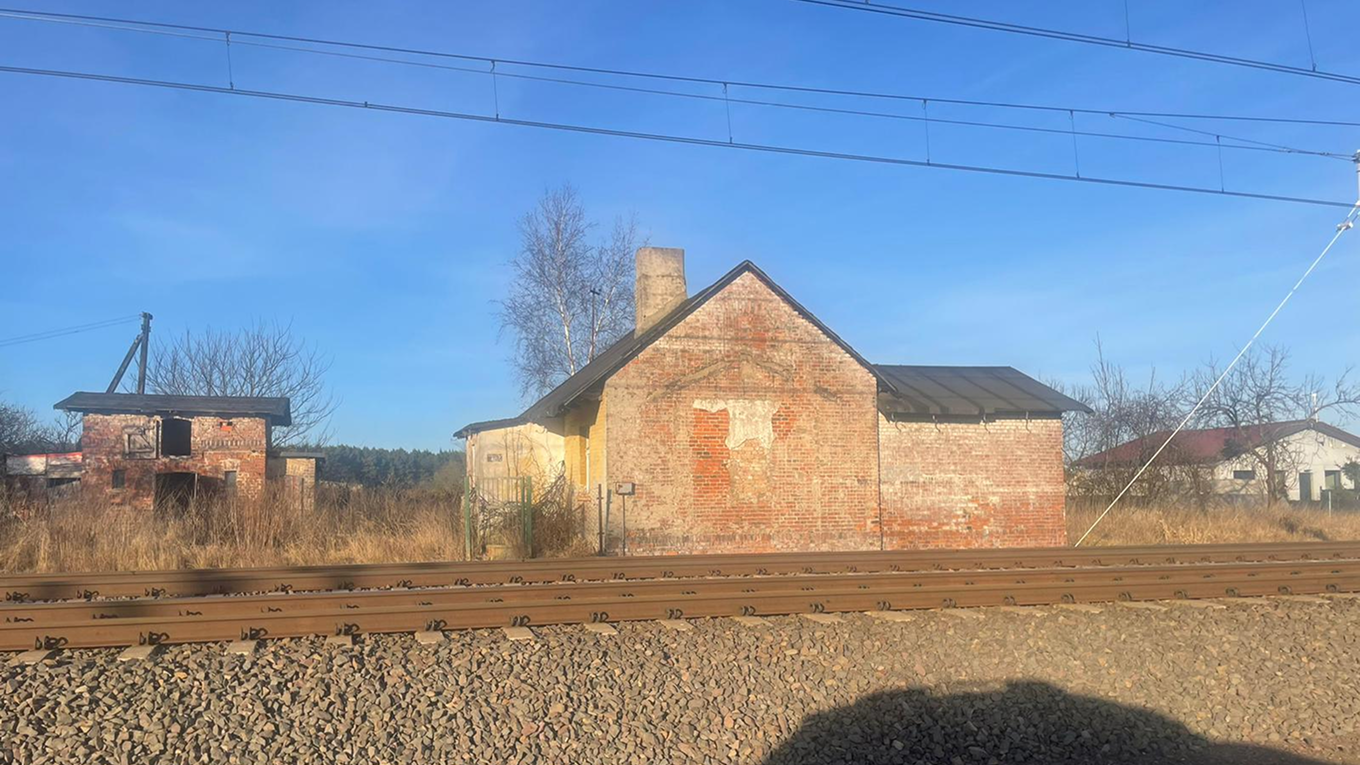
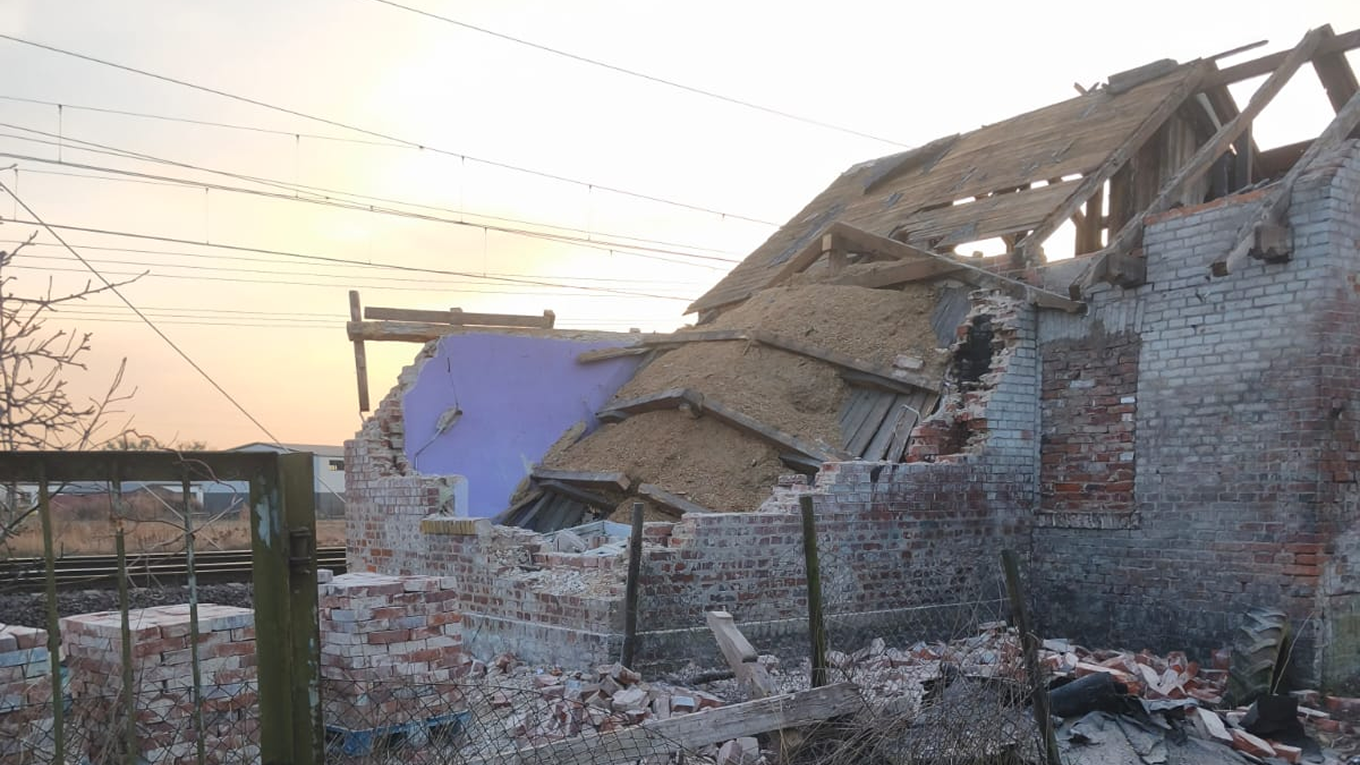
Old residential and farm buildings before the work began
Before work began, the site contained a residential building along with outbuildings. Such structures often have a varied construction. They include masonry, wooden, and metal elements, as well as roofing and foundation components, and remnants of old systems.
That is precisely why it is important to plan the sequence of work carefully before dismantling. First, check the site conditions and equipment access. Next, prepare the area to ensure the work can be carried out safely and designate a location for the temporary storage of materials.
Older buildings may have weakened sections of walls, worn-out roof components, or debris that requires separate disposal. Therefore, demolition work should be carried out in stages, rather than haphazardly.
Work on the facility near the railroad tracks
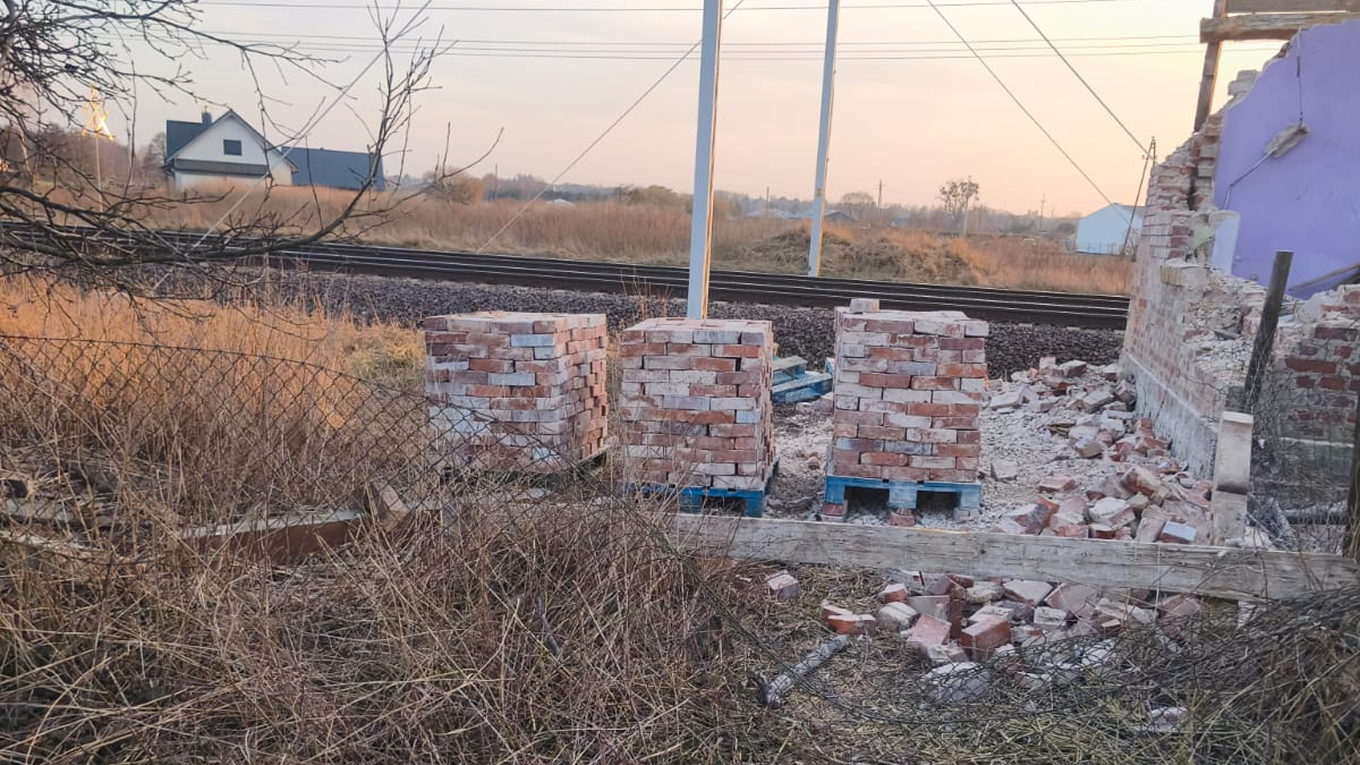
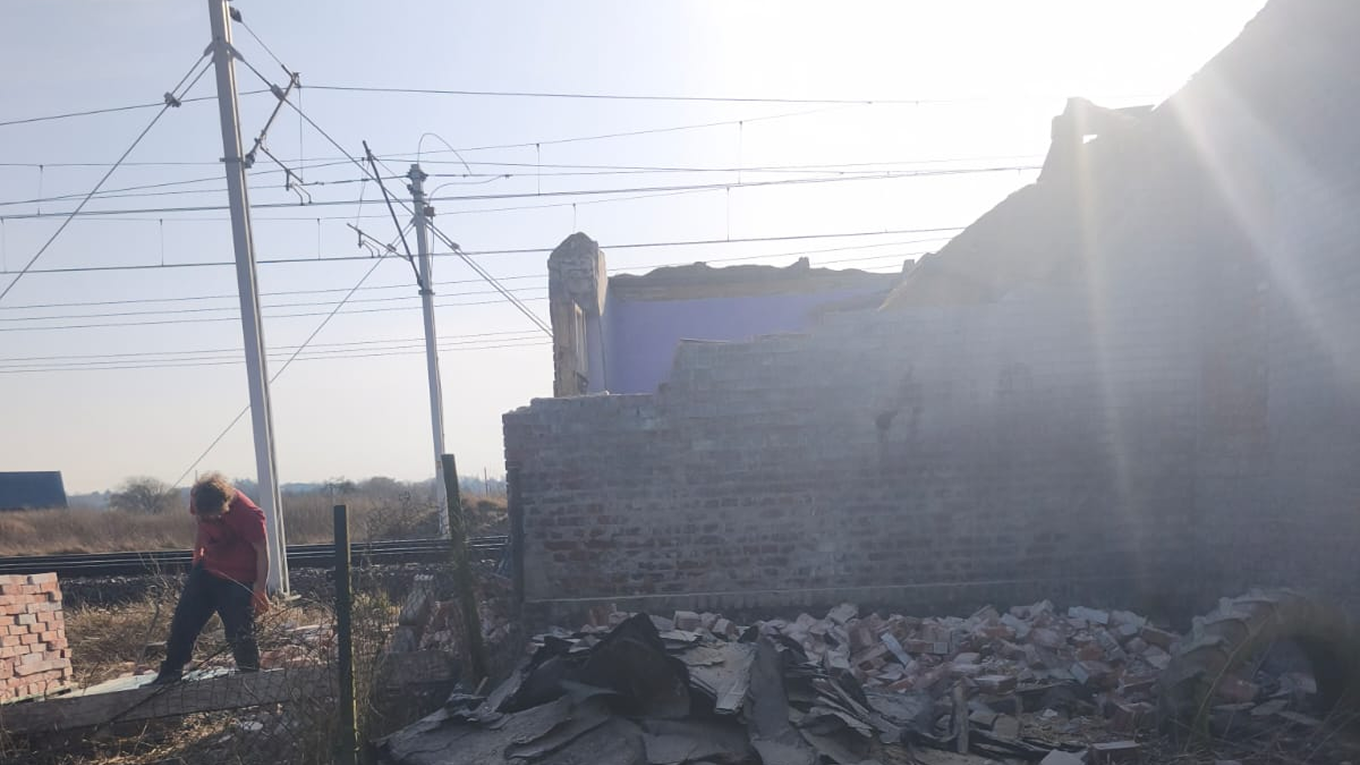
The site’s surroundings played a significant role in how the work was carried out. Working near railroad tracks requires greater organizational discipline than a standard demolition on an open lot. It is necessary to ensure proper site security, access control, and the safe movement of equipment.
In a place like this, order and predictability are particularly important. Machinery must operate within designated zones, and materials resulting from demolition must not hinder further work. Furthermore, demolition should minimize the impact of the work on the immediate surroundings.
With proper preparation, you can keep operations running smoothly and avoid chaos on the job site. This is important both for safety and for the final outcome of the project.
Organization of the Construction Site
Good organization of the construction site is key to ensuring that the entire project runs smoothly. At the outset, you need to designate the work area, prepare access routes, plan space for equipment, and determine how to load the demolition debris.
In the case of residential and commercial buildings, a wide variety of material types are generated. These may include construction debris, wood, steel components, pieces of roofing material, remnants of plumbing and electrical systems, and other waste resulting from demolition. Therefore, it’s a good idea to sort materials and keep things organized right from the start.
This approach makes further work easier. Importantly, it reduces the time needed for final cleanup of the site and allows the lot to be prepared more efficiently for its next use.
Demolition of the building and the outbuilding
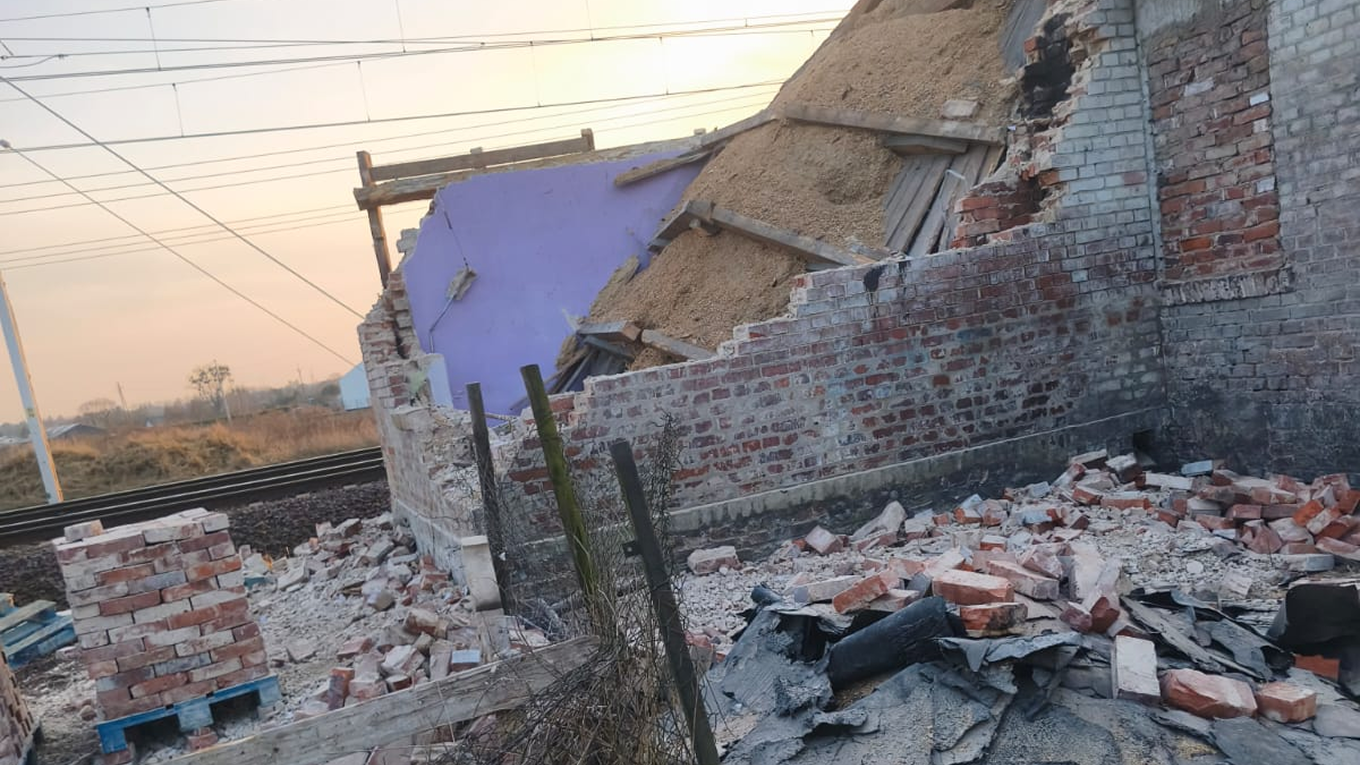
The proper demolition of the building proceeded in stages. First, it was necessary to remove the elements that hindered further work. Then it was possible to proceed with the demolition of subsequent parts of the structure, including structural elements, walls, the roof, and the remains of the outbuildings.
Special care must be taken with older structures. The structure may be weakened in places, and certain parts of the building may require a slower, more controlled demolition. That is why experience and the proper selection of equipment are essential.
The utility area requires a separate approach, as it often contains different materials than the living area. By carrying out the work in stages, it is easier to separate different types of waste and minimize unnecessary mixing of materials.
Sorting of materials from dismantling
Demolition work generates a variety of materials, which is why sorting them is so important. Rubble, metal, wood, and other debris must be separated right at the job site. This makes removal more efficient and keeps the site tidier.
Proper waste management was also important in this project. Materials resulting from dismantling should be sent for further processing according to their type. This helps reduce clutter on the site and improves workplace safety.
Sorting materials also helps prepare the site more quickly for further use after demolition. The more organized the site is during construction, the more efficiently the entire project can be completed.
Protection of Green Spaces and the Environment
During the work in Wronki, attention had to be paid to the building’s surroundings. Demolition isn’t just about the building itself. Greenery, access, the adjacent area, and nearby infrastructure are also important.
Protecting green spaces helps minimize damage on the construction site. In addition, clearly designated work zones help protect neighboring properties and facilitate the operation of heavy equipment. As a result, demolition can proceed in a more controlled manner.
This approach is particularly important for sites that are to remain tidy and ready for further work once the project is completed.
Clearing the Site of Old Structures
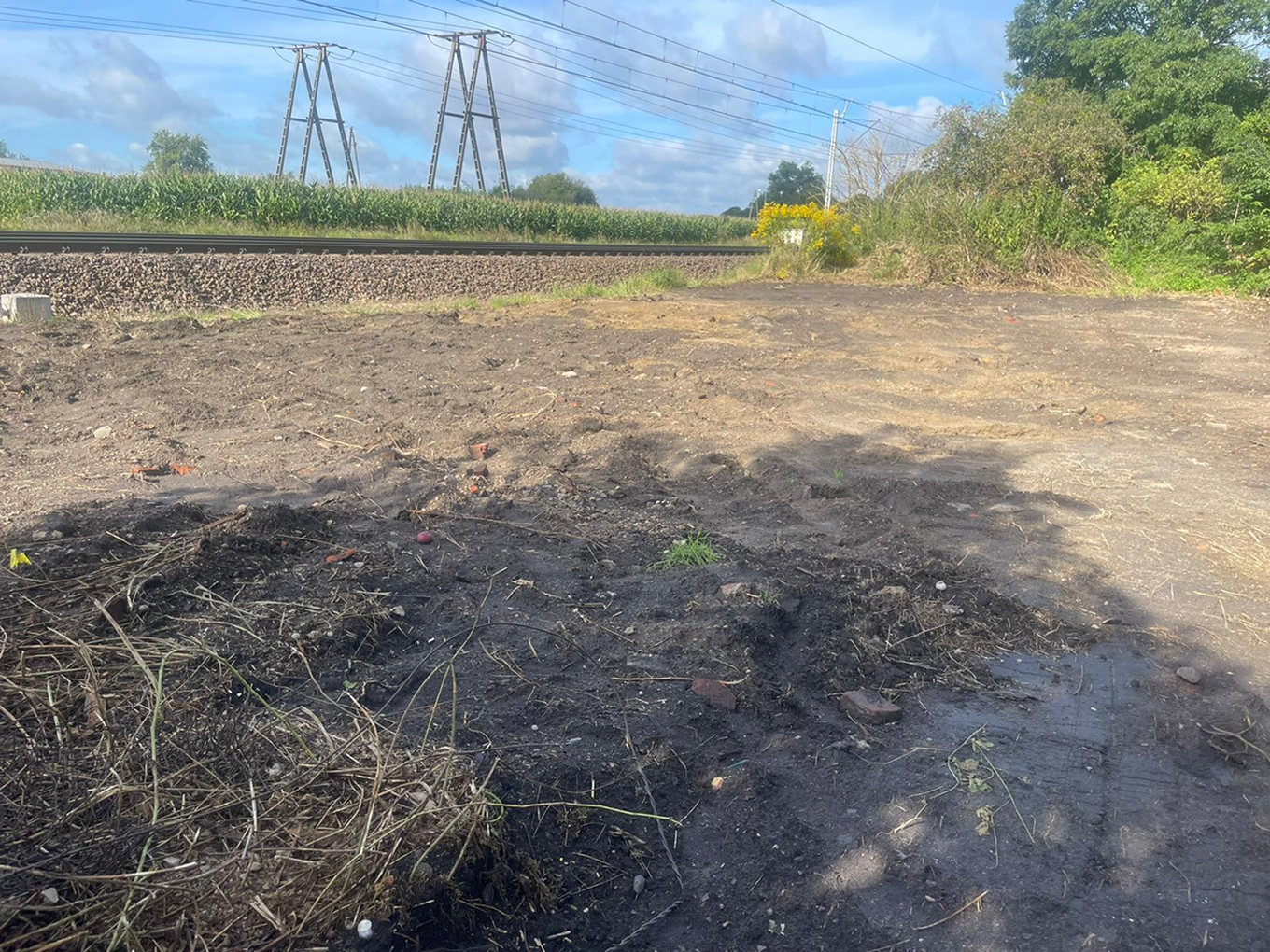
Once demolition is complete, the most important step is to clean up the site. It is necessary to remove the remains of the building, haul away the demolition debris, level the surface, and restore the site to a safe condition.
In the Wronki project, the final result was of great importance. The site of the old buildings should be clear, orderly, and prepared for future use. Only then can the work be considered fully completed.
A cleared site after demolition facilitates further investment decisions. It can be used for new development, earthwork, landscaping, technical infrastructure, or other activities in accordance with the landowner’s plan.