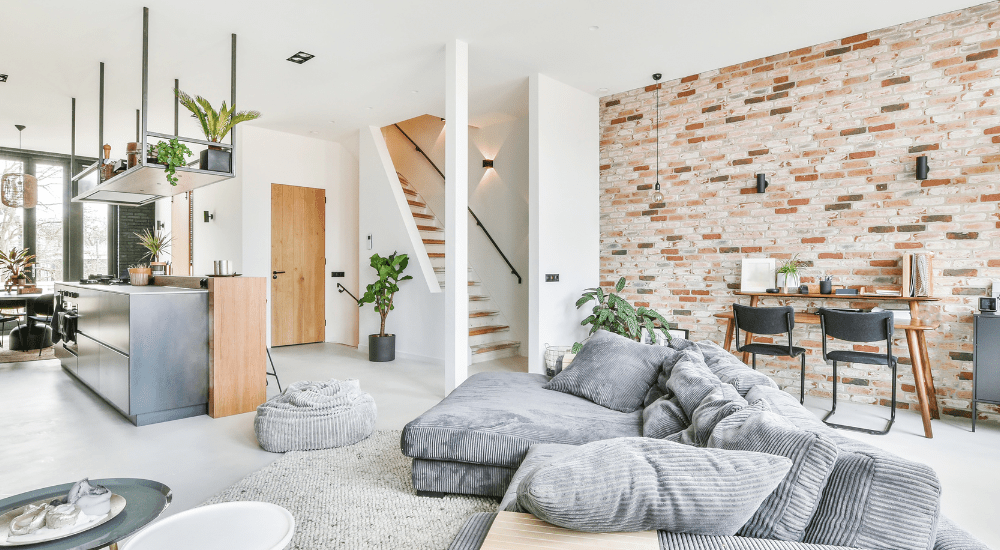
Decorative brick and microcement play on the same team, but each has a different role. Brick gives a warm, “earthy” texture and a sense of history, while microcement organizes the space with a smooth, uniform surface. Together, they create a backdrop that is both expressive and calm – perfect when you want character without visual noise.
It must be admitted that brick and microcement is simply the essence of loft style.
Where to lay brick, and where to lay microcement
The best effect is created when the materials do not fight for priority. Brick works well on walls that are supposed to “tell the story”: in the alcove of the living room, behind the dining room table, as a belt at the headboard. Microcement is worth running where fluidity and easy cleaning are important: on the floor in the living area, in passageways, on the kitchen counter or fireplace surround.
If you’re juxtaposing them in a single frame, it’s a good idea to have one material as the background – for example, a smooth microcement floor and one brick wall instead of two competing planes.

Color and grout, or how to “set” the temperature of the interior
The shade of microcement determines the mood. Warm grays and sandy beiges will conquer the honeyed tones of the brick, cooler ashes will carry the composition towards the loft. The grout in the brick acts as a frame: linen or cream melds the face into a calm plane, graphite creates a clear rhythm and stronger contrast. In small rooms, it’s better to stick to light grout and bleached brick selections; in large rooms, you can indulge in fuller reds and slightly darker microcement.
Light that connects materials
Microcement “wears” diffused light beautifully, brick likes a soft slant. Instead of one sharp point overhead, plan several sources: a ceiling lamp with a milky shade, a wall lamp that moves the glow across the brick, and a table lamp that warms the microcement countertop. This makes the texture of the masonry clear, and keeps the smooth surfaces from appearing cool.
Practice: use and care
This duo is grateful in everyday life, if you take care of the details. Microcement requires proper protection (varnish or wax according to the manufacturer’s system), while brick requires a matte, vapor-permeable waterproofing that makes it easy to clean and does not introduce shine.
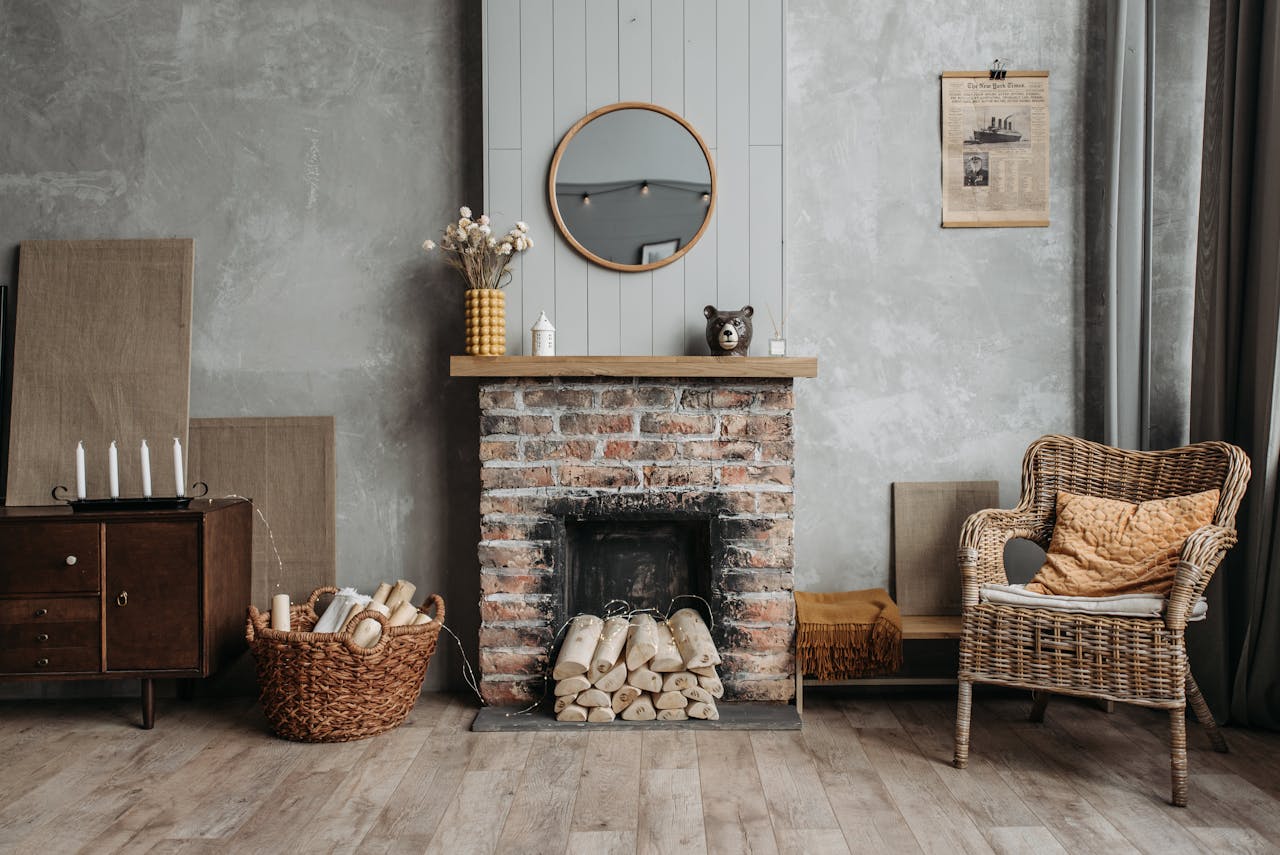
In the kitchen, a combo works especially well: a strip of brick between the countertop and the shelf and a micro-cement floor; the dirt zone cleans up quickly, and the wall is left “alive.” In the living room, the brick in one frame and the micro-cement fireplace surround create a natural dialogue, as long as the colors are not from two different tales.

Proportions and neighborhoods
When two strong materials come in, the rest is worth calming down. Simple furniture in natural wood, textiles with a large weave and a subdued wall palette will allow the brick and microcement to ring out. Leave the patterns to the accessories – a few books, soft-edged ceramics, one larger plant. So much is enough to make the whole look self-conscious and not “out of a catalog.”
Looking for a brick that “holds” color well with light-colored floors, consider our brick tiles made from original old demolition brick (available at dekoracyjnacegla.pl). The natural variety of shades makes the wall next to the smooth microcement not flat and boring, but subtly alive.