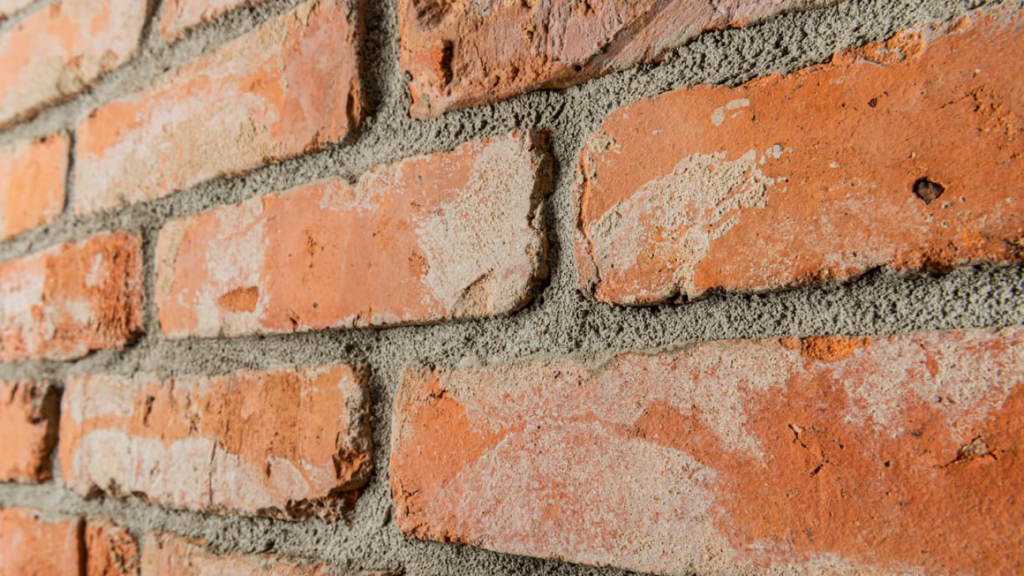
Facing tiles made from salvaged bricks are one of the most highly valued materials used to create walls with a unique character. They are made from the outer layer of historic bricks—the surface that was visible for many years on the facades and walls of old buildings.
As a result, the tiles retain the original texture of old brick. What’s more, their surfaces feature natural discoloration, irregularities, and signs of years of use. It is precisely these characteristics that make each tile unique.
Unlike modern imitations, face tiles made from salvaged bricks have an authentic history. That is why the finished wall does not look artificial or repetitive. Instead, its appearance resembles a real, historic wall.
Why are face tiles made from salvaged bricks so unique?
The greatest advantage of this material is its natural character. Each brick was part of a real building for many years. That is why its surface has been shaped by time, weather conditions, and how it was used.
In addition, facing tiles made from salvaged bricks retain unique characteristics, such as:
- natural variations in color,
- the original texture of the brick,
- slight unevenness,
- traces of history visible on the surface,
- unique shades of red, orange, and yellow.
As a result, every project looks different. What’s more, this diversity is the greatest advantage of natural brick, not a drawback of the material.
Face tiles or tiles from the inside of a brick—what are the differences?
This is one of the most frequently asked questions by people choosing tiles made from salvaged bricks. Although both options are made from the same historic bricks, in practice their appearance and character are completely different. That’s why it’s worth learning about their key features in detail before making a decision.
What are facing tiles made from salvaged bricks?
Facing tiles made from salvaged bricks are crafted from the outer surface of historic bricks. It is this surface that has been visible for many years on the facades and walls of buildings, townhouses, and former industrial structures.
As a result, the tiles retain the most distinctive characteristics of old brick. They display natural discoloration, signs of wear, subtle irregularities, and the original texture that has developed over many years of exposure to the elements.
What’s more, each tile has its own unique character. That’s why a wall finished with face tiles made from salvaged bricks looks like an authentic, historic wall.
What are brick-core tiles?
Brick-core tiles are made from the inner part of historic bricks that were previously embedded in a wall. For this reason, their surface is rougher and less varied than that of face tiles.
In addition, tiles made from the center of a brick often have a more uniform color and a clearly visible texture resulting from the brick-firing process.
However, this does not mean that they are any less attractive. On the contrary—their raw, unpolished look fits very well with loft, industrial, and modern interior designs. As a result, they are often found in apartments, restaurants, offices, and commercial spaces.
Which to choose—face tiles or tiles cut from the center of a brick?
In practice, there is no single answer to the question of which tiles made from salvaged bricks are better. Both face tiles made from salvaged bricks and tiles made from the center of the brick have their own unique character.
If you want a wall that looks like an old brick wall, with visible signs of age and natural discoloration, face tiles made from salvaged bricks are your best choice.
On the other hand, if you prefer a more raw, modern, and industrial look, you should choose brick-effect tiles.
Therefore, the final decision should depend primarily on the interior style, the planned layout, and the effect you want to achieve.
Where can face tiles made from salvaged bricks be used?
Facing tiles made from reclaimed brick have a wide range of applications. Thanks to their natural aesthetic, they complement both modern and classic interiors.
What’s more, they work well in homes, apartments, restaurants, hotels, and commercial spaces.
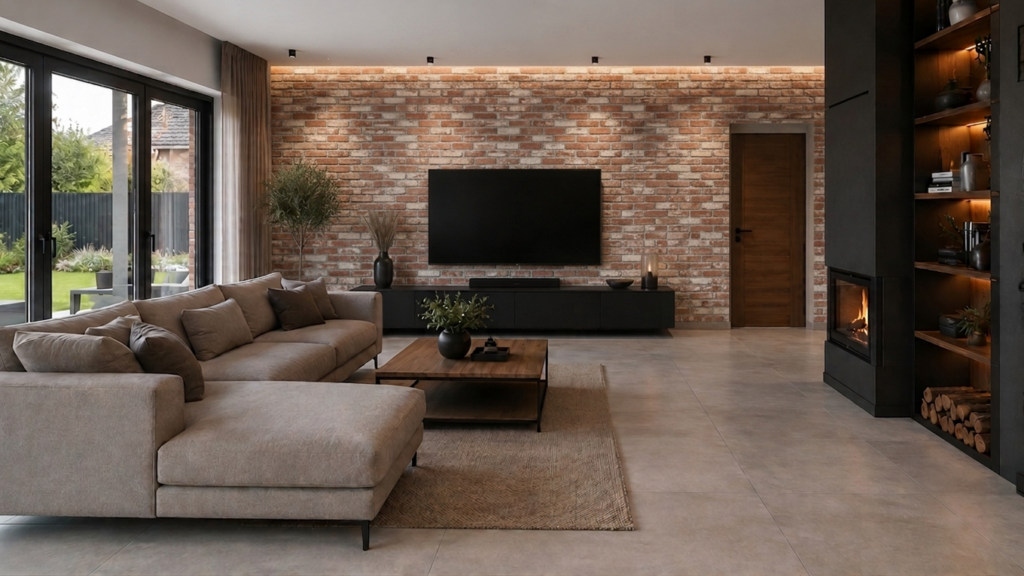
Brick tiles in the living room
The living room is one of the most popular places to use decorative brick on the walls. Very often, brick tiles are used to create a feature wall behind the TV, by the fireplace, or in the seating area.
In such designs, the Loft Red brick tiles, Classic Yellow reclaimed brick tiles, and Old Wall reclaimed brick tiles, among others, look great.
Thanks to its wide range of colors, the fabric can be matched to both light and darker interiors.
Brick tiles in the kitchen
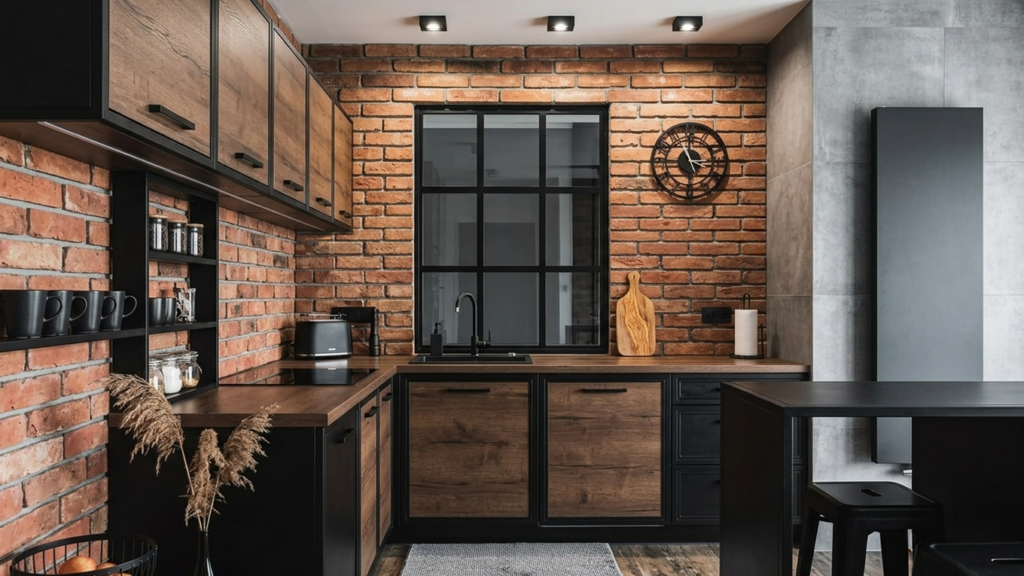
The kitchen is another room where tiles with a reclaimed brick finish look particularly striking. They pair especially well with wood, metal, and natural accents.
However, because dirt can accumulate, it’s a good idea to properly protect the surface. That’s why using ProtectGuard sealant is a good solution—it helps reduce dirt absorption and makes it easier to maintain the brick on a daily basis.
Brick tiles in the entryway and stairwell
The entryway is the calling card of every home. It’s where guests first get a glimpse of the home’s interior style. That’s why reclaimed brick-look tiles are a perfect choice for this space.
The natural texture of the brick, the varied color palette, and the authentic signs of age give the wall a unique character. What’s more, the subtle differences between the tiles make the surface look very natural.
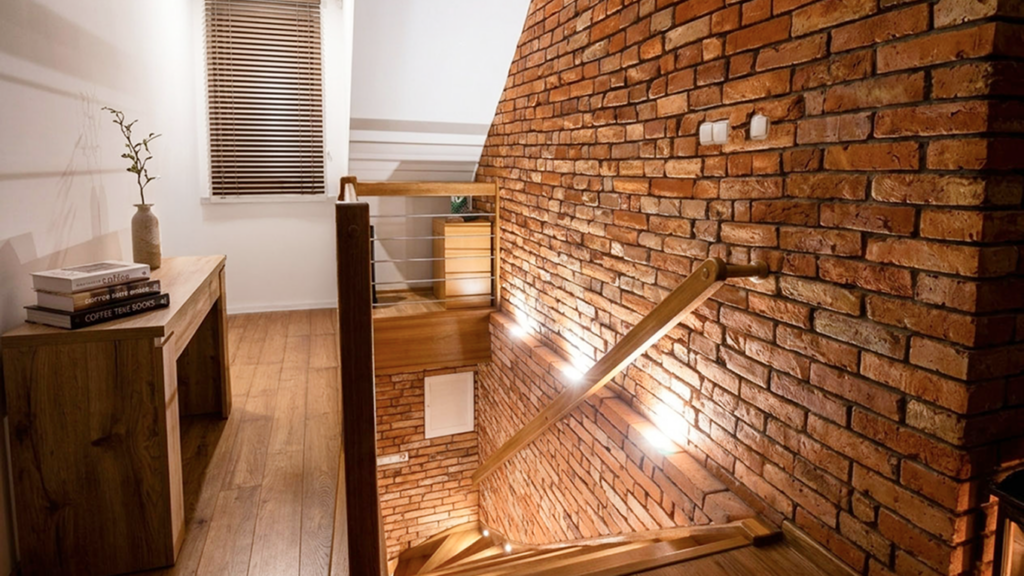
Brick tiles can also be used in the stairwell. Since this is a high-traffic area, it’s worth choosing a durable material with a timeless look. Furthermore, brick pairs perfectly with wooden stairs, metal railings, and modern lighting.
Are face tiles made from salvaged bricks suitable for a facade?
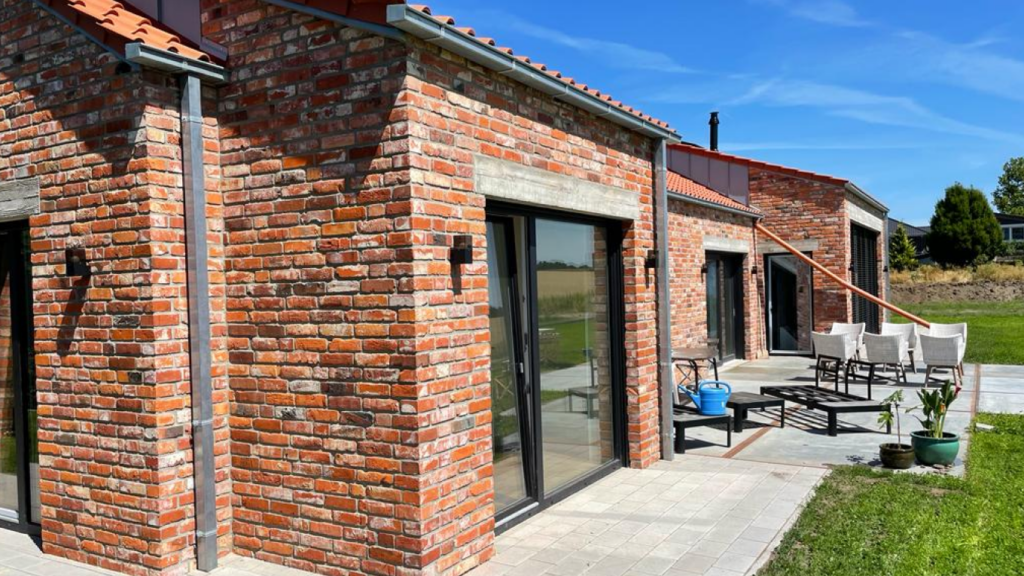
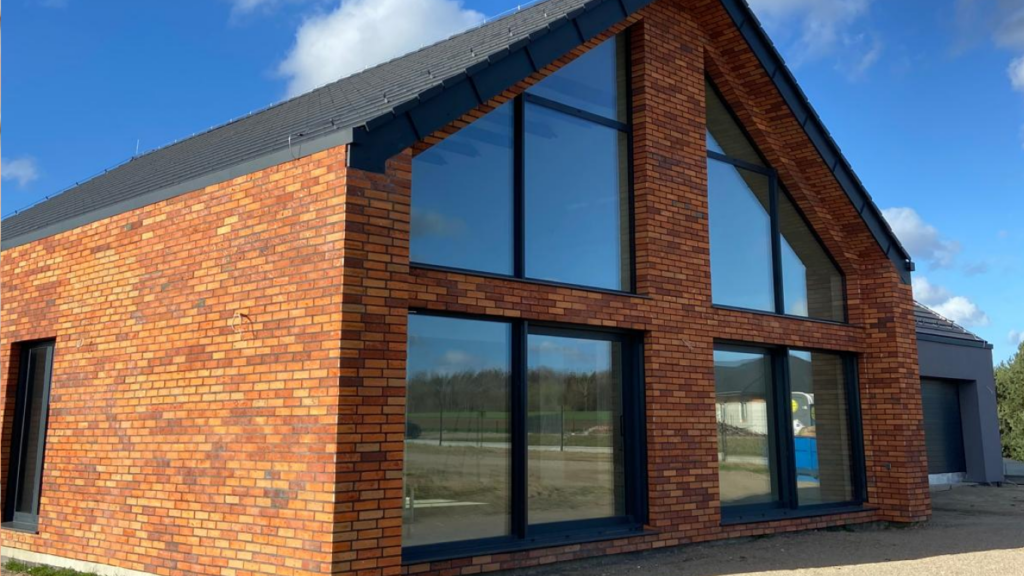
Yes, brick veneer tiles made from salvaged bricks can also be used on the exterior of a building. This gives the facade the look of an authentic, historic wall. What’s more, the natural variations in color and texture highlight the character of the old brick.
However, installing brick tiles on a facade requires proper preparation of the substrate. The surface should be stable, load-bearing, clean, and properly prepared for installing the cladding. Furthermore, tiles should not be adhered to loose, dusty, or flaking layers.
A properly selected installation system is also very important. Exterior brick tiles are exposed to rain, frost, and fluctuating temperatures. Therefore, the individual stages of the work should form a cohesive system adapted to outdoor conditions.
For installation on facades, we recommend FX 900 gel adhesive. It is a highly flexible gel-based adhesive reinforced with dispersed fibers. As a result, it ensures high adhesion and a durable bond between brick tiles and a properly prepared substrate.
At the same time, it is important to ensure that the joints are properly executed and that the surface is protected in accordance with the specific project requirements. With proper substrate preparation and the use of the right chemicals, face tiles made from salvaged bricks can retain their unique appearance for many years.
What styles do reclaimed brick face tiles go well with?
One of the greatest advantages of natural brick is its versatility. Thanks to this, face tiles made from salvaged brick can be adapted to a wide variety of interior designs.
Among other things, they look great in the following interiors:
- loft and industrial,
- rustic,
- classic,
- modern,
- Scandinavian.
In addition, brick tiles pair beautifully with wood, concrete, glass, steel, and natural fabrics. This makes it possible to create both a raw, loft-style interior and a warm, cozy space.
Frequently Asked Questions About Facing Tiles Made from Demolition Bricks
What are facing tiles made from salvaged bricks?
Facing tiles made from salvaged bricks are crafted from the outer layer of historic bricks. As a result, they retain their original surface, natural discoloration, and signs of aging. Furthermore, each brick tile may vary in texture and shade.
How do facing tiles differ from tiles made from the inside of a brick?
Facing tiles retain the outer surface of the old brick, which is why they have a more varied texture. In contrast, tiles cut from the center of the brick are more raw and often have a more subdued color palette. The final choice, therefore, depends on the effect you want to achieve on the wall.
Can face tiles made from salvaged bricks be used on a facade?
Yes, face tiles made from reclaimed brick can be used on properly prepared exterior surfaces. However, proper installation and the selection of adhesives suited to weather conditions are very important. That is why we recommend FX 900 gel adhesive for exterior use.
What kind of adhesive should I use for face tiles made from salvaged bricks?
For indoor use, we recommend FX 600 gel adhesive. For facades and other exterior surfaces, however, we use FX 900 gel adhesive. By selecting the right adhesive, you can tailor the installation system to the specific application of the brick tiles.
Summary
When it comes to facing tiles, the details are what matter most. Uneven surfaces, variations in shade, and the marks left by time are not accidental decorative effects. This is the original surface of a brick that was once part of a real building.
That’s why you should choose facing tiles made from salvaged bricks if you want a natural-looking wall without a repetitive pattern. Each section of the cladding may look slightly different, and it’s precisely these differences that create the look of an old wall.
Before making your choice, it’s worth asking yourself one question: Are you looking for a perfectly uniform surface, or for bricks that truly show their history? If the second option appeals to you more, the original face of old brick will be the natural choice.