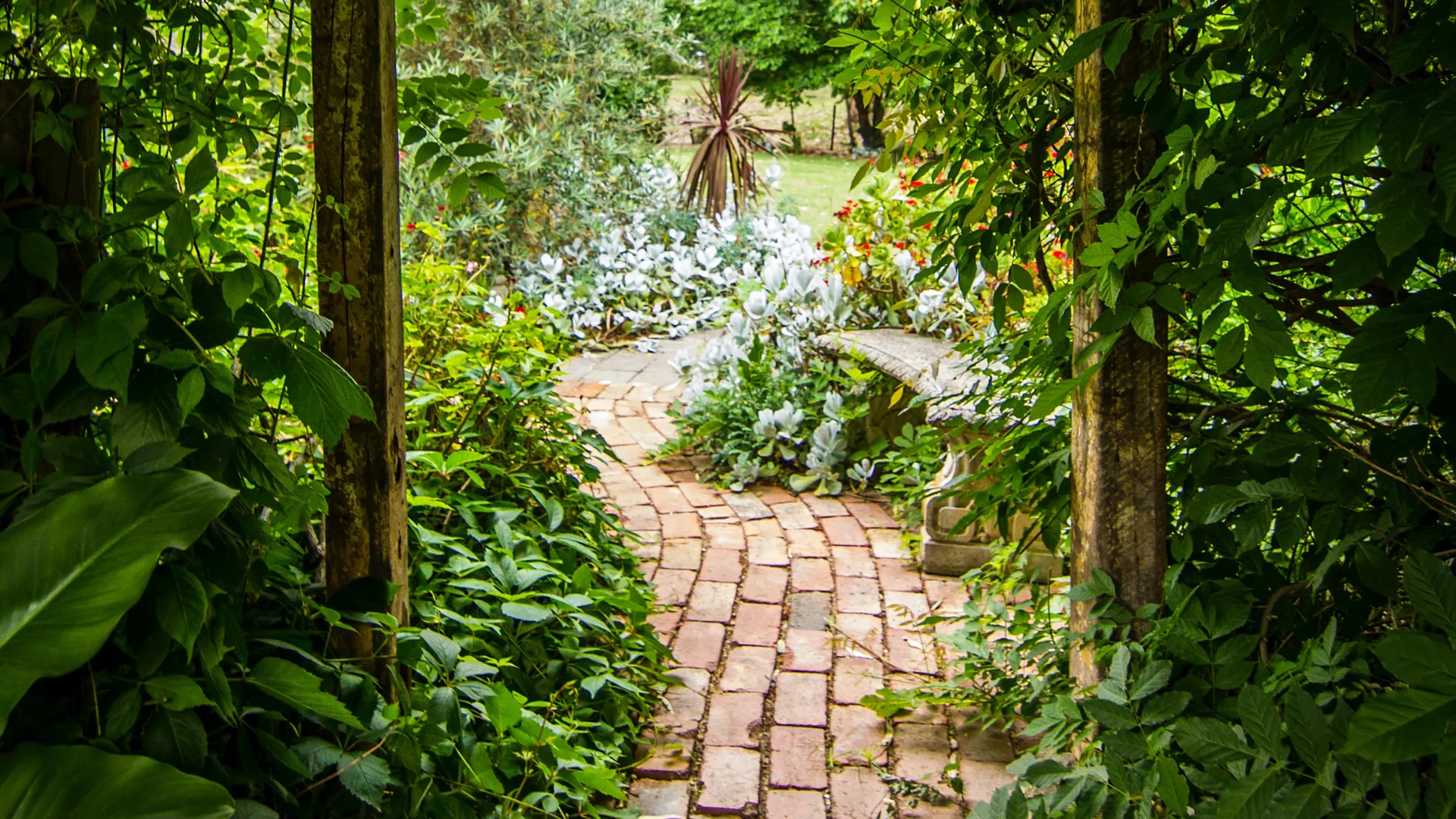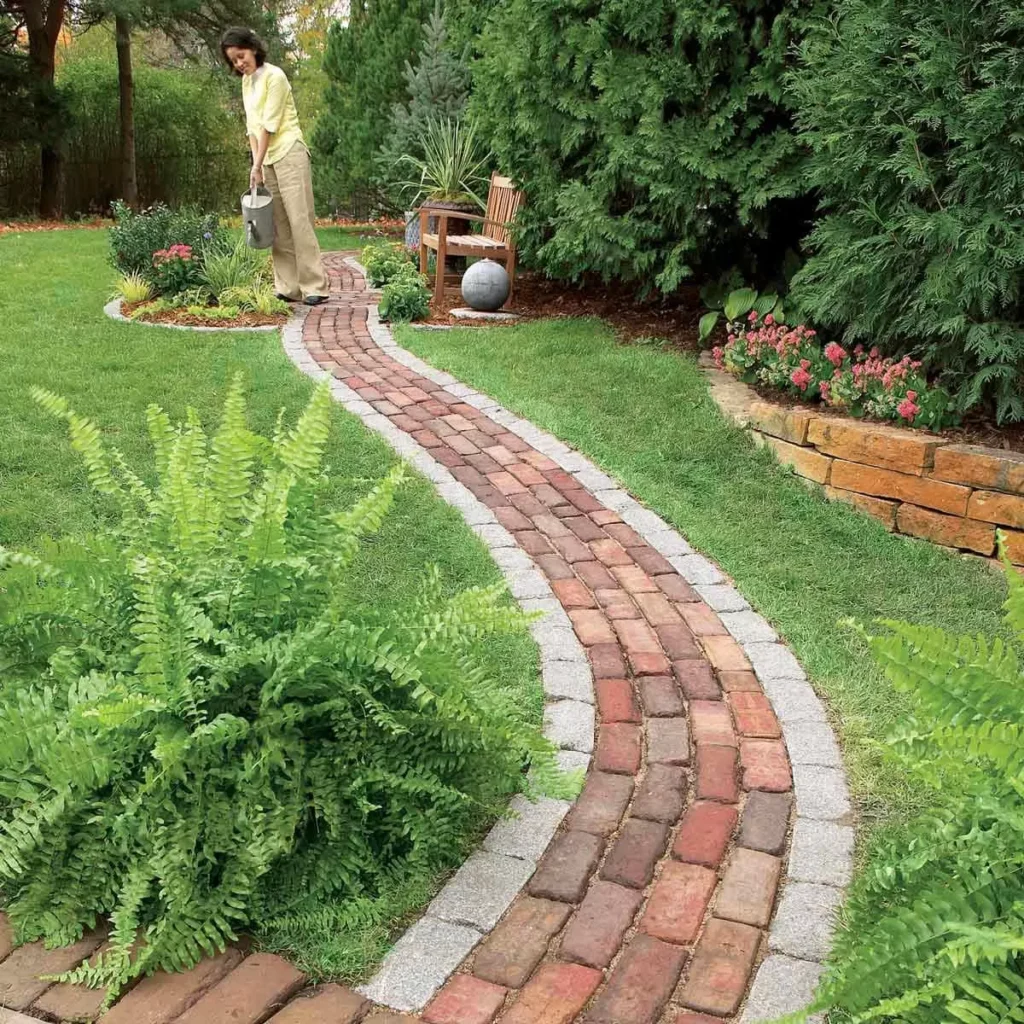
Old bricks from demolition can become a real treasure for gardening enthusiasts, transforming an ordinary garden into a space full of character and rustic charm. However, it is worth remembering that the choice of appropriate materials and proper preparation of the ground are crucial, both for the durability and aesthetics of such a path.
In our article you will find tips on how to prepare a stable foundation and how to lay bricks to create a beautiful garden path. Find out how you can turn your garden into a place full of magic.
Can old bricks from demolition be used for a garden path?
Old demolition bricks can be used for paths in the garden – they will give the environment a unique, rustic atmosphere. And in addition, it is a great choice from an ecological point of view!
However, in order to make such a path not only nice, but also durable, it is worth keeping in mind a few key aspects:
- Bricks should be laid on a layer of sand, such treatment allows water to seep freely into the soil, which prevents it from collecting on the surface and protects the material from damage during frost. Ordinary bricks can, unfortunately, easily succumb to such damage. Dry laying is only suitable for bricks in very good condition.
- To increase the strength of the path, it is a good idea to embed the bricks in a dry mix (4 parts sand to 1 part cement) or in mortar – this will give them better stability.

Step by step: How to make a brick garden path?
Start by properly planning your garden path and choosing the right materials. Demolition bricks are an excellent choice, as they add rustic charm and are environmentally friendly.
When designing, you need to determine the edges of the path. This can be done with string and stakes, which will precisely define the boundaries.
The edging should be bricked with lime mortar to resist shifting due to external factors. Then sand should be poured between the edging and leveled, which will ensure the stability of the laid bricks.
An important step is to evaluate the terrain so that the structure is solid.
It is worth thinking about how to lay the bricks so that the path is both visually appealing and practical. There are many laying patterns – from simple lines to more complicated mosaics like herringbone.
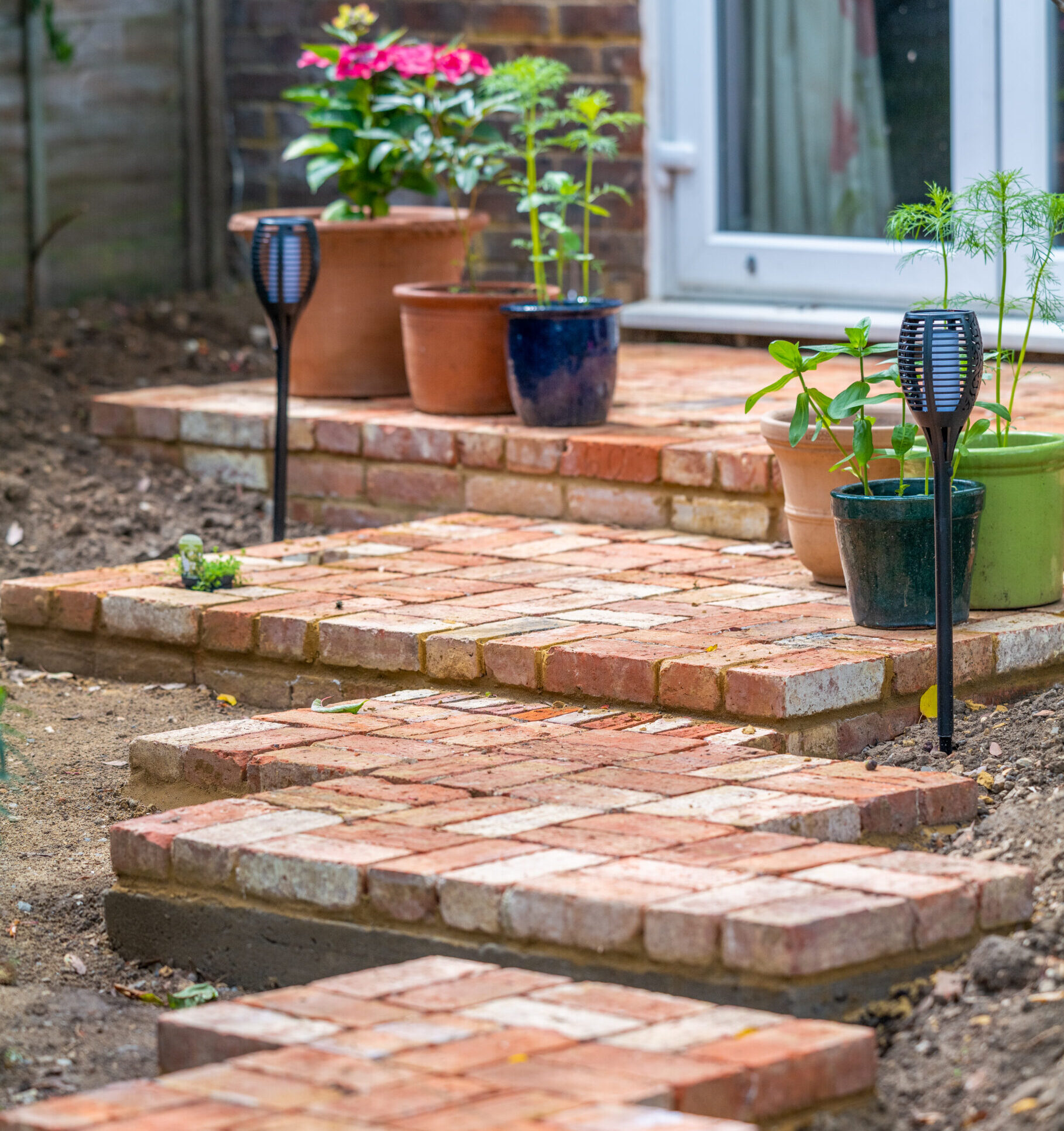
Once you have a solid base prepared, proceed to lay bricks in the pattern of your choice.
-
For mortar (cement or lime) – a thin layer of mortar on the foundation, then set the bricks, press them with a rubber mallet, check the level every few bricks.
-
In the case of sand – lay dry, without mortar, gently tamped from above.
-
With dry mortar – lay bricks as you would on sand, but fill the joints of the bricks with a mixture of sand and cement (4:1), then spray lightly with water to harden the mixture.
Finally, make a grout using sand. Grouting not only increases the durability and aesthetics of the path, but also allows water to flow freely to the lower layers of soil, protecting the structure from frost damage.
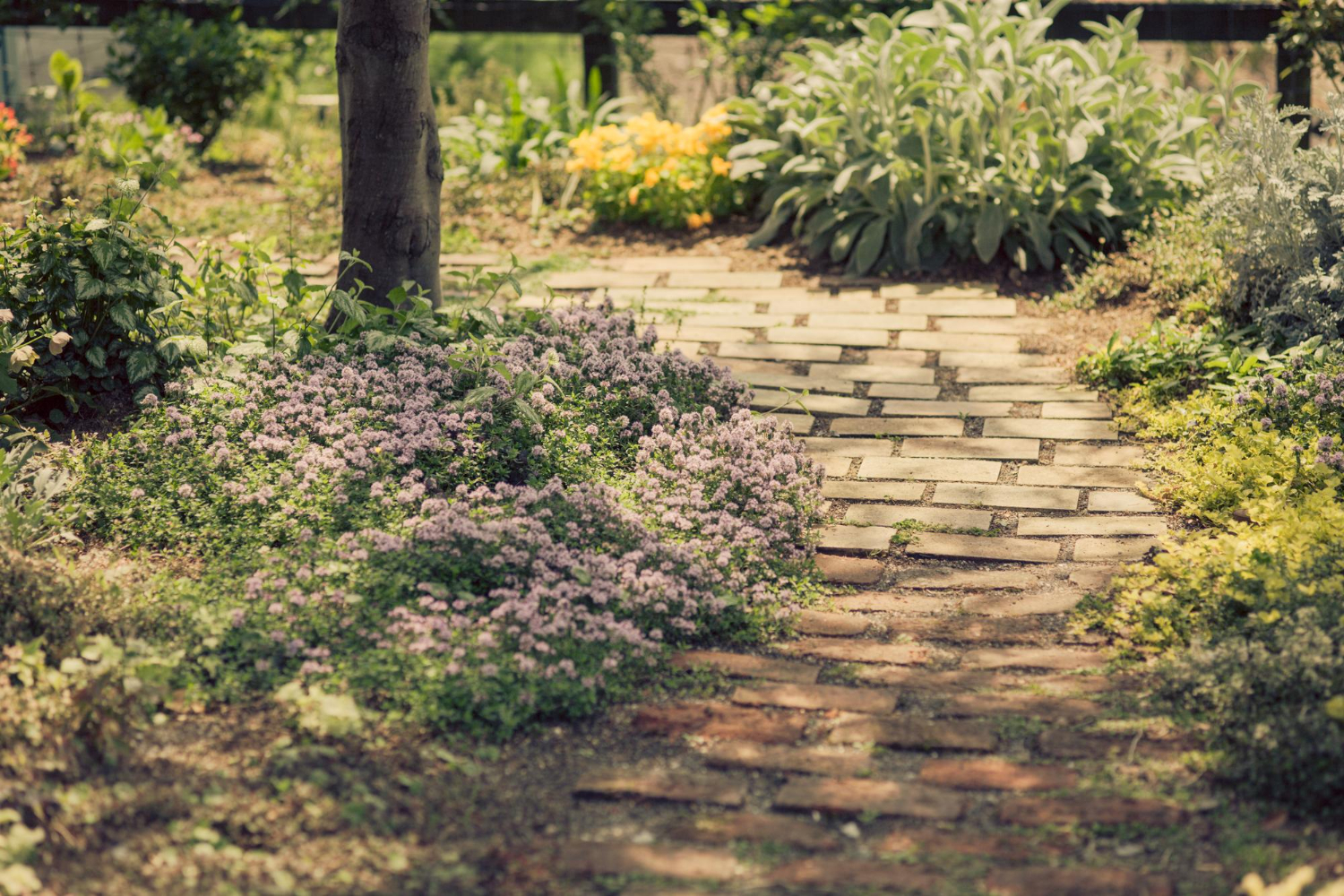
Demolition brick garden path inspiration and ideas
Paths in the garden made of whole bricks from demolition can add a unique charm to any green space. These bricks, with their unique look and history, are a great decoration that will add a touch of magic to your garden.
Arranging them in a variety of patterns makes it possible to create paths of unique character:
- One frequently chosen pattern is herringbone, which gives the path an elegant and dynamic look.
- You can also create geometric compositions by combining different colors and textures of bricks.
- Experimenting with the shape of the path – adding curves or irregular lines – further adds to its uniqueness.
Surrounding such paths with plants allows to achieve a harmonious garden composition. For example, lavender or ornamental grasses contrast beautifully with the brick shade, emphasizing the naturalness of the whole arrangement. Brick paths can become an element of small garden architecture, acting as the focal point of the design.