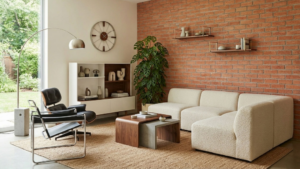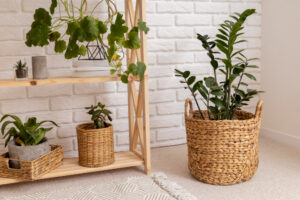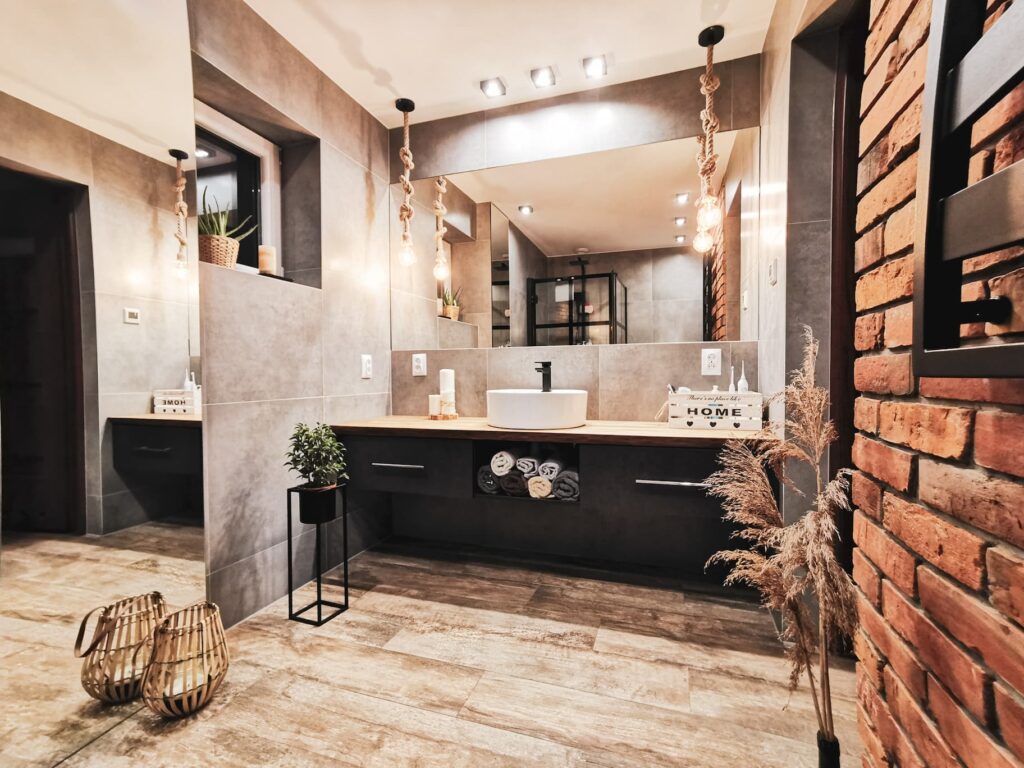
Brick in interiors has been experiencing a renaissance for several years – it appears in living rooms, kitchens, and increasingly also… in bathrooms. No wonder: an original demolition brick can give a room a unique character, break the sterile whiteness of tiles and introduce an atmosphere of loft, rustic coziness or elegant minimalism. But will such a decoration really work in a place exposed to moisture and temperature changes? What are its advantages, and what should you watch out for when deciding on a brick in the bathroom?
In this article, we will suggest when brick makes sense in bathroom design, how to protect it and why choosing original demolition brick can be a hit.
Is it possible to have a brick wall in the bathroom?
Brick in the bathroom is an excellent choice. Its natural texture enriches the interior with depth and aesthetics, blending perfectly with different styles, such as industrial or Scandinavian.
Yes – brick in the bathroom is as possible, but it requires proper preparation. Demolition brick itself is durable and resistant to the passage of time, but it naturally absorbs moisture. Therefore, the key is to protect it: properly impregnated brick does not absorb moisture and dirt, which protects against dusting and loss of color, and the wall remains easy to maintain.
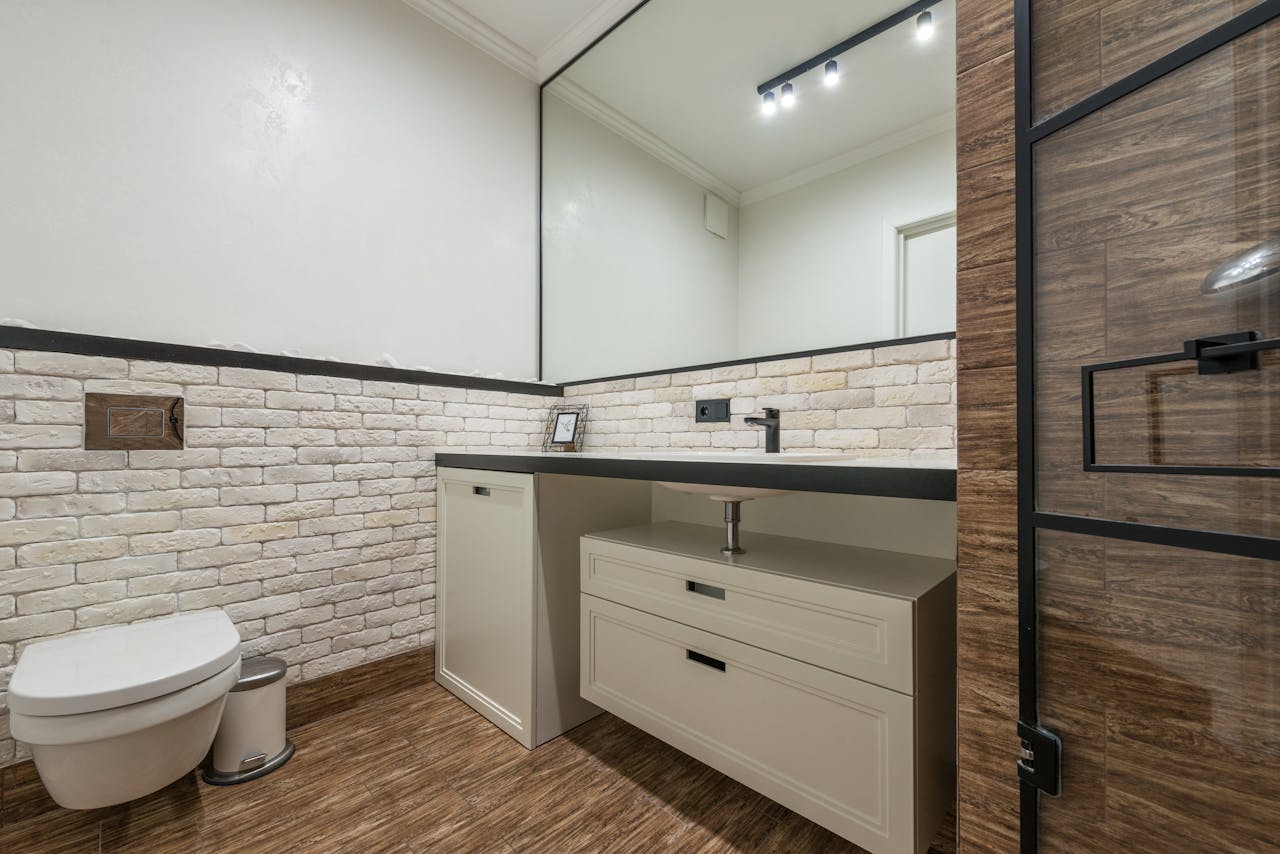
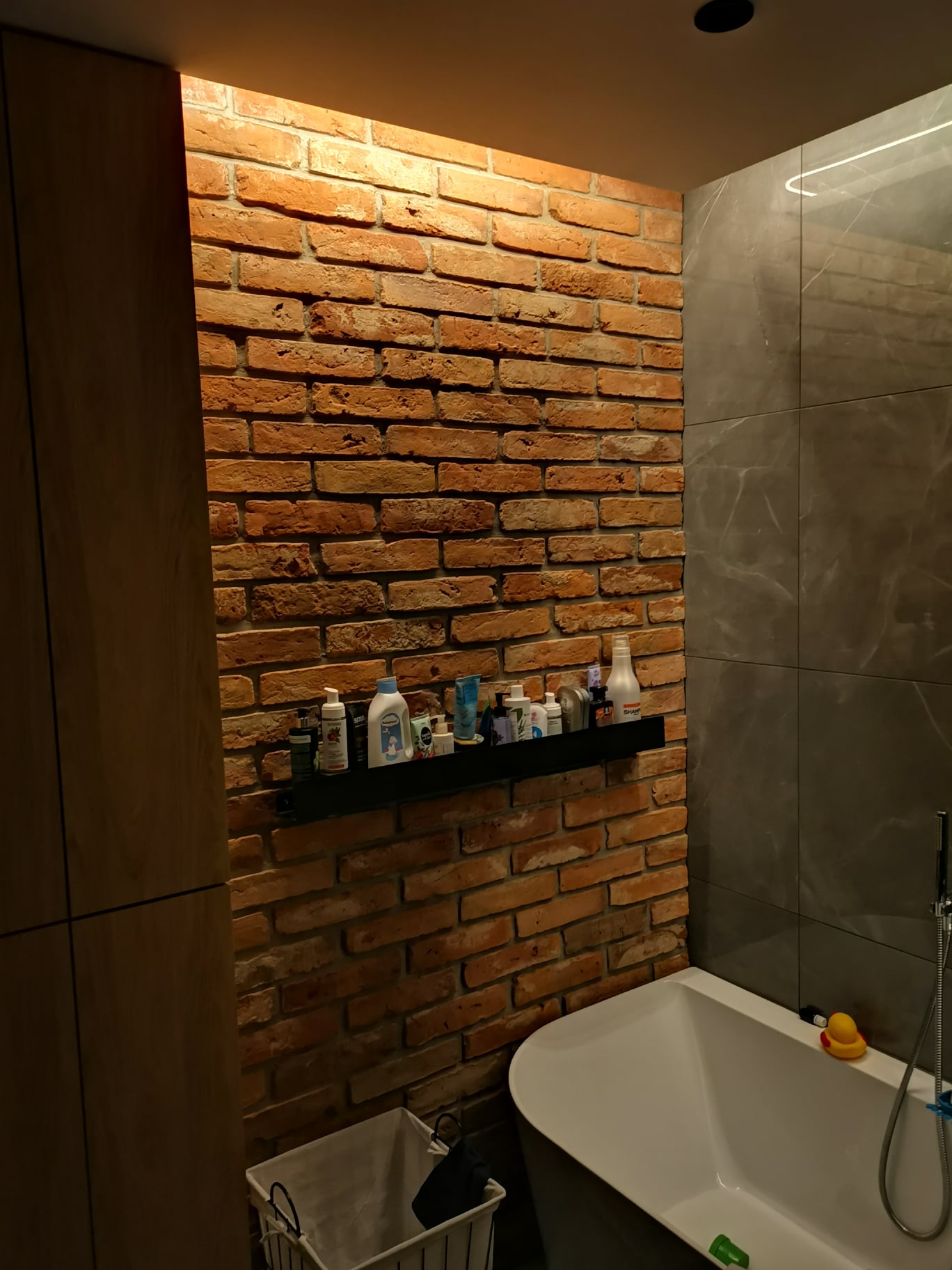
Brick works best on parts of the walls that are not exposed to direct contact with water (e.g., by the free-standing bathtub, on the wall with the mirror, on the wall next to the toilet, or as decoration behind the door). In the shower area or right next to the sink, for example, it is better to use ceramic tiles – and treat the brick as a strong decorative accent in the rest of the room.
If you care about a unique visual effect and want to break the monotony of tiles, demolition brick will be a great choice. It will add character to the interior, and properly protected will serve for years – without worrying about mold or stains.
What are the advantages and disadvantages of using brick in the bathroom?
Advantages of brick in the bathroom:
-
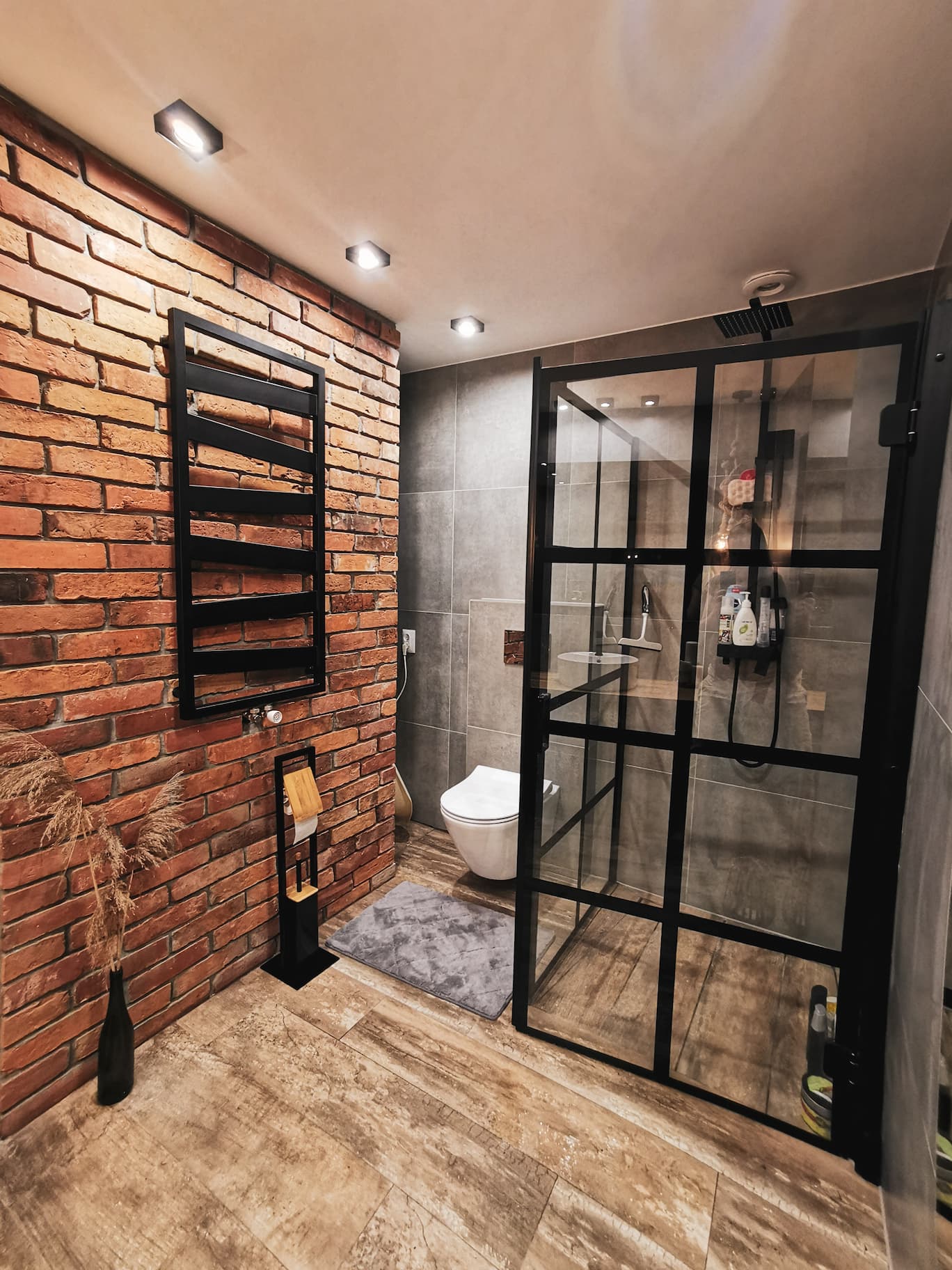
A unique visual effect – the brick brings to the bathroom an atmosphere of loft, industrial, but also rustic coziness. Thanks to it, the room gains character, which is not given by standard tiles.
-
Durability – original demolition brick is a material that has already survived for decades. Properly impregnated, it will resist moisture and dirt.
-
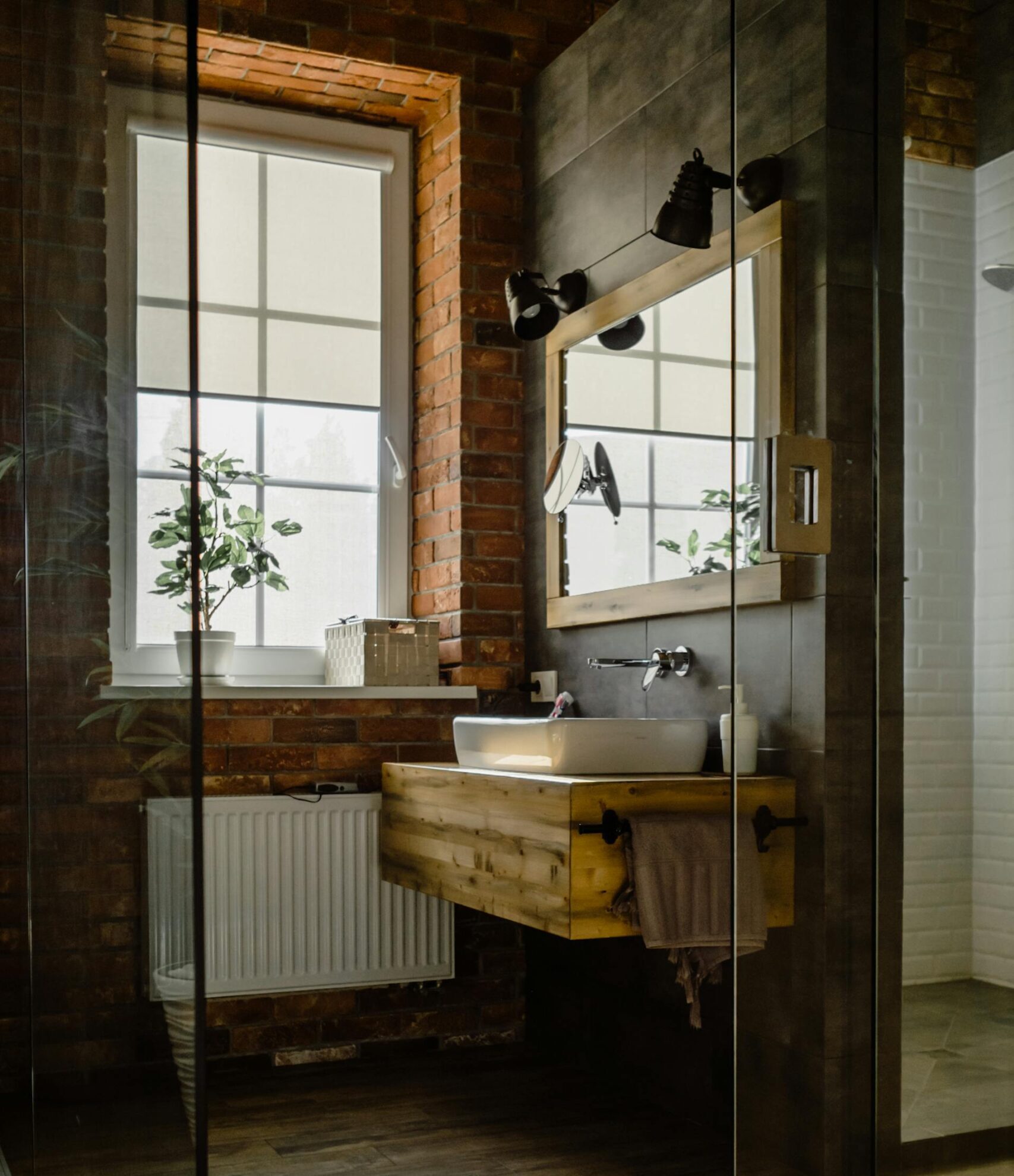
Arrangement versatility – brick combines well with wood, glass, concrete or ceramics. It can be both a subtle accent and a dominant wall decoration.
-
Natural beauty – each brick is different, which gives a unique effect. The interior looks authentic, not like “from visualization”.
Disadvantages of brick in the bathroom:
-
Absorbability of the material – without impregnation, the brick can draw in water and dirt, which is sometimes problematic in the bathroom.
-
The need for regular maintenance – waterproofing wears off over time, so every few years it is worth refreshing the protective layer.
-
Not for every wall – brick will not work well directly in the shower or in areas constantly flooded with water. It is better to use it in “drier” parts of the bathroom.
-
Cost and installation – demolition brick or tiles made from it are heavier than ordinary tile, and require proper adhesive and waterproofing, which can increase the cost of the work.
When you buy demolition brick from our Dekoracyjna Cegła store, you can be sure that the material has been selected, cleaned and checked for efflorescence or hidden defects.
How to choose the right decorative brick for the bathroom?
When deciding on a brick in the bathroom, it is worth remembering that not every brick will perform equally well. This is a particularly demanding room – moisture, steam and frequent temperature changes mean that the material must be really solid. What to pay attention to when choosing?
-
Type of brick – The best bet is the original demolition brick or tiles made from it. This is a material that has stood the test of time – it is durable, natural and visually unique. What’s more, reclaimed brick has its own history, so it brings an authentic character to the interior.
-
Proven source of purchase – With demolition bricks can vary – you can come across poor quality materials on the market, with visible salt efflorescence or damage. That’s why it’s a good idea to buy it from places that specialize in sourcing, selecting and preparing demolition bricks, to make sure that the bricks you buy are thoroughly cleaned, tested and ready for installation.
-
Format and thickness – Brick tiles are usually used in the bathroom – they are a few centimeters thick, lighter and easier to install than full bricks. As a result, they do not weigh down the walls and can be laid even in small areas.
-
Color and texture – Demolition brick comes in various shades – from warm reds to cooler browns or soft grays. It is worth matching it to the style of the interior: a darker brick will be a strong accent, while a lighter one will subtly warm the space.
- Arrangement – No less important is the juxtaposition of brick with other bathroom furnishings. Matching it with materials such as glass, concrete or wood can significantly affect the final visual effect of the interior.
How to properly waterproof a brick wall in a bathroom?
The entire surface is covered with a special impregnant for brick (usually applied with a roller or spray), which creates a protective layer resistant to moisture and dirt. For the best effect it is advisable to apply 2 layers of the preparation, and repeat the procedure every few years. In this way, the brick wall will maintain its appearance and be easy to care for.
In our store you will find all the chemistry necessary for the installation of bricks in the bathroom, including suitable impregnants for old bricks.
Equally important is good bathroom ventilation, which helps maintain waterproofing. Proper air circulation helps reduce excessive moisture.
What design styles do old brick tiles fit into?
Old brick tiles perfectly blend into a variety of interior styles, making them an extremely versatile decorative material.
1. rustic style
- In rustic arrangements, their natural and somewhat rough texture blends perfectly with wood and natural materials. In a rustic bathroom, warm shades of brick emphasize the coziness and homeliness of the interior.
2. loft / industrial style
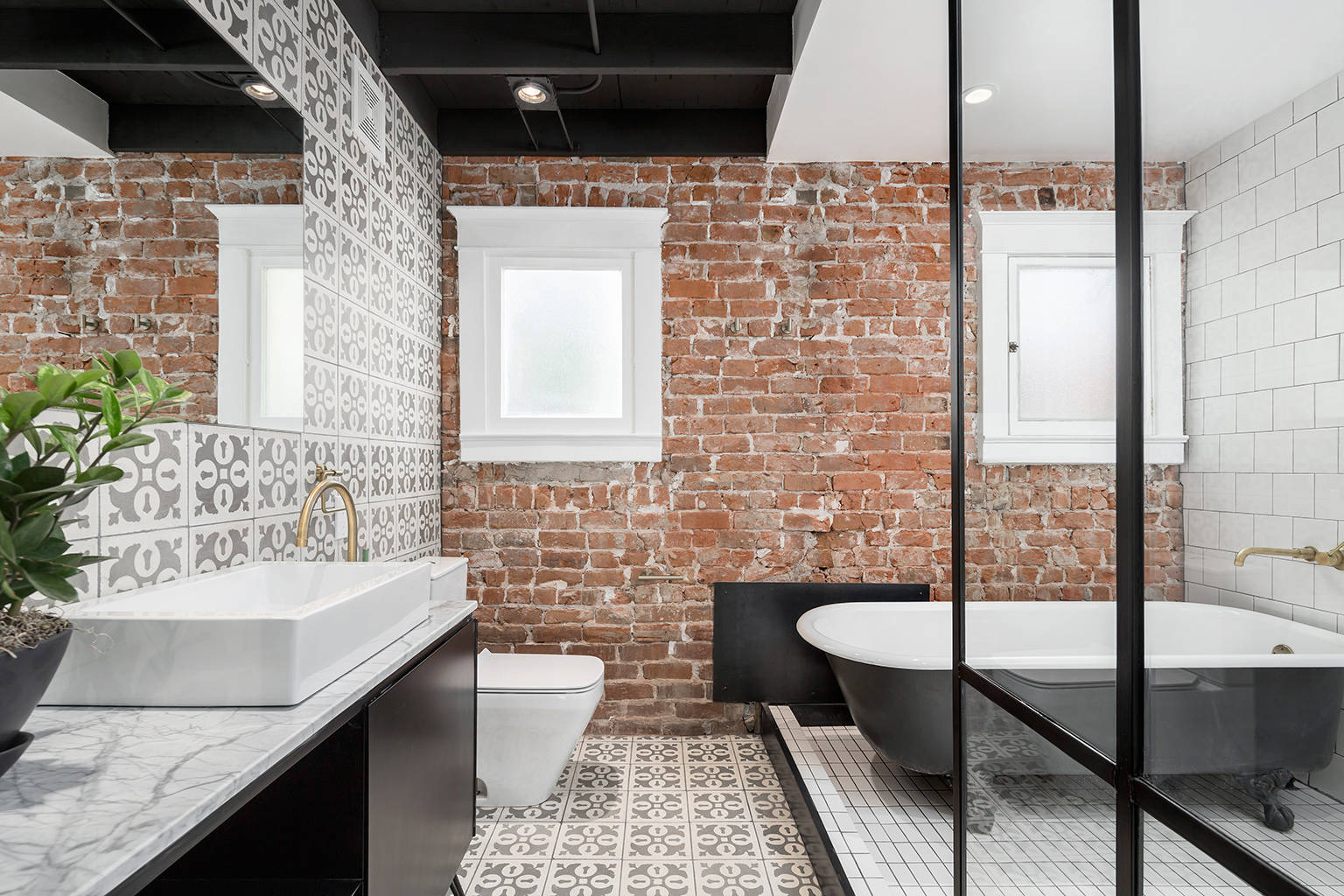
- In an industrial style bathroom, characterized by simplicity and rawness, brick tiles also work well with black fixtures, metal and glass, giving the effect of a modern, bold space. It introduces rawness, authenticity and the atmosphere of old factories.
3 Scandinavian style
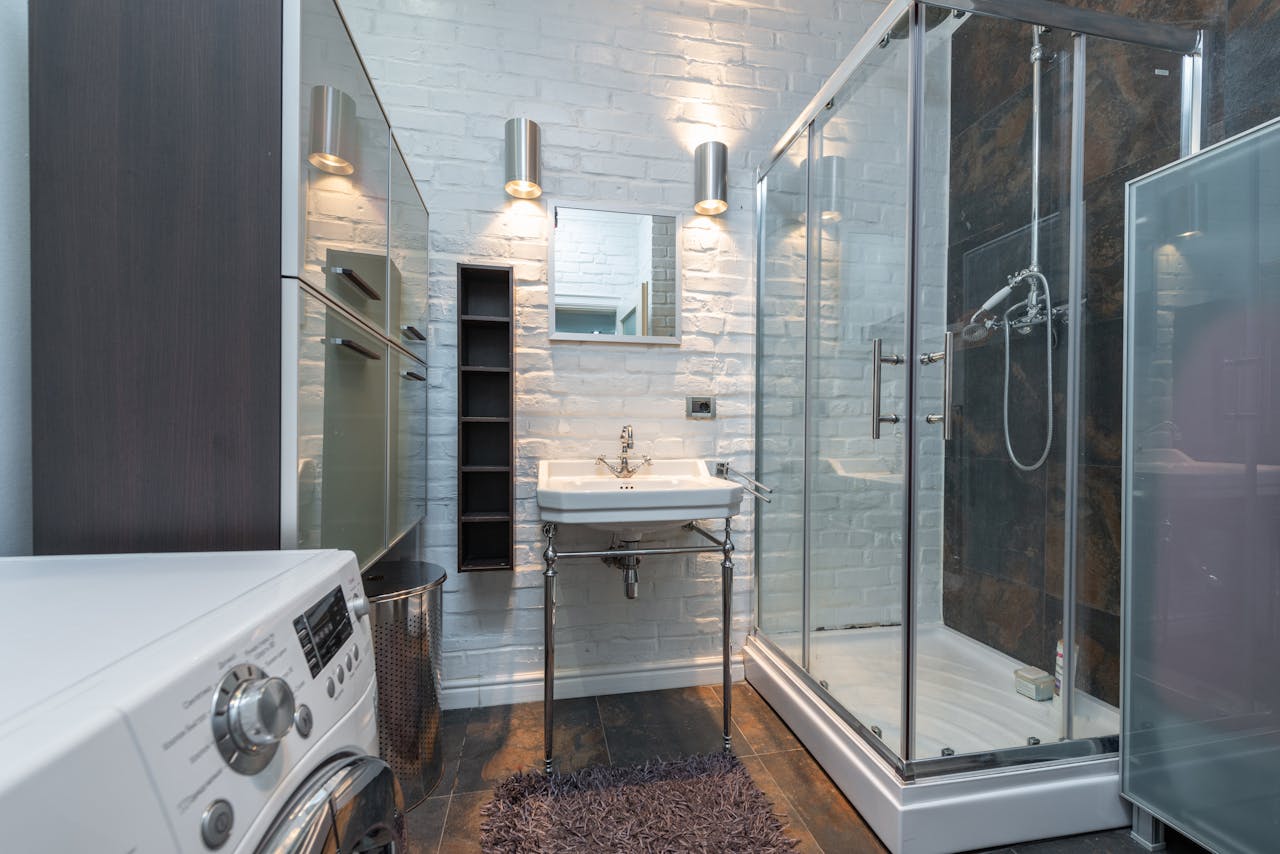
- In bright, minimalist arrangements, brick acts as an invigorating accent – it adds warmth to the interior and breaks the coolness of white and gray. Just one brick wall is enough to give the bathroom more character.
4. vintage style
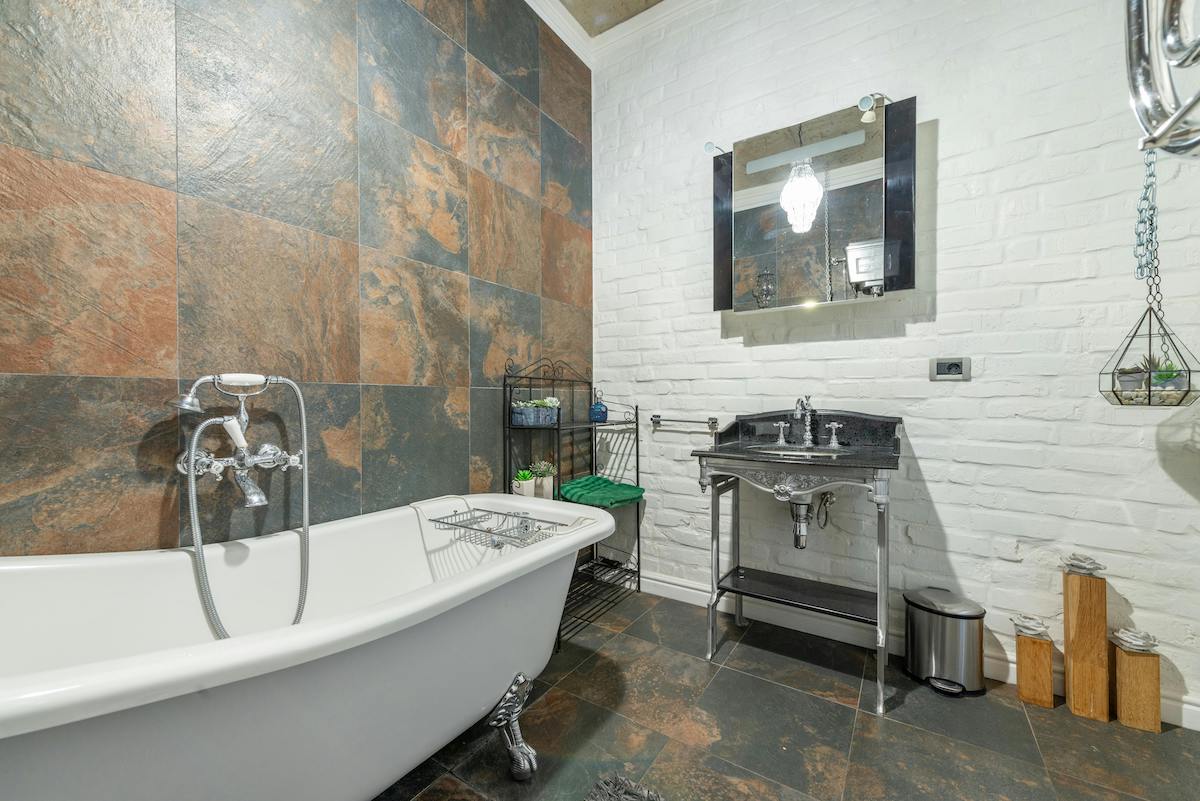
- The old brick perfectly emphasizes the retro atmosphere. Juxtaposed with brass faucets, a free-standing bathtub and a mirror in a decorative frame, it takes the interior back to the old days.
With what accessories and colors to combine demolition brick in the bathroom?
Demolition brick in the bathroom opens up a wide range of design possibilities, helping to create a unique atmosphere in the room.
Here’s what materials, colors and decorations are best to combine brick in the bathroom with, depending on the prevailing style:
1. loft / industrial style
-
Color scheme of the arrangement: black, graphite, shades of gray, steel.
-
Materials: glass (e.g., shower wall), brushed steel, architectural concrete.
-
Extras: black fixtures, metal shelves, industrial-style lamps, steel-framed mirror.
-
Other walls: smooth, in shades of gray or white, to make the brick the main accent.
2. rustic style
-
The color scheme of the arrangement: warm beiges, olive green, cream, light browns.
-
Materials: wood (cabinets, countertop under the sink), linen, natural stone.
-
Accessories: wicker baskets, ceramics in earth tones, potted plants (e.g., ferns, ivy).
-
Other walls: in shades of sand or cream to warm up the space and harmonize with the brick.
3 Scandinavian style
-
The color scheme of the arrangement: white, light gray, pastel shades (mint, blue, powder pink).
-
Materials: light wood (such as bleached oak), glass, frosted ceramic.
-
Accessories: simple shelves, minimalist mirror, light textiles in bright colors, plants in white pots.
-
Other walls: white or very light gray, so that the brick becomes an accent that enlivens the room.
4. vintage style
-
Color scheme of the arrangement: bottle green, navy blue, burgundy, gold.
-
Materials: darker colored wood, milk glass, brass.
-
Accessories: fixtures in gold or brass, a mirror in a decorative frame, stylized lamps.
-
Other walls: pastels (e.g. light blue, dim green) or neutral creams that will emphasize the retro atmosphere.