Below we have gathered in one place the questions that most often come back when choosing a decorative brick for your home or apartment. If you’re planning a brick wall and don’t know where to start – browse through this mini-FAQ. And if you have further questions, contact our store decoracyjnacegla.pl – we will be happy to help you with your selection!
1. how do you even choose a decorative brick for the interior?
The easiest way to start is with three things: how much light you have, what kind of flooring you have and what style you like. For small, poorly lit rooms, light bricks (whitewashed, sand colored) work better, for larger, bright living rooms – also brick in natural, dim red.
The second step is to decide: where should the brick appear – one wall, a section, an alcove? In the offer of decorativenacegla.pl you will find very “raw”, loft-like models, as well as calmer ones, which suit more classic or Scandinavian interiors.
2. what color of brick will be best?
In small apartments and with a dark floor, it is safer to choose a lighter brick – whitewashed or in warm beiges. Optically it does not reduce the size of the room and adds lightness.
Darker brick-red shades look good in larger living rooms, with light-colored floors and walls. Treat the brick as a strong accent – if everything else (floor, walls, furniture) is also dark, the effect can be too heavy.
Read more about choosing a brick for your interior color scheme here <<

3. Is it better to choose all demolition brick or tiles made from it?
Full demolition brick is a lot of thickness and weight – it’s better for houses, lofts and major renovations. On a load-bearing wall it still makes sense, but in a block of flats, on a thin partition wall it is often just too much.
Demolition brick tiles or tiles stylized to look like old brick are usually about 1-2 cm thick, and are much lighter and easier to install. On the wall they look like “solid” brick, and they do not take up so many centimeters and do not weigh down the structure.
4. original old brick or new stylized old brick?
Original demolition brick / tiles from it give a unique effect – each piece is a little different, you can see the traces of time. However, you have to reckon with more work in selection and arrangement, and sometimes a bit of visual “mess” (for some this is an asset, for others not).
New brick tiles stylized on old brick are more reproducible, it is easier to predict the final effect. They are also usually better sized and thicker, making installation easier. They can look very natural, and are easier to keep clean.
5. For which rooms is brick most suitable?
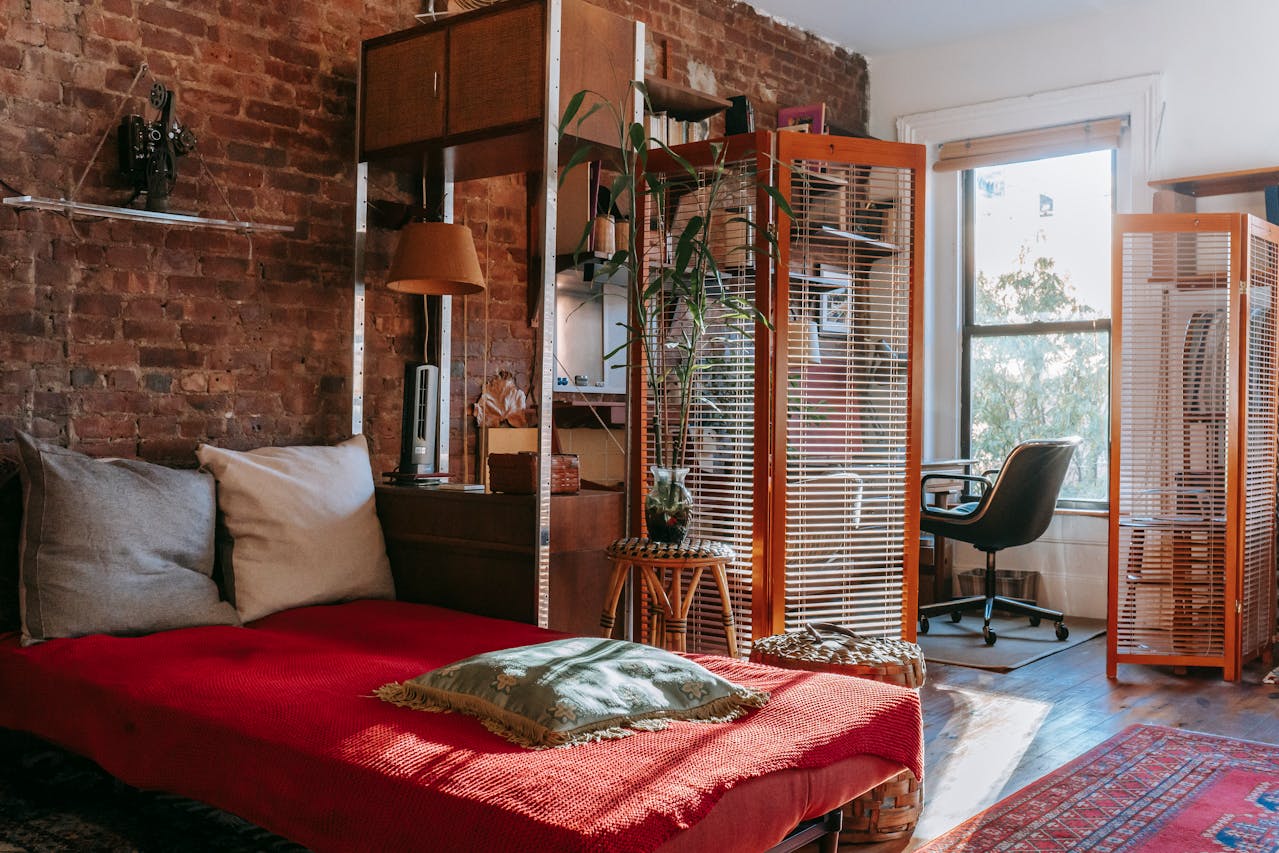
Most often brick appears in the living room, hallway and bedroom – there its decorative potential is best used. In the living room it makes the main accent, in the hallway it further protects the walls, and in the bedroom it creates a calm background behind the bed.
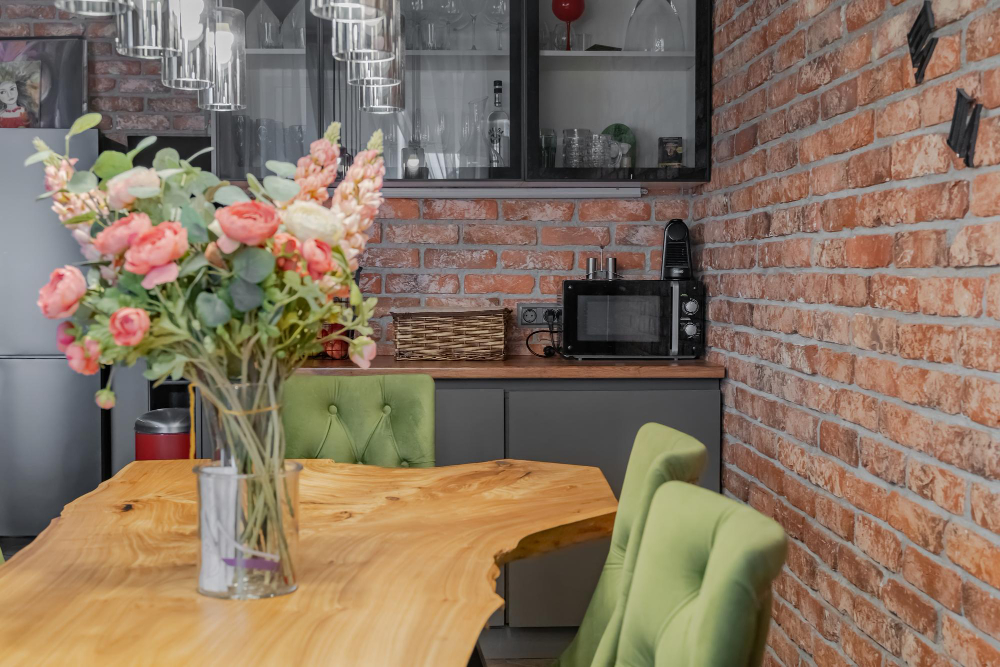
In the kitchen, brick works well as a backdrop near the dining area or on the living room side. In the typical working area (over the sink, hob) it is better to bet on materials that are easier to clean, and leave the brick where there is less risk of splashing.
6. Should I put brick on one wall or on all of them?
In the vast majority of apartments, one brick wall or a section of it works better. It is a clear accent that does not overwhelm the interior.
Brick on all walls makes sense mainly in large, high spaces (lofts, open first floors of houses). In a standard apartment in a block, a full “brick box” will easily turn a room into a cramped, heavy space.
7. are decorative bricks durable?
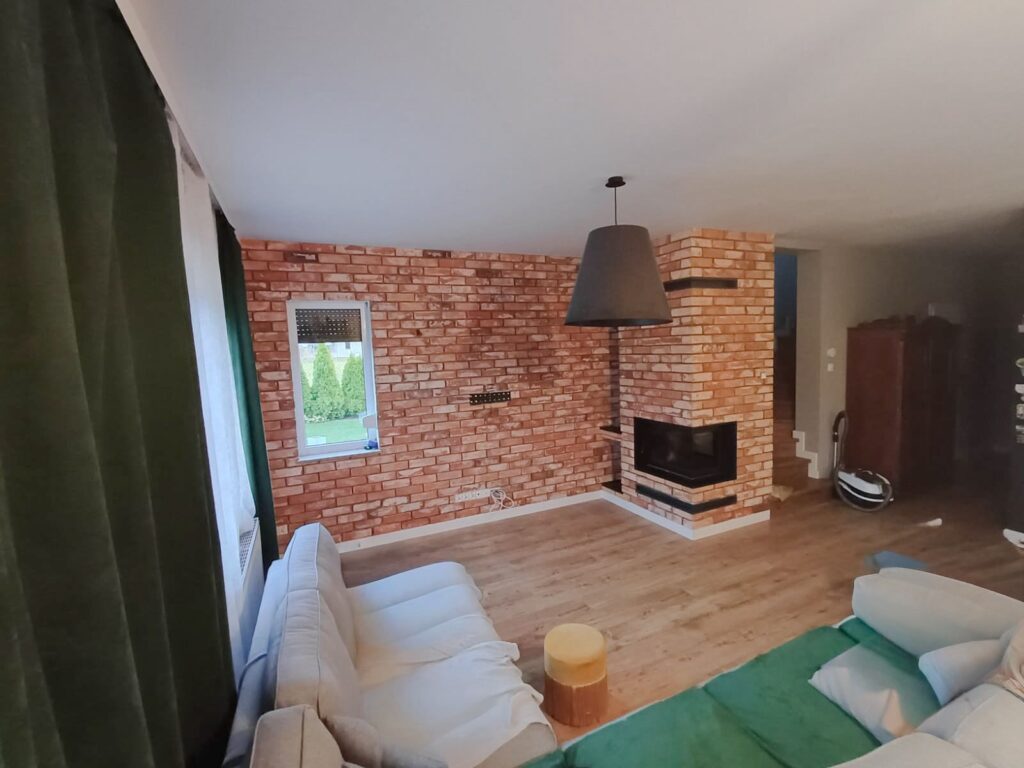
A well-placed decorative brick is more durable than paint alone – it stands up better to knocks, scuffs and daily use. In the hallway or by the stairs, this is a real advantage.
However, it should be remembered that it is still a wall covering – it can also be damaged when hit hard. Therefore, narrow passages, places near chairs or hangers should be planned so that it is possible to spot repair or replace individual tiles.
8. does the brick get very dusty? How do you clean it?
Like anything with texture, decorative brick catches dust a little more than a perfectly smooth wall. On a daily basis, just dust it with the soft end of a vacuum cleaner, wiping it from time to time with a slightly damp cloth or brush.
It is worth using mild detergents or water alone. Too aggressive detergents can destroy the impregnation or change the appearance of the surface. When buying brick tiles on decorativenacegla.pl it is a good idea to check the manufacturer’s recommendations for cleaning and possible impregnation.
9. is brick suitable for kitchens and bathrooms?
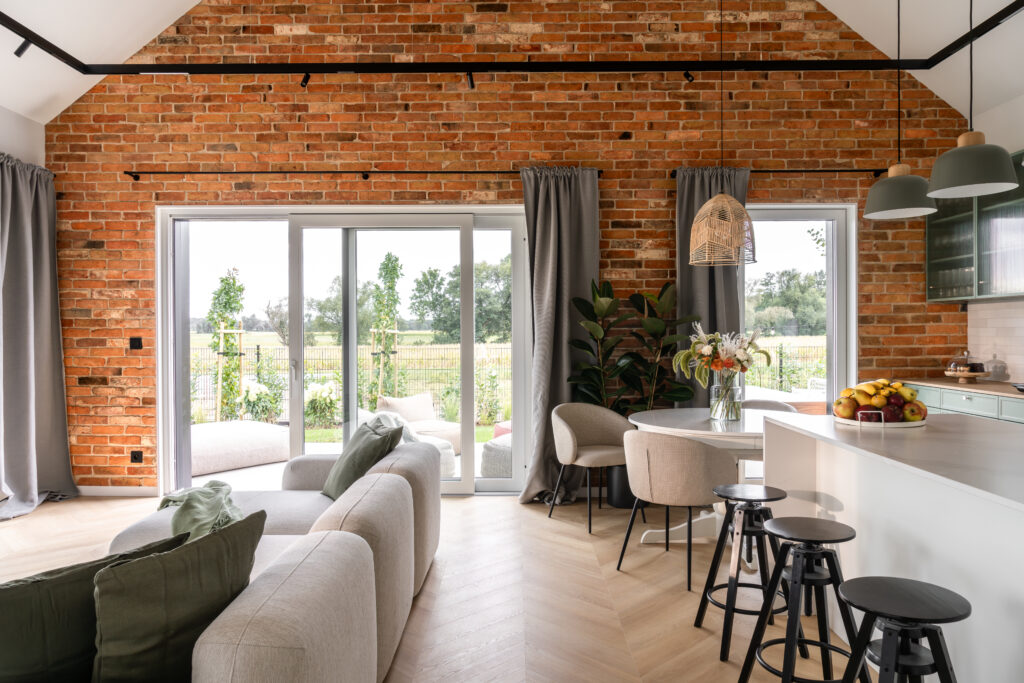
Yes, but such an arrangement must be done with a head. In the kitchen, brick works best where it is not constantly doused with water and grease – at the dining area, the island, the wall visible from the living room. Above the worktop it can be used, provided it is decently waterproofed, but it is usually better to finish this part with tiles, glass or other easily washable material.
In the bathroom, decorative brick can be used away from direct splashing (not in the shower area) and should also be well protected. Here, the type of tile and manufacturer’s recommendations are especially important – not all materials like constant moisture.
10. approximately how much does it cost to make a brick wall?
The cost of a brick wall consists of: tiles, glue and grout, possible waterproofing and labor (if you do not do it yourself). The price per m² varies depending on the type of product: tiles made of real demolition brick, new stylized tiles, different formats.
The general rule is simple: the more detail and “handiwork” in the material, the higher the price usually is. On the other hand, one well-made brick wall can replace several other decorations and will last for years, without the need for refreshing as in the case of paint or wallpaper.
11. can the assembly be done by yourself?
Yes, many people with basic renovation experience can handle installation on their own, especially on a simple wall that is not too big. In short: you need to prepare the substrate well, determine the level, apply the appropriate adhesive, lay the tiles with grout, and finally, if necessary, grout and waterproof them.
If the wall is crooked, has a lot of corners, recesses, plumbing penetrations, or you are planning a larger area (for example, living room + hallway), it is often wiser to hire a team. The result will be more predictable, and the work will go faster.
12. On what substrate can the brick be installed?
The main thing is that the substrate should be stable, clean and load-bearing. The following will work: traditional cement-lime plaster, plasterboard (in good condition, properly fixed), concrete. Do not lay tiles on loosely adhering paint, falling off plaster or a substrate with pronounced moisture efflorescence.
Before gluing, it is usually a good idea to prime the wall, smooth out the biggest irregularities and remove anything peeling. Detailed recommendations for the substrate and type of adhesive can usually be found in the description of a particular product.
13. how thick is a wall of decorative brick? Does it “take up” a lot?
Brick tiles are usually about 1-2 cm thick + a layer of glue and grout. In practice, the wall “grows” by about 2-3 cm, which is much less than when using solid brick.
In apartments in a block of apartments, this is a huge advantage – you can get the effect of a brick wall without noticeably “swallowing” the space and without putting unnecessary strain on the structure.
14. does brick improve acoustics?
Decorative brick diffuses sound inside a room – thanks to its texture, it can slightly reduce reverberation in an empty living room or hallway. It works well in combination with carpet, curtains and furniture.
However, it is not a soundproofing material in the sense of sound insulation. If the main problem is noisy neighbors, the brick alone will not solve the problem – it can improve the comfort of sound reception inside the room, but it will not “cut off” the noise from the neighboring apartment.
15. can the brick be painted?
Many tiles can be painted with a suitable wall paint (after priming), but it is worth thinking carefully about it. Painting smoothly can “kill” some of the charm of a brick, especially one with nice, varied colors.
If you know from the beginning that you want a wall in a certain tone (such as light whitewashed brick), it is usually better to choose tiles in such a color right away – the in the offer of our store there are quite a few variants, which allow you to avoid combining with paint.