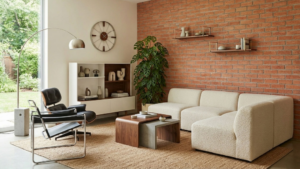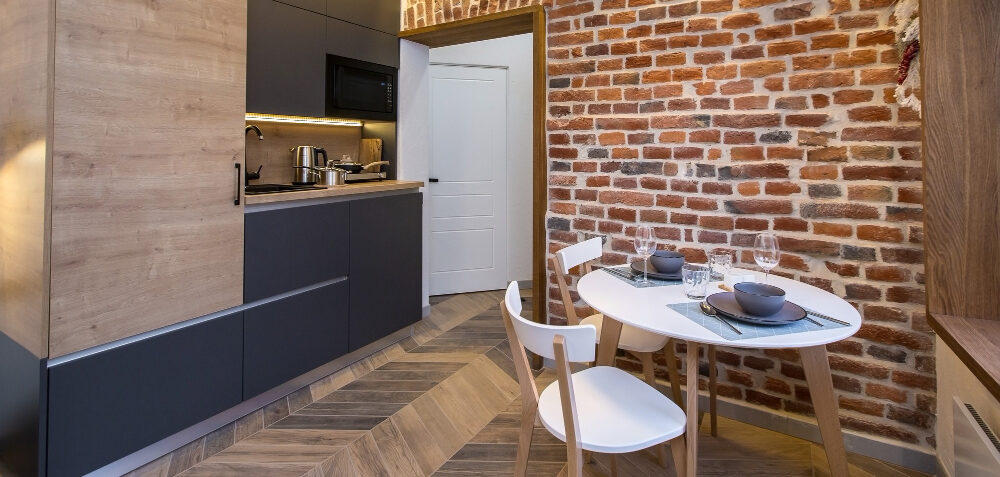
Decorative brick can “do” an entire interior – but also easily spoil it if the color is chosen haphazardly. The same brick pattern in a bright living room with oak flooring will look great, while in a dark hallway with black doors it can overwhelm. So before you click “add to cart,” it’s worth going through a simple scheme: how much light you have, what kind of flooring you have and what kind of furniture.
Below you will find practical tips and specific color sets for the living room, bedroom and kitchen – with brick on one wall or only on a section of it.
A simple decision-making scheme – three questions to start with
Start with three key elements:
1. amount of daylight
-
Little light (first floor, north-facing window, narrow room, loggia):
→ better light brick (whitewashed, sand, beige). -
Lots of light (large windows, high living room, south-facing windows):
→ you can also afford darker, classic brick.
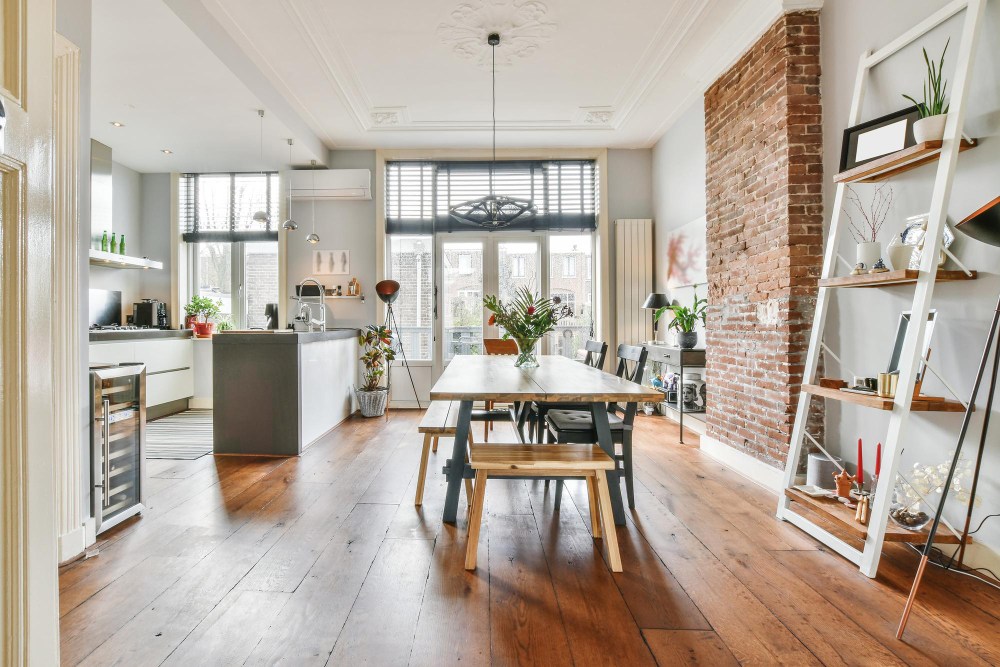
2. floor color
-
Dark floor (walnut, wenge, dark gray tiles):
→ brick rather lighter or in a medium, dim shade, so as not to create a “well”. -
Light flooring (oak, ash, light panels, terazzo):
→ you can opt for both light and darker brick – the key then will be the furniture and walls. -
Gray/concrete floor:
→ warm brick (beiges, muted red) will add coziness.
3. color of furniture and windows
-
Dark furniture + dark window/door frames:
→ brick rather light, so as not to make the interior heavy. -
Light furniture (white, wood) + white windows:
→ brick can be both light and medium dark, as long as it does not overwhelm the small room. -
Lots of black (industrial lamps, metal, black fronts):
→ brick in a natural, slightly dim red or warm beige will usually work better than a very dark one.
In the offer of decorativenacegla.pl you will find both bright brick tiles and designs in a more classic red shade – so it’s easy to match the color to a particular interior layout (you can check out our collection here).
Living room – some ready-made sets
1. light brick + dark floor
When: narrow living room, little light, strong flooring (walnut, dark brown).
-
Brick: light, whitewashed or sand-colored, on one wall (for example, behind the sofa or TV).
-
Walls: warm white / very light beige.
-
Furniture: simple, bright (oak wood, white dresser).
-
The effect: the brick brightens the space and “relieves” the dark floor.
2. darker brick on one wall in a bright living room
When: large living room, bright floor, wide windows.
-
Brick: natural, slightly dim red on one main wall.
-
Walls: white or very light gray.
-
Flooring: light oak, plank or panels.
-
Furniture: sofa in neutral color (gray, beige), accessories in black (lamp, table).
-
The effect: the brick adds character, but thanks to the light base it does not overwhelm.
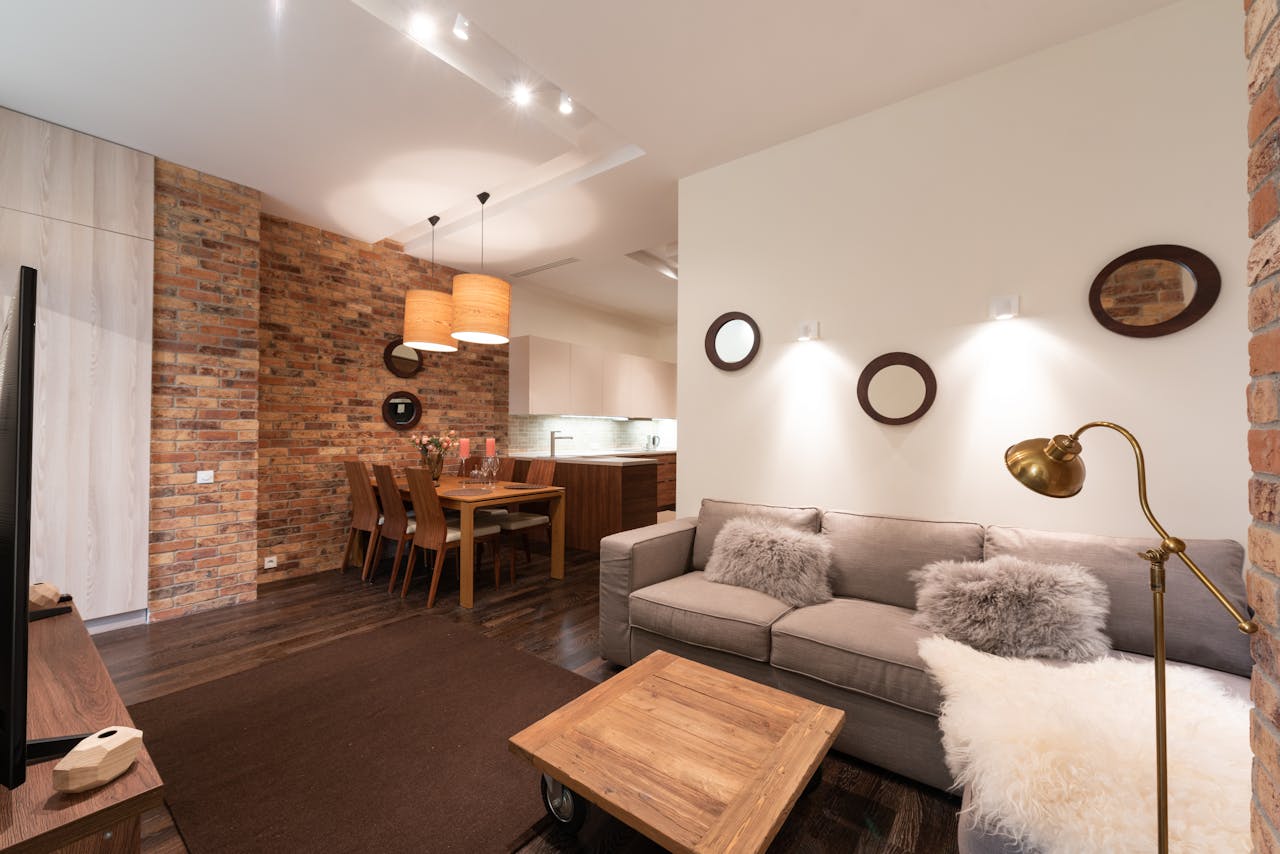
3. only a section of the wall – for example, by the dining room
When: living room with annex, little space.
-
Brick: light or medium, on a section of the wall near the table.
-
The rest of the walls: in one calm color.
-
Flooring: the same throughout the living area – ties the whole thing together.
-
The effect: the brick delineates the dining area without taking away the breath of the small living room.
Bedroom – tranquility more important than the “wow” effect
In the bedroom, the brick should soothe rather than dominate.
1. light brick behind the bed
When: small or medium bedroom, standard apartment height.
-
Brick: whitewashed, sandy or very light beige only behind the bed.
-
Walls: neutral, warm white or soft gray/beige.
-
Flooring: light wood or panels.
-
Furniture: a simple bed, textiles in muted colors (beiges, greens, grays).
-
The effect: the brick adds structure, but does not “darken” the room.
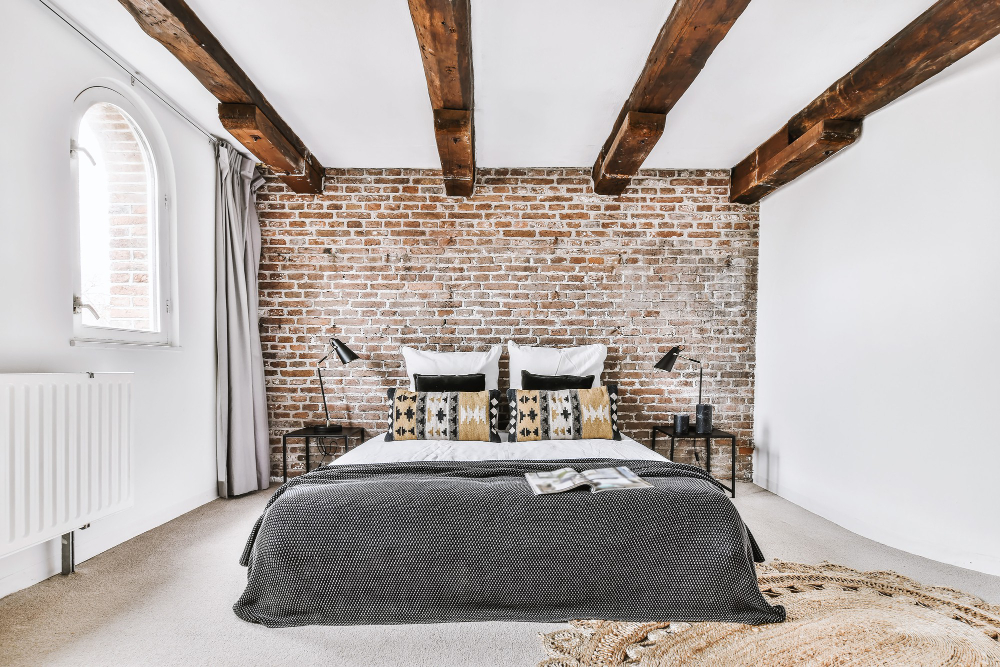
2. muted red in the larger bedroom
When: larger room, good daylight.
-
Brick: natural, slightly brick-red, behind the bed.
-
Walls: warm, broken white; one of the adjacent walls can be in a soft, off-white color (such as greenish-gray).
-
Floor: wood in natural shade.
-
Furniture: simple forms, without excess decor, textiles more neutral (without intense red).
-
The result: cozy, but with character – with balance.
Kitchen and annex – brick in the living area
In the kitchen, brick most often appears in the part visible from the living room, not necessarily just above the countertop.
1. small kitchen in a block of flats – brick only by the dining room
When: the kitchen connects to the living room, it has one window.
-
Brick: light (whitewashed, beige), such as on the wall at the table or island.
-
Fronts: white or light gray.
-
Tabletop: wood or light laminate.
-
Walls: white throughout the living area.
-
The effect: the brick gently warms without visually taking away space.
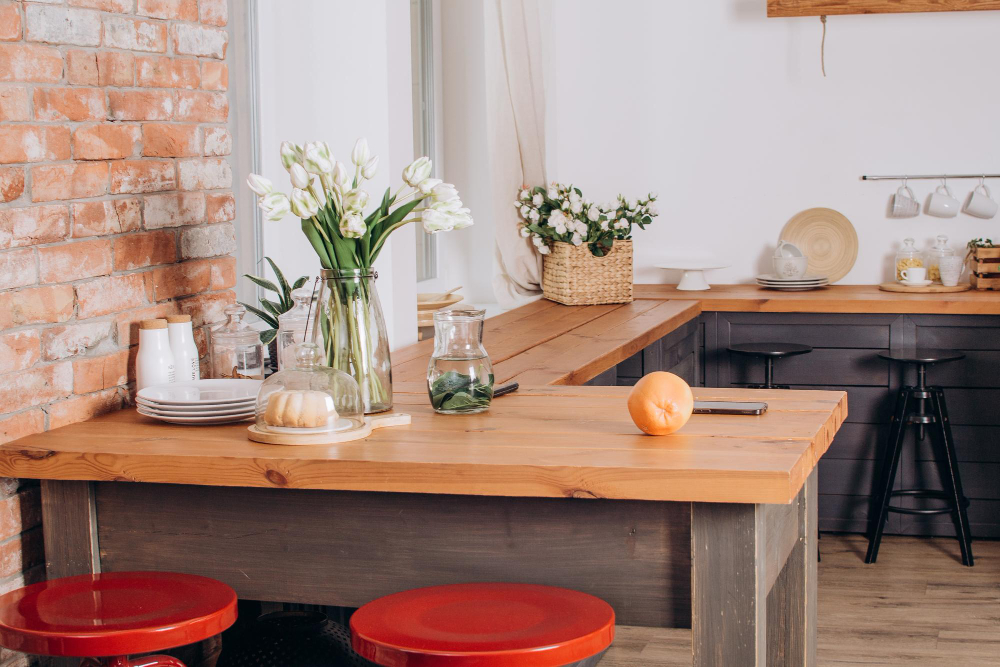
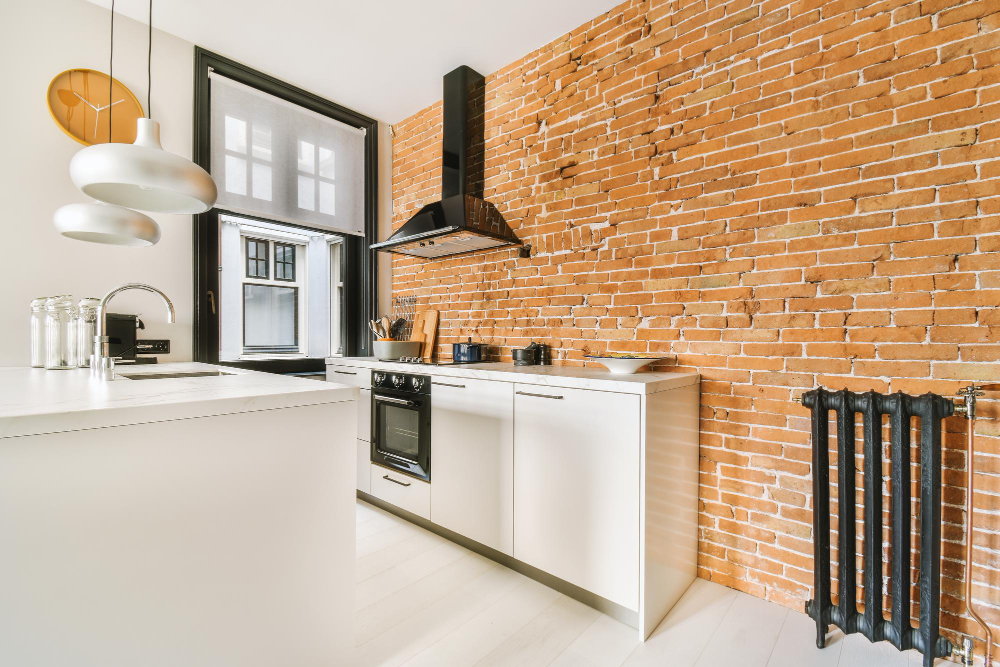
2. brick in the kitchen with light-colored fronts
When: the kitchen is larger, well-lit.
-
Brick: medium dark, such as a faded red or warmer brown, on one wall or a section (e.g., at the bar, island).
-
Fronts: light – white, cream, light wood.
-
Floor: tiles in a neutral color (gray, beige) or wood as in the living room.
-
The effect: the brick adds “flavor,” but light-colored furniture and walls keep the whole thing in check.
When light and when darker brick – summary
Light brick will work well when:
-
The interior is small, narrow or poorly lit,
-
You have a dark floor and dark furniture,
-
You want a soft effect and a slight brightening.
A darker / classic brick makes sense when:
-
The room is large and bright,
-
The floor and most of the walls are light,
-
You want a stronger accent in the living room or a larger bedroom.
The safest approach is to treat the brick as one distinct element – on one wall or section – and match it with calm walls, simple flooring and furniture. Check out our tips for choosing brick and photos of sample arrangements – then you will easily catch which color combinations best suit your interior.