Decorative brick in the living room is one of the most impressive ways to bring character to the interior. Thanks to it, the walls gain depth, the space becomes more cozy, and the living room gains a unique, individual style.
However, in small or medium-sized rooms it is worth using it in moderation – too much brick can overwhelm the room. In this article we will give you step-by-step tips on how to use brick in the living room, what colors and textures work best, and where not to use it, so that the interior remains light and harmonious.
Why go for a decorative brick in the living room?
Decorative brick, especially old demolition brick, has a unique character about it.
Its uneven surface, natural discoloration and subtle traces of time make the interior cozy and authentic. Each piece of the wall looks different, which adds individuality and depth to the living room.
In small spaces, brick works best as a point accent that draws attention without overwhelming the room. It can act as a backdrop for furniture, decorations, lamps and even a TV.
It’s important to get the color, texture and place of application right to strike a balance between style and functionality.
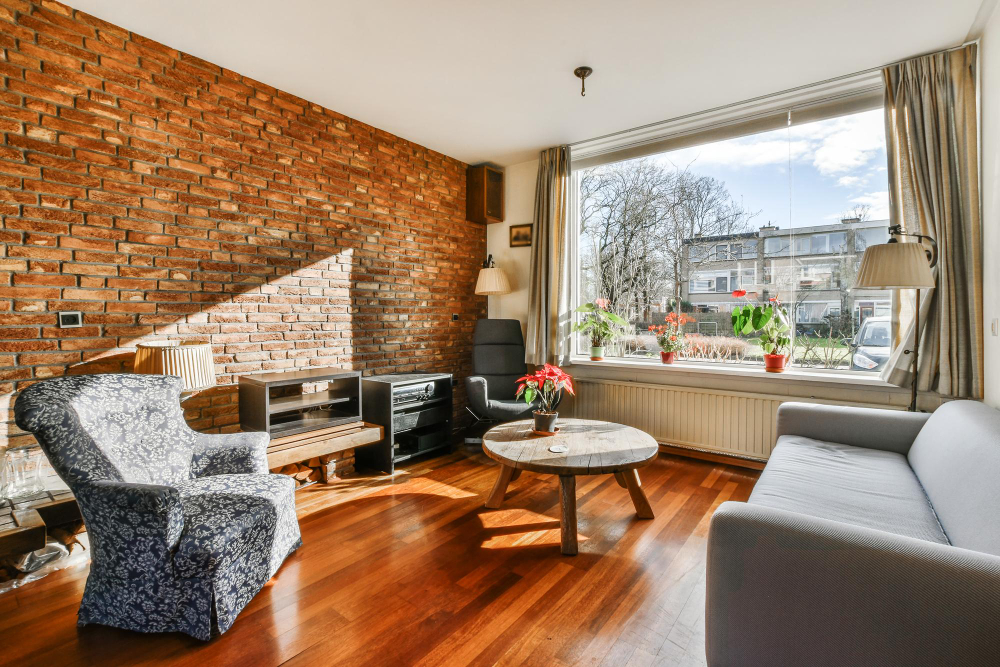
How to choose the color and texture of the brick?
Choosing the right brick is crucial, especially in a small apartment, where every element affects the perception of the space.
Light shades of – white, cream or light gray – optically enlarge the room and make the brick seem lighter. Such a light color creates a pleasant contrast with the texture of the material, emphasizing its natural nuances, while not overwhelming the interior.
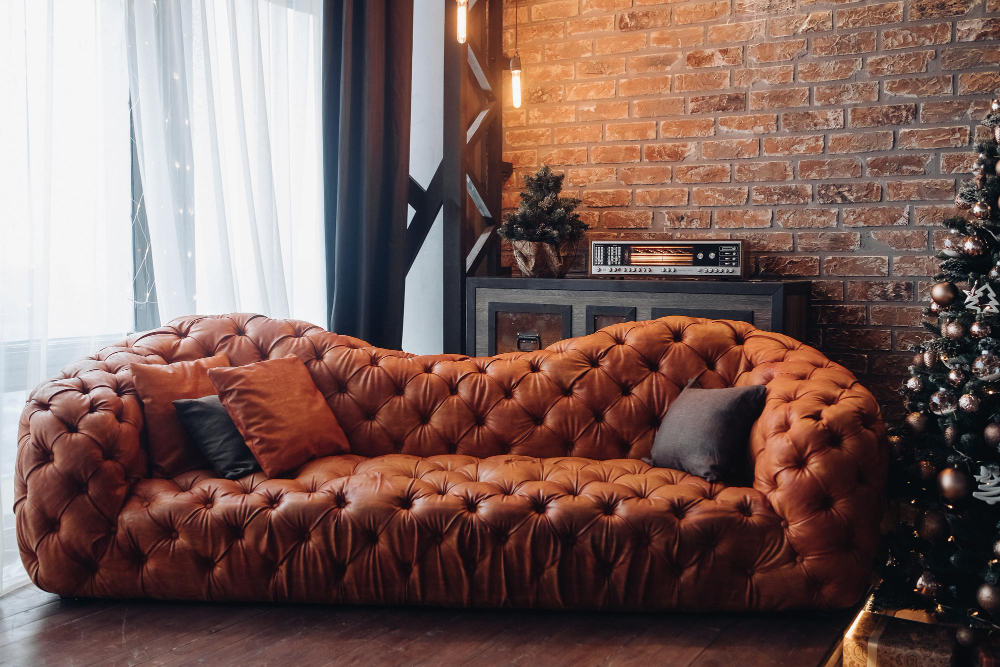
Old demolition brick works best as decorative wall pieces or details – for example, behind a sofa, next to a bed or as a strip in a kitchen. Its uneven surface, natural discoloration and subtle traces of time bring an authentic character to the interior.
However, it is worth exercising moderation: too much old brick can optically “reduce” the room, so it is best to limit it to one wall or selected zones.
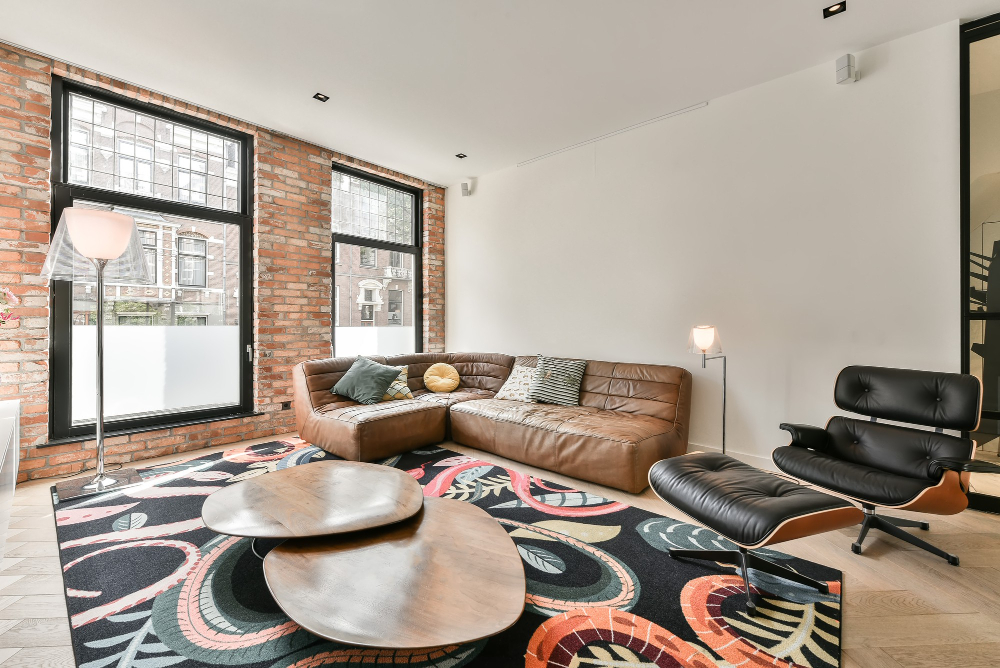
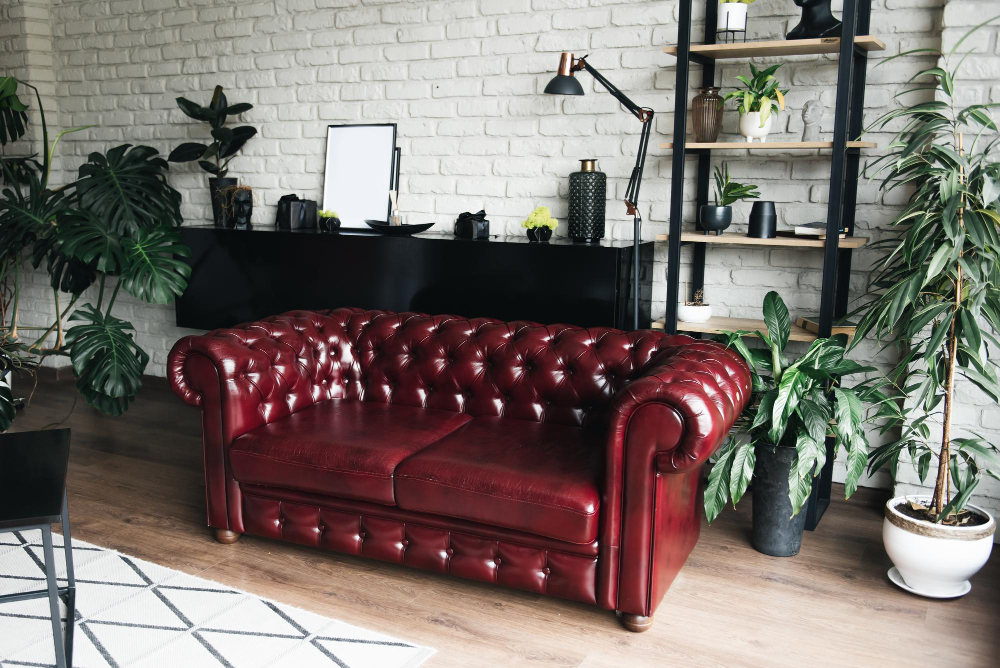
It is also a good solution to combining brick with a neutral background. Light-colored walls, simple furniture and light accessories help to bring out the structure of the material, while maintaining a sense of spaciousness.
Such a contrast emphasizes the charm of the brick, gives the interior a consistent character and keeps the room bright and welcoming.
Where is the best place to use brick in the living room?
Here are five tried-and-true arrangements that will work in any living room:
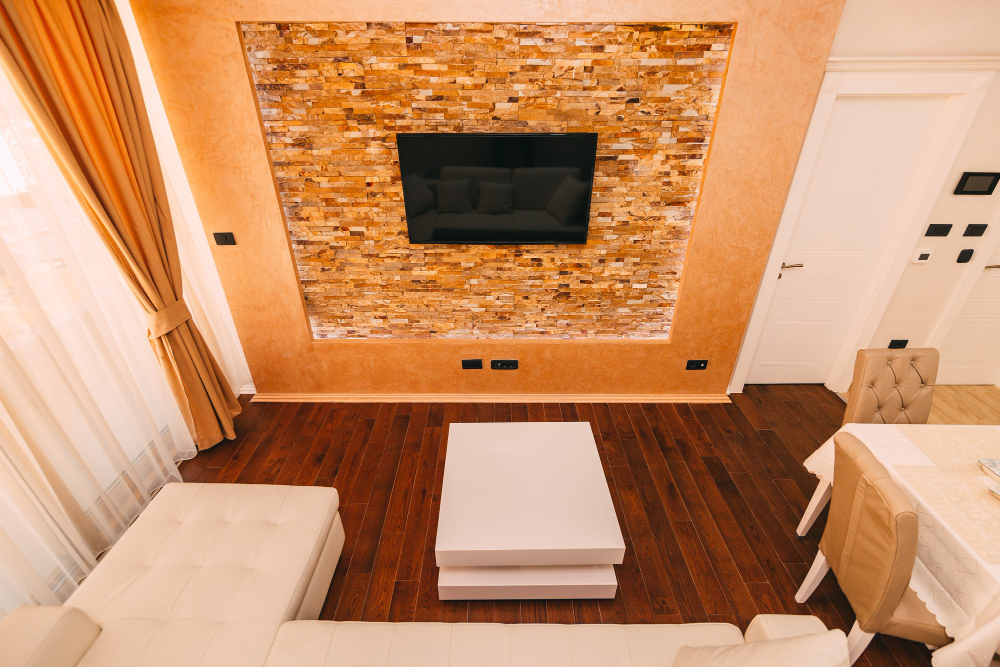
1. the wall behind the TV
Brick behind the TV is one of the simplest and most striking ways to introduce texture into an interior. Just cover the wall of your choice with it, creating a natural, expressive background.
To keep the whole thing from looking heavy, choose a minimalist TV cabinet and limit the number of accessories.
A great addition are point sources of light – lamps over the TV or LEDs under the cabinet will emphasize the texture of the brick and make the interior cozier.
2. the wall behind the sofa
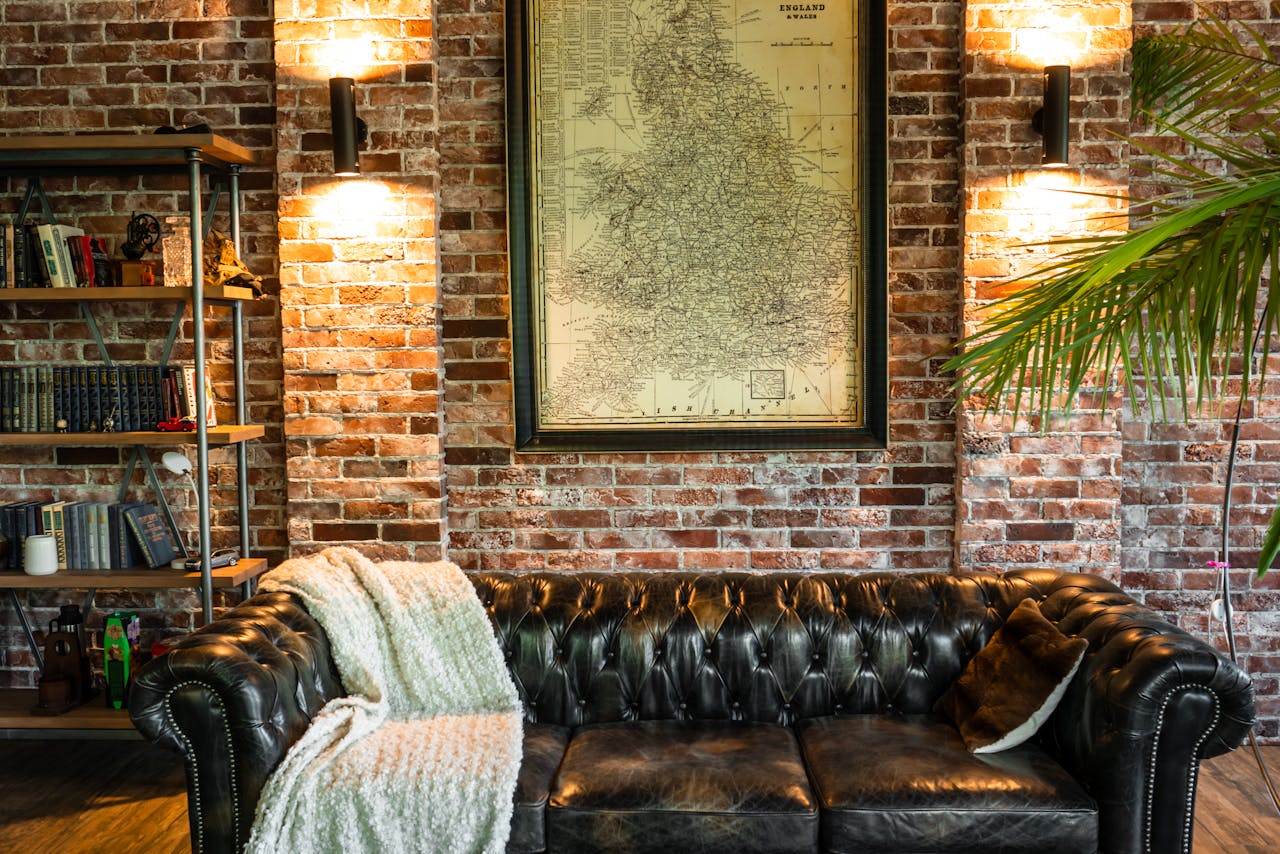
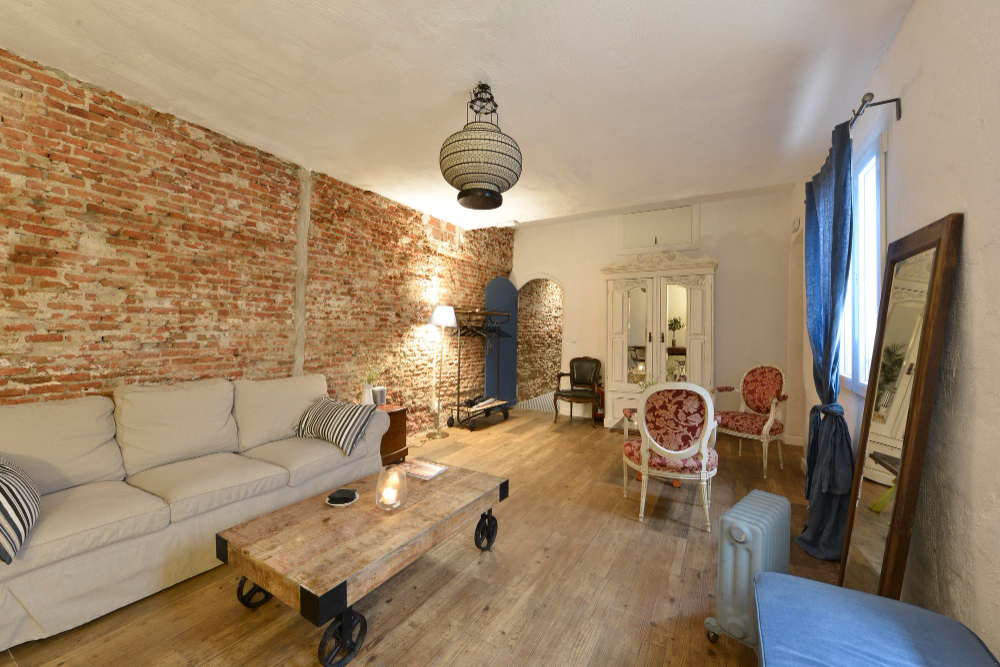
Covering a section of the wall with brick in the sofa area creates a focal point for the living room. It’s the perfect place to accentuate a place of relaxation and rest.
It is worth juxtaposing the brick with contrasting pillows and a light-colored rug to soften the “heaviness” of the material.
You can also add light shelves or decorative sconces – they will introduce functionality and make it easier to incorporate brick into the daily use of the space.

3 Brick as a backdrop for photo galleries or images
Brick is also perfect as a natural background for wall galleries. Choose a section of wall on which to expose photos, graphics or paintings.
It is best to use brick in a light or medium shade, so that the decorations stand out against the material. The layout of the gallery can be free – the brick will add depth and a clear frame to any painting, bringing an authentic character to the interior.
4. brick in the kitchen open to the living room
In an open space, brick can connect the living room and kitchen, creating a cohesive and visually pleasing zone.
Use it as a backdrop for open shelves, pendant lights over an island or sections of wall over a countertop. In this way, the brick serves both a decorative and practical function.
Bright grout and contrasting accessories will make the space look modern, light and airy.
In which areas will brick not be the best idea?
Not every idea looks good in practice. In a small living room it is advisable to avoid covering entire walls with brick – then the interior becomes overwhelmed.
Similarly, it is unfavorable to use dark brick without contrast with a light background, because it visually diminishes the room.
Remember technique, too: carefully plan grout and waterproofing. Carelessly made brick will dust and be harder to keep clean. In this guide you will learn more about the correct laying of brick on the wall.
What to combine with brick to keep the interior light?
Decorative brick by itself is very expressive, so the rest of the interior should gently balance it so that the living room does not seem overwhelmed.
A good solution is light furniture and accessories – White, light wood, creamy fabrics or muted grays. Such elements optically enlarge the space, while emphasizing the natural texture of the brick.
It is also worth betting on minimalist decorations. Avoid heavy dressers, excess ornaments or large rugs that may compete with the brick. Light shelves, subtle lamps or a few carefully selected decorations are enough to make the interior cohesive and pleasing to the eye.
Do not forget light. Both natural and spot lights – wall sconces, standing lamps or LED strips – will highlight the brick structure and add depth to the space. Good lighting makes the brick wall not overwhelming, but becomes an elegant and eye-catching element of the living room.