This is one of the first questions that arises before installing brick on a wall. Many people associate old masonry with a dusty, crumbling surface and worry that their hands will be red after touching the wall and their clothes will quickly get dirty.
The truth is simpler: a good demolition brick, when properly installed, should not stain. If it stains – it is usually not the fault of the material itself, but its quality or lack of proper protection.
Where does the “dirtiness” of the brick come from?
Raw brick, straight after demolition, can indeed dust. On its surface there is a layer of old mortar, fine ceramic dust and deposits formed by years of use. Touching such a piece will leave a mark on your hand.

Therefore, the brick for interiors should be:
-
purified,
-
sorted,
-
prepared for installation.
This is why the source of the material matters. In the case of selected cut tiles from original demolition bricks, which decorativenacegla.pl offers, the pieces are already prepared for use in interiors and free of loose dirt.
Will the brick wall dust after installation?
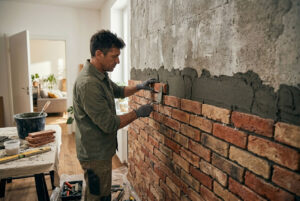
Once the tiles are glued and grouted, the wall is no longer a “loose material”, but a stable cladding. In addition, one more very important step is performed – impregnation.

It is the waterproofing that makes it:
-
The surface stops dusting,
-
The brick does not stain clothes,
-
easier to clean it.
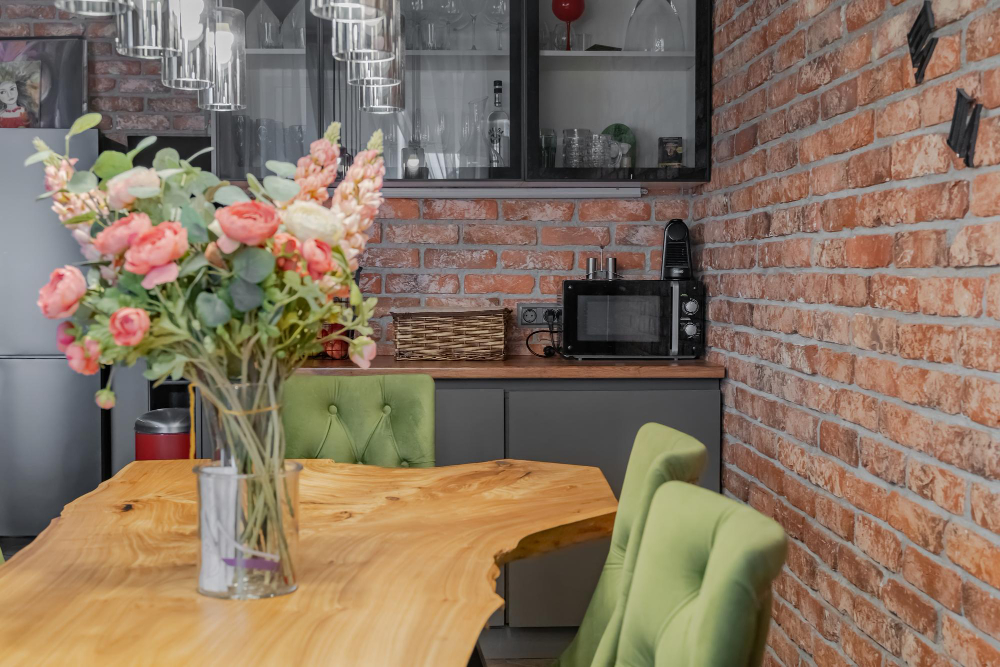
Once secured, you can comfortably lean against the wall or walk past it in the hallway without worrying about marks on your clothing.
Is the brick falling or crumbling?
A well-fired ceramic brick is hard. Its edges are irregular, but this is a visual feature, not a defect. Crumbling occurs mainly in low-quality materials or in bricks that have not been properly selected.
In practice, after installation and grouting, the wall is stable – it does not settle and does not require special treatment. It can be used normally like any other decorative surface.

Here, the brick has the most contact with clothes
The most common concerns arise when installing in a hallway or next to a staircase, that is, where we pass close to the wall. It is in these places that waterproofing is particularly important.
Once secured, the wall behaves like a standard surface – you can lean against it or walk past it in your jacket without the risk of staining it.
How to take care of a brick wall on a daily basis?
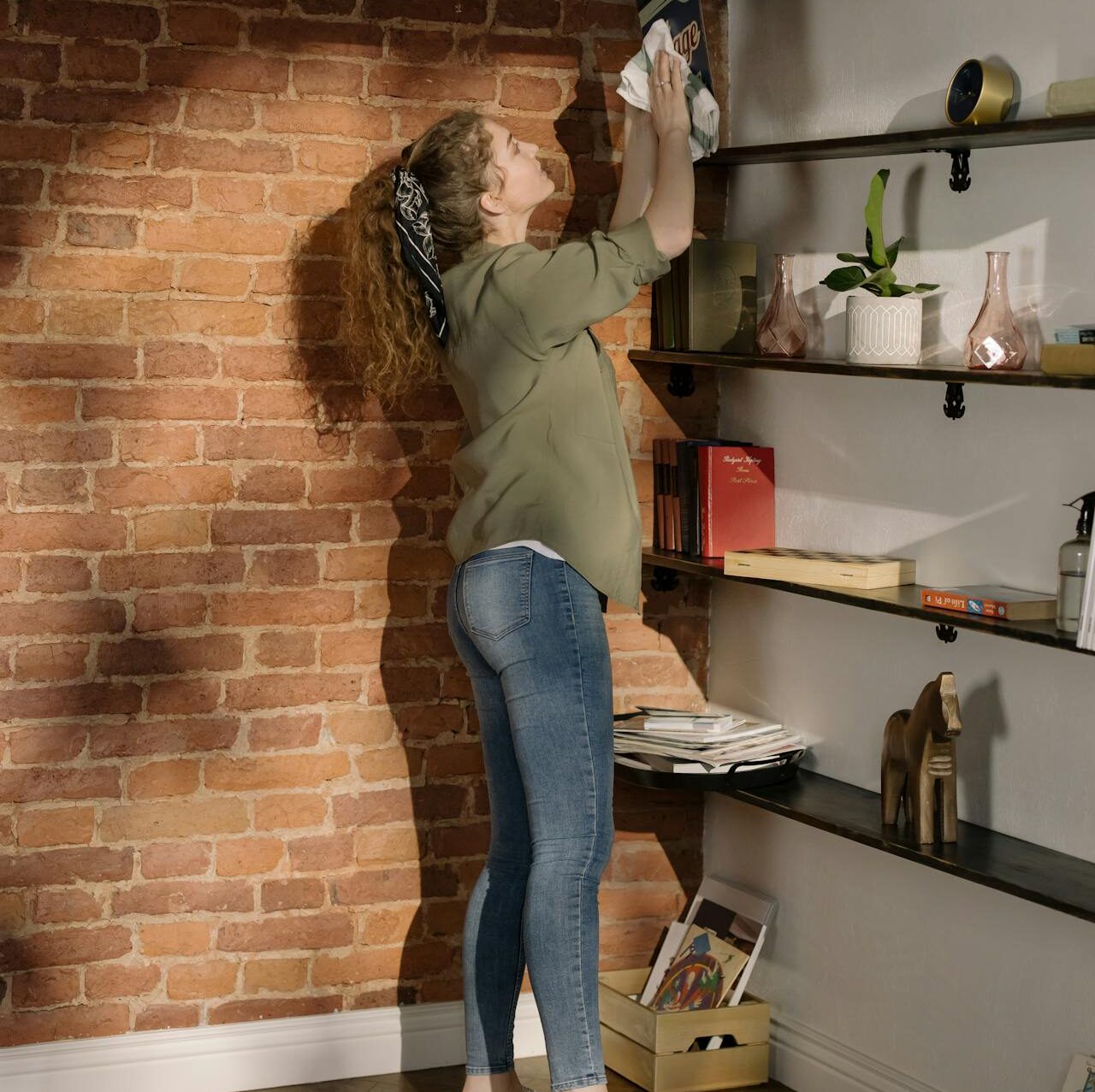
After impregnation, care is simple. No special agents or treatments are needed.
Enough is enough:
-
Occasional vacuuming with a soft-bristle brush,
-
Wiping with a damp cloth if dirty.
Do not use aggressive chemicals or agents with bleach – they are not needed and may discolor the grout.
Here’s why brick quality matters
Not every demolition brick is suitable for interiors. Material from a random source is sometimes soft, under-cleaned or contains residues of old mortar. It is such elements that most often cause dusting.
Tiles prepared from properly selected brick are cleaned and selected, so that after installation they do not cause usability problems. So it is worth using proven sources of old brick, which are a guarantee of the highest quality and proper cleaning.
Summary
Demolition brick can only stain when raw and unprotected. When properly installed, grouted and waterproofed, it becomes a normal, usable decorative surface.
It does not dust, does not leave marks on clothes and does not require special care. In practice, it is as comfortable as a painted wall, and gives an effect that no paint or wallpaper can provide.