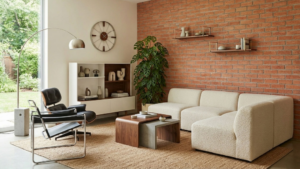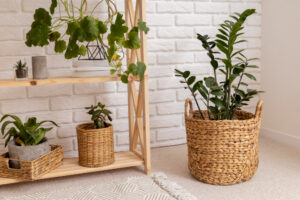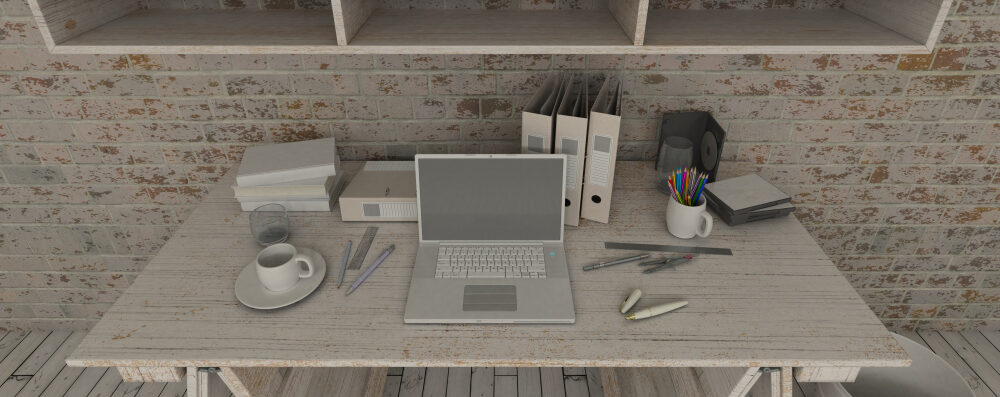
Home office has become a permanent fixture in our homes, as well as apartments in blocks of apartments, where every meter matters. A work corner increasingly needs to fulfill several roles at once: be comfortable, aesthetically pleasing, look good on camera and at the same time not dominate the entire living room or bedroom. Decorative brick can help a lot with this – provided it is well planned.
Below you’ll find practical tips on how to use brick as a backdrop for video conferencing, what colors “work best” with a camera, and how to use brick to visually separate a home work area.
Brick wall as backdrop for video conferencing
Many people today work from home, conducting online meetings with clients or teams. What you see behind your back on camera becomes, in practice, part of your professional image.
A brick wall has several advantages as a backdrop:
-
is neutral, but not boring – the brick structure adds depth, but is not as distracting as a bookcase full of random objects,
-
looks professional – it is associated with an orderly, thoughtful space,
-
does not require many additional decorations – often one plant, a lamp, a small painting is enough.

When planning a work corner, it is best to position the desk so that:
-
Behind his back was a section of brick wall,
-
The frame showed a quiet slice – no door, laundry dryer or kitchen in the background,
-
The distance between the chair and the brick was large enough so that the background was not “glued” to the silhouette.
In small apartments, a narrower strip of brick behind the desk is often enough – the rest of the wall can be plain, painted in a light color.
What brick colors look best on camera?
The camera (on a laptop or phone) does not “see” colors the way the human eye does. Too strong contrasts or very dark backgrounds can work less favorably than in reality.

For the home work corner, the following are particularly well suited:
1. light and toned bricks
-
bleached shades,
-
sand, beige,
-
Gently “rubbed” surfaces.
Such a background brightens the image, does not compete with the face and works well with both natural and artificial light.
2 Brick in natural, slightly dimmed red
Classic brick can also look good on camera if:
-
is not very dark and heavily saturated,
-
There is enough light in the room,
-
The rest of the decor is quiet (without many patterns and colors).
This is a good choice if you want the background to have more character, but still be professional.
3. what is better to avoid?
-
a very dark brick in a small, dimly lit room – the camera may “lose” details, and the background will become a heavy blur,
-
Bricks with very high contrasts (e.g., strong black and white transitions) – on the screen they may look too “aggressive”.
In our store you will find both brick in bright shades, as well as more classic bricks – when planning a background for a video conference, it is worth paying special attention to the sample photos of the arrangement and assess how the material works in different lighting.
Light – an ally of the brick wall in the work corner
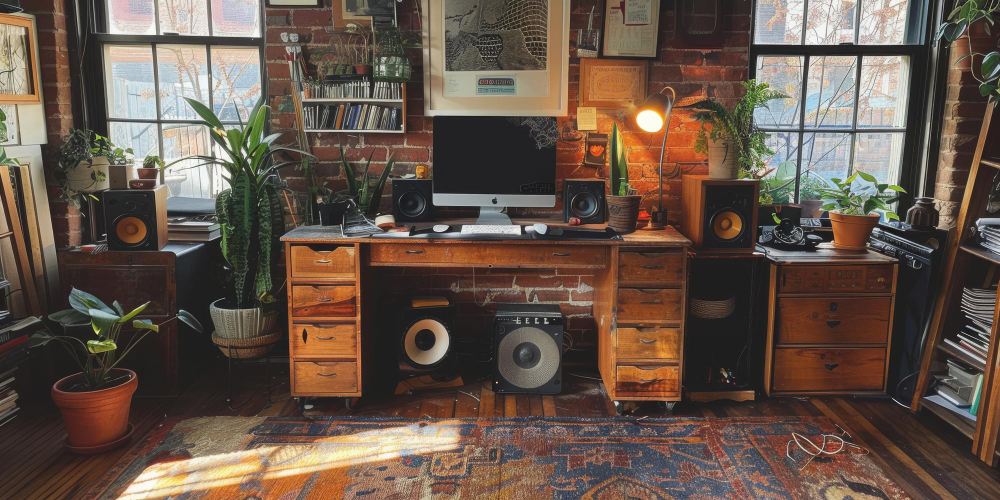
The background itself is not everything. Light is equally important:
-
it is good if the main source of light (e.g., a window) is in front of you or slightly to the side, and not behind your back – this prevents the effect of “dark silhouette on a bright background”,
-
A warm or neutral light color (about 2700-4000 K) makes the brick look natural, and the skin in the camera has a more pleasant tone,
-
An additional desk lamp or wall sconce on a brick wall can gently brighten the background without blinding.
It is a good idea to test the camera settings (e.g., in an appointment app) even before installing the brick – this way it is easier to assess which part of the wall will be the most favorable.
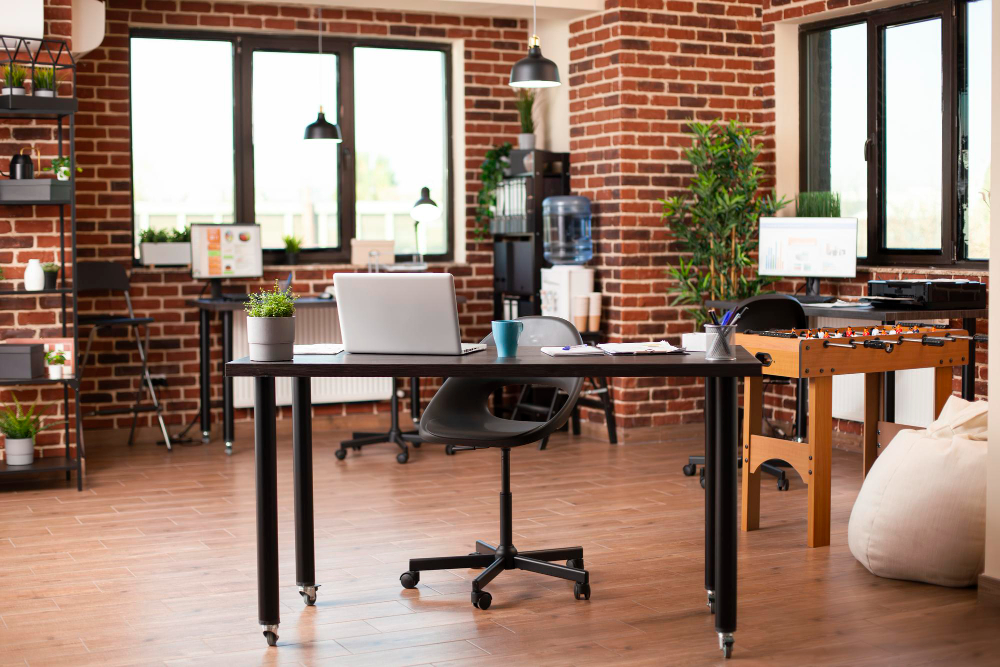
How to visually separate a work corner with a brick?
In many apartments, the work corner appears in the living room, bedroom or even in the hallway. Brick can help to divide the space clearly, but not literally.
1. just a section of the wall behind the desk
One of the simpler methods:
-
Brick on the width of the desk + a small margin on each side,
-
The rest of the wall in a base color (e.g., white, light gray).
Such a “strip” of brick delineates the work zone, without weighing down the entire room. It works especially well in small living rooms and bedrooms.
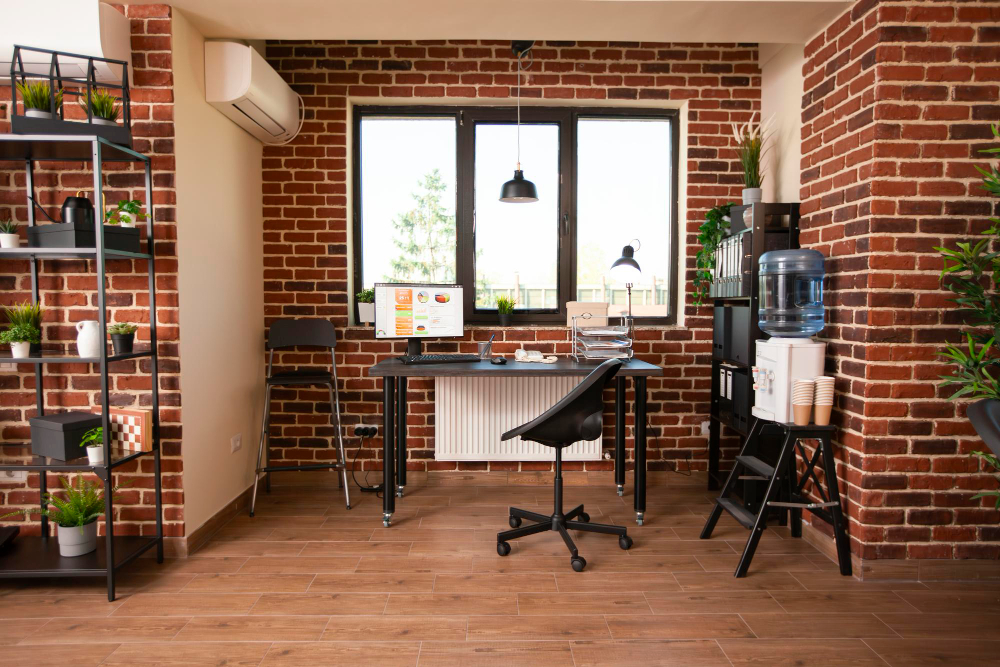
2. brick desk niche
If the layout of the apartment allows it, you can:
-
Take advantage of the recess, the section between the closet and the wall,
-
Cover three planes with brick: the back and two narrow sides.
A visually separated “booth” for work is then created – without putting up additional walls. This solution looks good in larger living rooms and in apartments with an annex.
3. brick continuation from another zone
If brick already appears, for example, in the living room seating area, you can:
-
“drag” the same material to a section of the wall near the desk,
-
Use it to visually connect the work, dining and leisure areas,
-
important not to use several different brick patterns in one room.
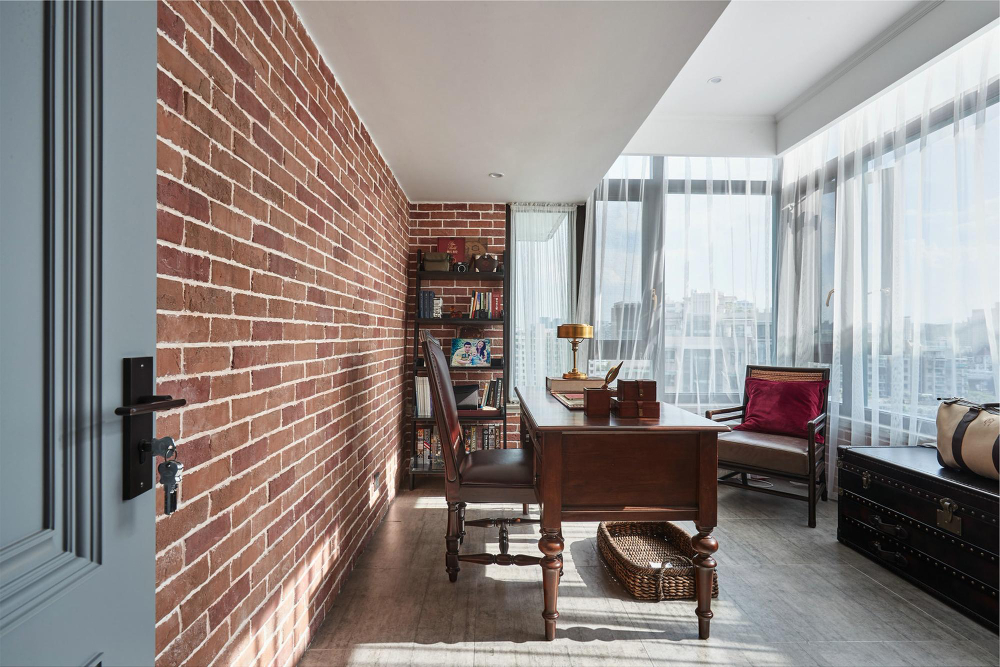
Practicality – what should you keep in mind when creating your work space at home?
Decorative brick in the place where you spend many hours every day should not only be pretty, but also practical:
-
surface – a slightly rough texture is aesthetically pleasing, but it should not “hook” the chair if it stands right next to a wall,
-
cleaning – dust often appears near the desk; it is worth choosing a material that can be easily vacuumed or wiped dry,
-
resilience – for narrower passageways, tiles work well and can better withstand accidental abrasions.
It’s also a good idea to think about sockets, wires and possible shelves before installation – the brick will be a backdrop for years to come, so it’s a good idea to plan it together with the entire layout of the work area.
Also read our article on the use of decorative brick in office spaces and offices <<