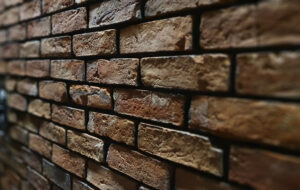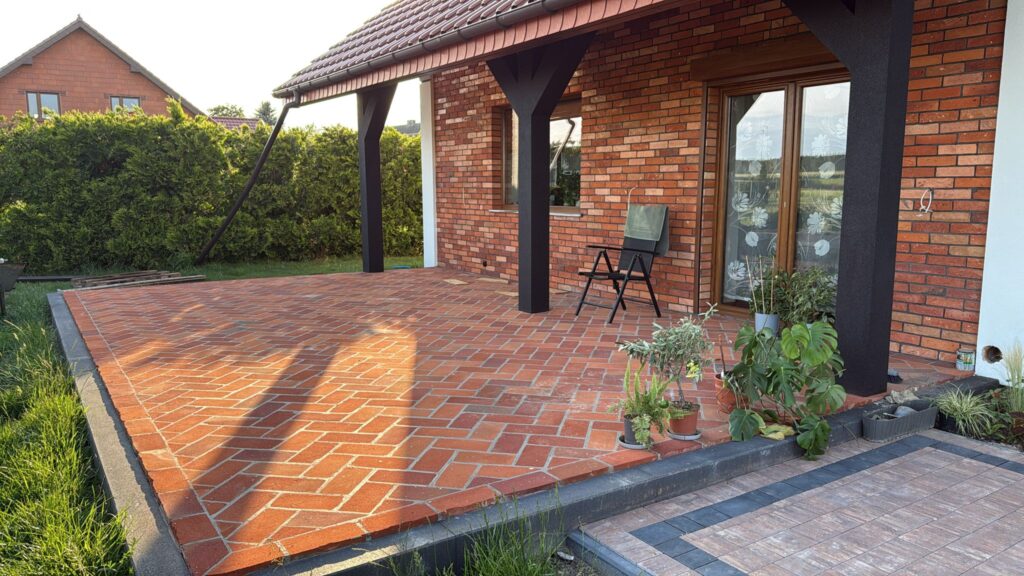
The terrace is a place that in summer becomes an extension of the living room – it’s where we relax, drink our morning coffee or spend evenings with family and friends. Since we spend so much time there, it is worth ensuring that the terrace is not only practical, but also beautifully finished so that it pleases the eye for a long time. More and more often, instead of standard tiles or paving stones, the idea of a terrace made of demolition bricks is emerging.
Is it a good solution? Properly laid and protected brick can not only be extremely durable, but also gives the terrace a unique character – from rustic to elegant or loft-like. In this guide we will tell you when a brick will work well on a terrace, how to lay it properly and what to pay attention to in order to enjoy a beautiful space for years.
Is brick suitable for a terrace?
Brick is an excellent material for a terrace for many reasons:
- First, its natural aesthetics go hand in hand with durability, making the terrace look great and withstand daily use.
- A terrace with a brick floor effectively resists dirt and changing weather conditions, including frost
- (as long as the brick is well waterproofed).
- The richness of the brick’s colors and the ways in which it can be laid, makes it possible to create unique patterns tailored to individual preferences.
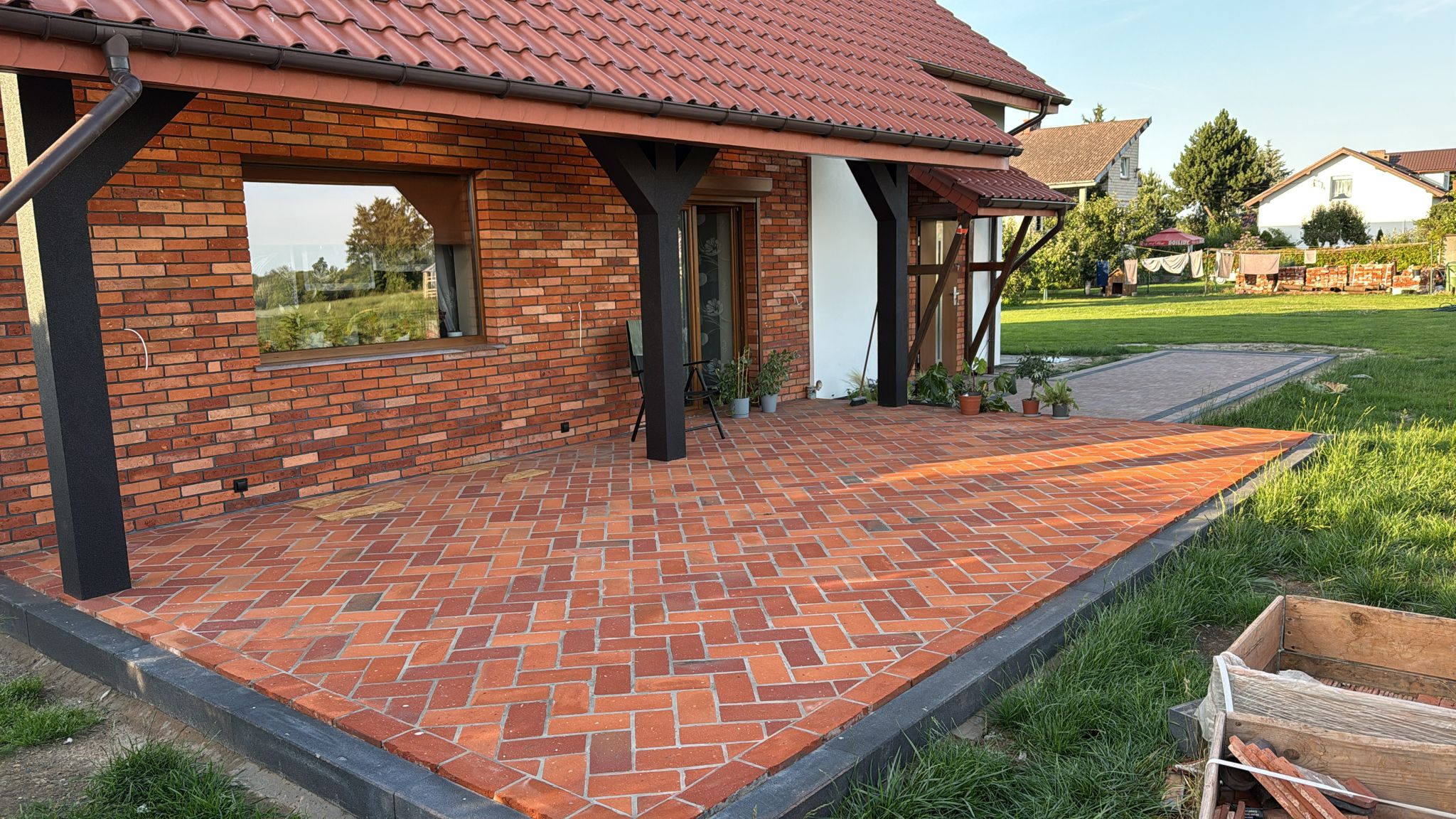
And in addition, the brick works well with greenery – it goes well with plants in pots, wooden garden furniture or natural stone. It creates a coherent, harmonious space in which it is pleasant to spend time. This is why brick terraces are so often associated with the climate of southern Europe or the veldt of old mansions, where aesthetics goes hand in hand with functionality.
Which brick to choose for the terrace?
Choosing a brick for a terrace is more than just a decision about the material – it’s an investment in a space you’ll use for years to come. So what should you pay attention to?
-
Type of brick – original demolition bricks or tiles made from old bricks. This is a material that has stood the test of time, is extremely durable and has a unique appearance. Each element differs in shade and texture, which are traces of the passage of time, so that the terrace gains a unique character.
-
Color scheme – warm shades of red and brown warm up the space and blend well with the greenery of the garden. If you want a more elegant, subdued effect, bet on bricks in cooler colors – for example, with a hint of gray.
-
Proven source – the brick for the terrace must be free of efflorescence, dirt and hidden defects. Therefore, it is worth choosing bricks from dekoracyjnacegla.pl, where each batch is selected, cleaned and prepared for reuse. And moreover, you can be sure that you are buying authentic demolition bricks, not imitations. As a result, your terrace will get an impressive look, durable and hassle-free to use.
How to prepare the ground for a brick terrace?
Before you start laying brick, you need to take care of a stable and properly prepared foundation. It determines the durability of the entire structure and resistance to weather conditions.
Low terrace made of whole bricks
-
Bricks can be laid directly on a sand (or sand-cement) ballast – exactly like paving stones or cubes.
- The most important thing is a solid hardening of the ground. We start by removing a layer of humus (plant soil) to a depth of about 20-30 cm. Then a layer of aggregate (e.g. ballast, gravel) is spread, which should be well compacted with a compactor. A layer of sand or sand-cement ballast is laid on top to stabilize the bricks.
-
The layers then look like this: soil → aggregate → sand/sand with cement → brick.
-
Such an arrangement has one advantage: water freely soaks into the ground, and the brick “works” with it.
-
The condition: the bricks must be well waterproofed and frostproof, and the substrate must be decently compacted so that the whole thing does not spread.
Low terrace with brick tiles
-
Here the case is different, because brick tiles are much thinner and do not form a stable pavement on their own.
-
The best solution is to pour a thin concrete slab (a few-something centimeters, depending on the structure), with an appropriate slope for water drainage.
-
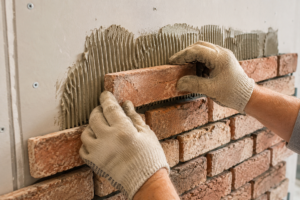
Only on it are the brick tiles laid, using a flexible, frost-resistant adhesive and grout.
-
This will prevent the tiles from cracking or peeling off, which could happen if they were laid on sand alone.
Elevated terrace (with stairs)
-
In this case, the brick usually acts as an aesthetic finishing layer.
-
The structure of the terrace is made of concrete – the screed must be stable, reinforced and protected against water soaking.
-
On the prepared concrete, brick tiles (rarely whole brick) can be laid with a suitable frost-resistant adhesive and grouted like ceramic tiles.
-
It is also worth remembering to waterproof the bricks and joints – the terrace will then be resistant to weather conditions and easier to maintain.
How to provide effective drainage under a brick terrace?
In order to effectively drain water from under a terrace made of brick, it is advisable to reach for some proven solutions:
- Lay the tiles on the terrace with a gentle slope, which will allow rainwater to drain naturally.
- Place a layer of gravel or sand under the surface to aid drainage and improve ventilation and stability of the entire structure.
- Consider installing a drainage system that will effectively collect excess water and carry it away from the terrace.
This will avoid problems related to moisture and potential damage to the bricks. Carefully designed drainage is key to maintaining the durability and aesthetic appearance of the terrace.
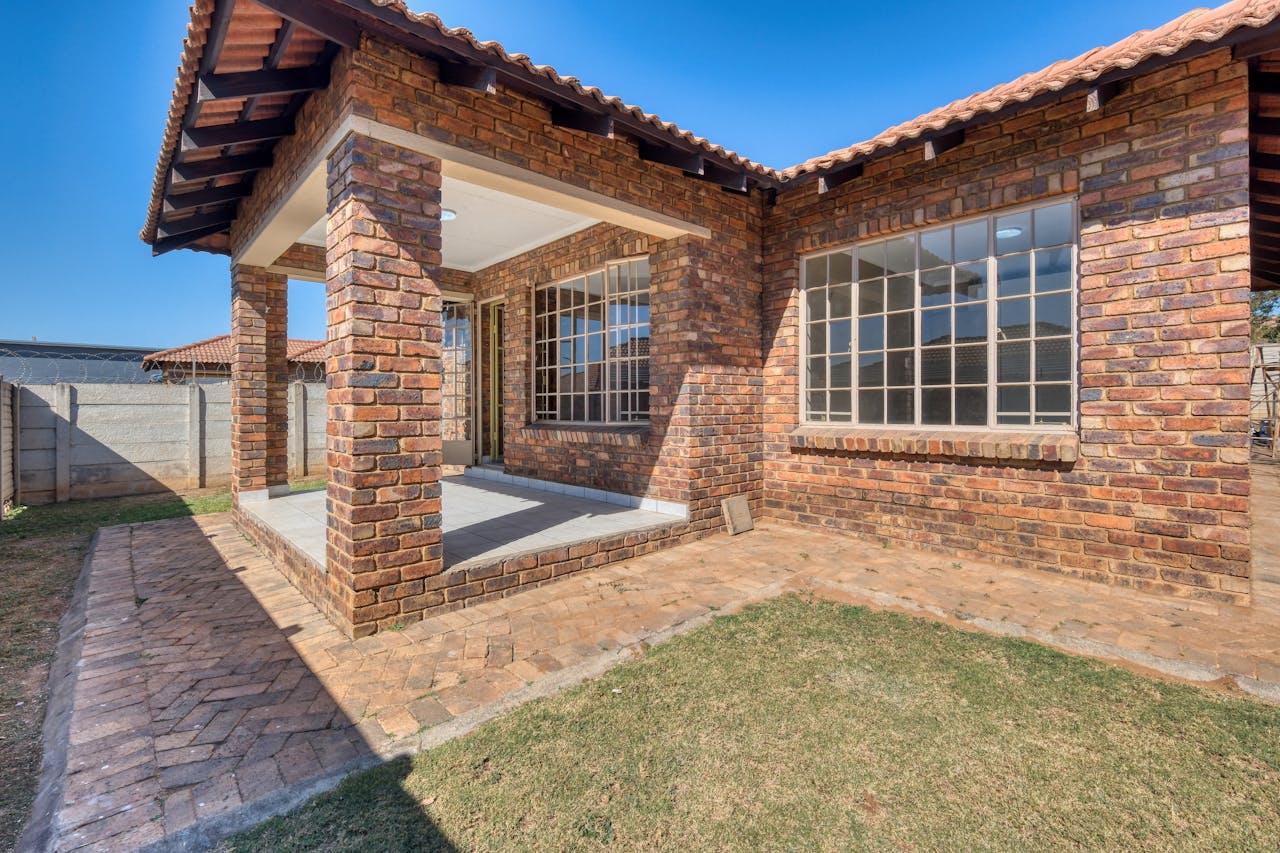
How to make a terrace from original demolition bricks step by step?
After preparing the ground and ensuring proper drainage, we can move on to the most important stage – the laying bricks on the terrace floor.
1. selection of paving pattern
-
By passing (carriage-style) – the simplest and most commonly used. Bricks are laid in rows with joints offset by half a brick length. A classic that always looks good.
-
Checkerboard – bricks laid in pairs, once vertically and once horizontally. It gives an interesting decorative effect, especially on smaller terraces.
-
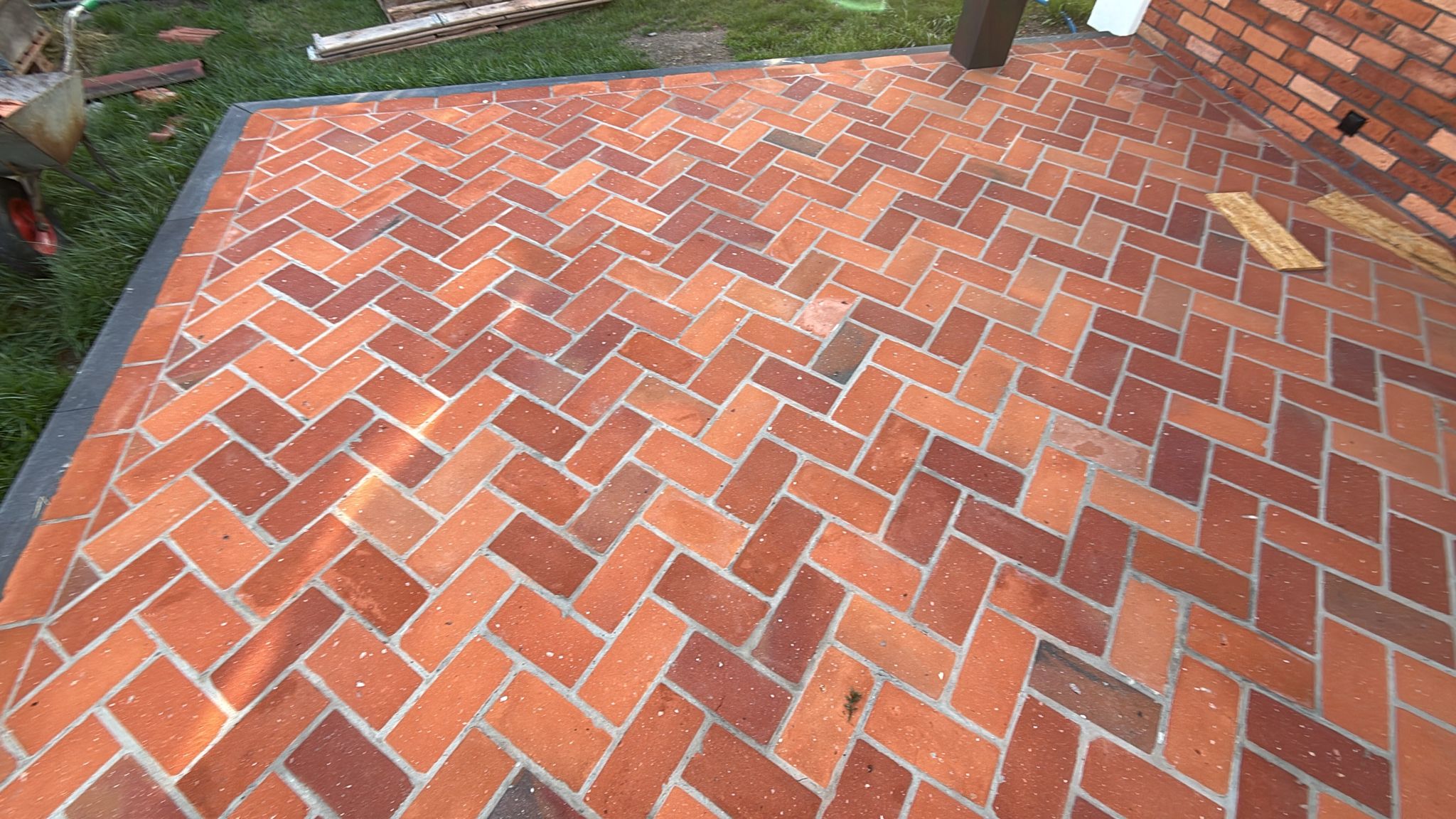
Herringbone – bricks laid at an angle of 45° or 90°. A very impressive and fashionable pattern, ideal if the brick floor is to be a strong accent of the terrace arrangement.
Expert advice: It’s a good idea to lay out the bricks dry before gluing them to see what the color and layout looks like. The original demolition bricks have different shades, so it’s a good idea to mix them for a natural effect.
2. glue and grout
-
For brick tiles, we use a flexible, frost-resistant adhesive (it must be a special adhesive that is suitable for outdoor floors).
-
In the case of a terrace made of solid bricks, lay them like paving stones – and a sand and cement ballast will work best here to stabilize the whole thing.
-
The grout should also be flexible and frost resistant. It is worth choosing a color that matches the brick – darker grout will give a more rustic character, lighter grout will emphasize the shape of the bricks.
3. impregnation
-
Apply waterproofing only after the glue and grout have completely set.
-
This is usually done a few days after the work is completed (the time depends on the glue manufacturer).
-
The preparation protects the brick from moisture, dirt and moss growth. It is worth applying two coats.
4. when can the terrace be used?
-
After the initial setting of the glue and grout (about 24-48 h), you can carefully walk on it.
-
The terrace reaches its full strength after a few days, so it is advisable to set heavier garden furniture or pots only after a week.
How to match the brick on the terrace with the style of the arrangement?
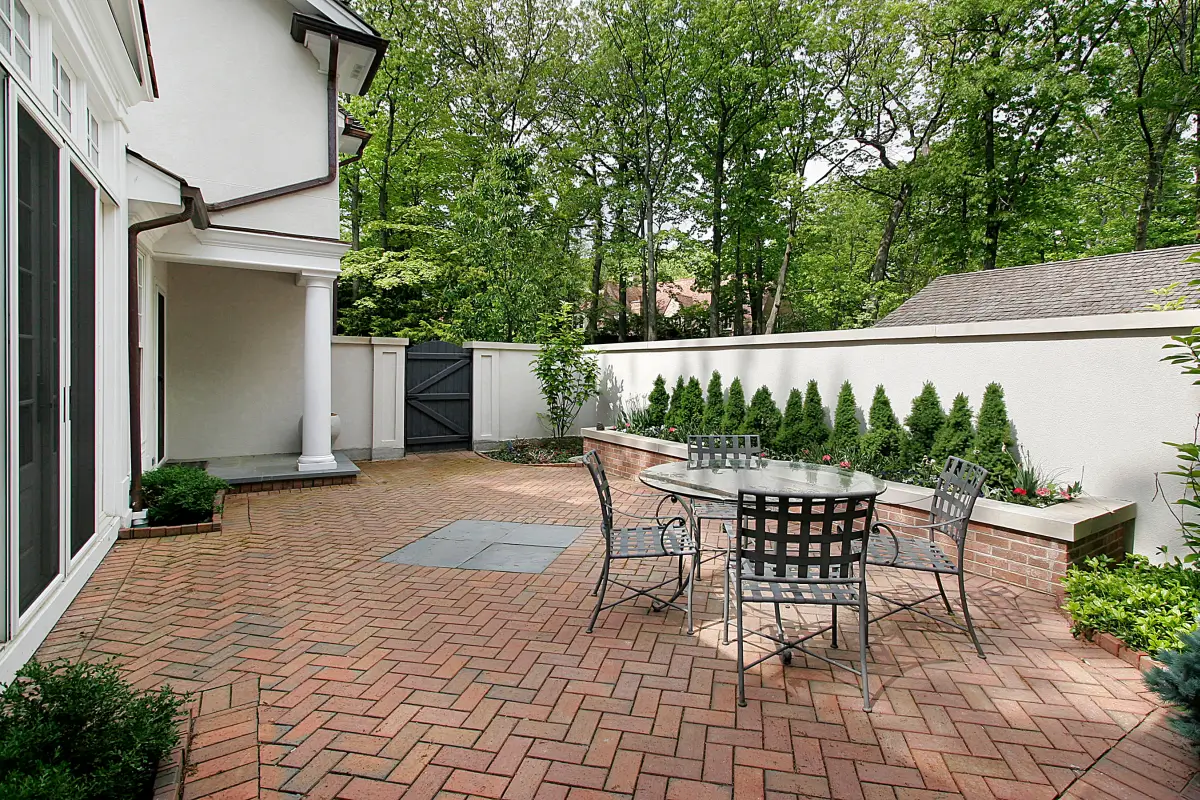
In what style do you want to decorate your dream terrace? It is important that it matches the architectural style of the house, as well as blends nicely with the overall garden.
1 Provençal style
-
Brick color: light shades of red and lightly whitened bricks that go well with pastels and lavender.
-
Layout: classic “passing” or checkerboard – will give a harmonious, idyllic effect.
-
Furniture: whitewashed wood, light with an aged effect or light metal (such as cast iron, painted white).
-
Plants: lavender, olives in pots, herbs in clay pots.
-
Accessories: linen tablecloths, pastel pillows, wicker baskets.
2 Mediterranean style
-
The color of the brick: warm reds, oranges and browns – are associated with southern Europe and harmonize beautifully with olive green or blue accessories.
-
Layout: irregular or herringbone, to make the whole look more natural and “old”.
-
Furniture: wooden in natural tones, rattan, olive or warm honey colors, or possibly metal with wrought iron details.
-
Plants: bougainvillea, rosemary, citrus in terracotta pots.
-
Accessories: blue ceramics, clay pots, light cotton curtains.
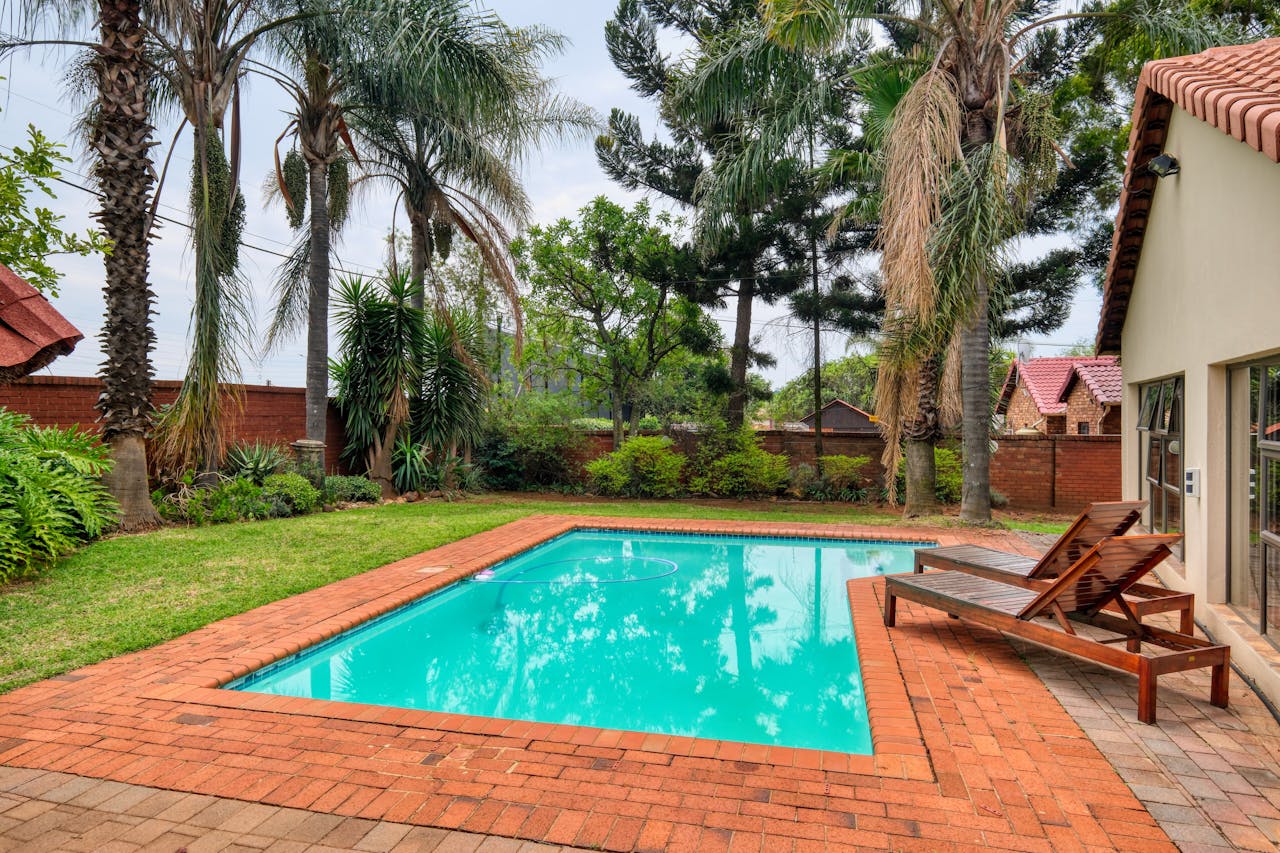
3. rustic style
-
Brick color: deep, warm reds with discoloration, sometimes combined with stone and wood.
-
Layout: traditional “passing” – emphasizes simplicity and authenticity.
-
Furniture: massive wooden tables and benches, simple chairs. Wood raw, darker, can also be unpainted.
-
Plants: geraniums, hydrangeas, perennials in large pots.
-
Extras: wool plaids, cast iron lanterns, wood baskets.
4. loft / industrial style
-
Brick color: darker shades of brick – reds falling into brown or graphite brick tiles.
-
Layout: herringbone or vertical stack bond, which add a modern touch with geometric patterns.
-
Furniture: metal chairs, simple benches, a table with a concrete top. There can also be wooden furniture – dark, oiled, combined with metal.
-
Plants: tall ornamental grasses, succulents, plants in concrete pots.
-
Extras: lights on cables, simple spotlights, steel pots (in black).